

Was it or wasn’t it? Remember this out of bounds drama from Bryson DeChambeau at the WGC-FedEx St Jude Invitational back in 2021?
At the 6th hole on the final day at TPC Southwind, Bryson flared his tee shot into a fence on the right-hand side of the fairway. The ball was trapped beneath the fence, which marked the boundary of the course, and DeChambeau called in a Rules official.
In an exchange that lasted the better part of eight minutes, and which included some sweeping away of loose impediments and the employment of a ball of string, the American’s ball was judged to still be within the boundaries of the course.
After satisfying Ken Tackett, the man on the spot, with the shot he would play he was then able to take relief from an abnormal course condition – a path.
Now, this ruling produced quite a lot of comment but one thing which came up repeatedly was why the ball hadn’t been deemed out of bounds in the first place.
Let’s delve into Rule 18.2a (2) – When Ball Is Out of Bounds – to reveal the answer…
When is a golf ball Out of Bounds?
Referees often carry a roll of yarn about with them and it’s not because they fancy knitting up a sweater like Tom Daley.
It’s because it can be really useful, as in DeChambeau’s case, in revealing whether a ball is out of bounds or not.
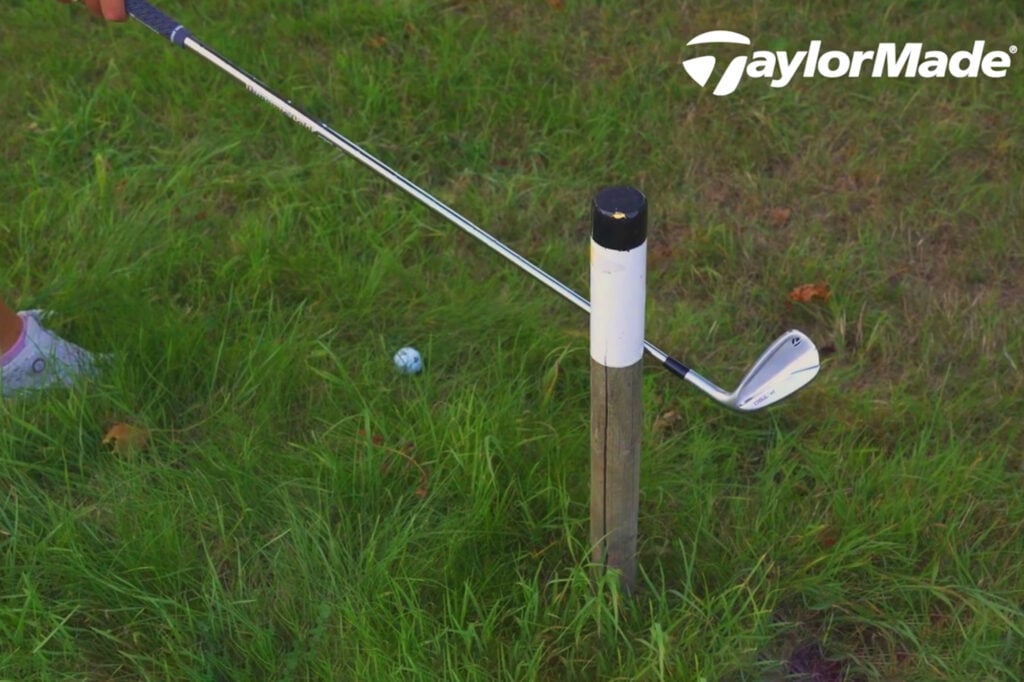
Let’s get to basics first. When people saw the footage of his ball under the fence, they assumed it had to be OOB but the Rules say a ball at rest is out of bounds only when “all of it is outside the boundary edge of the course”.