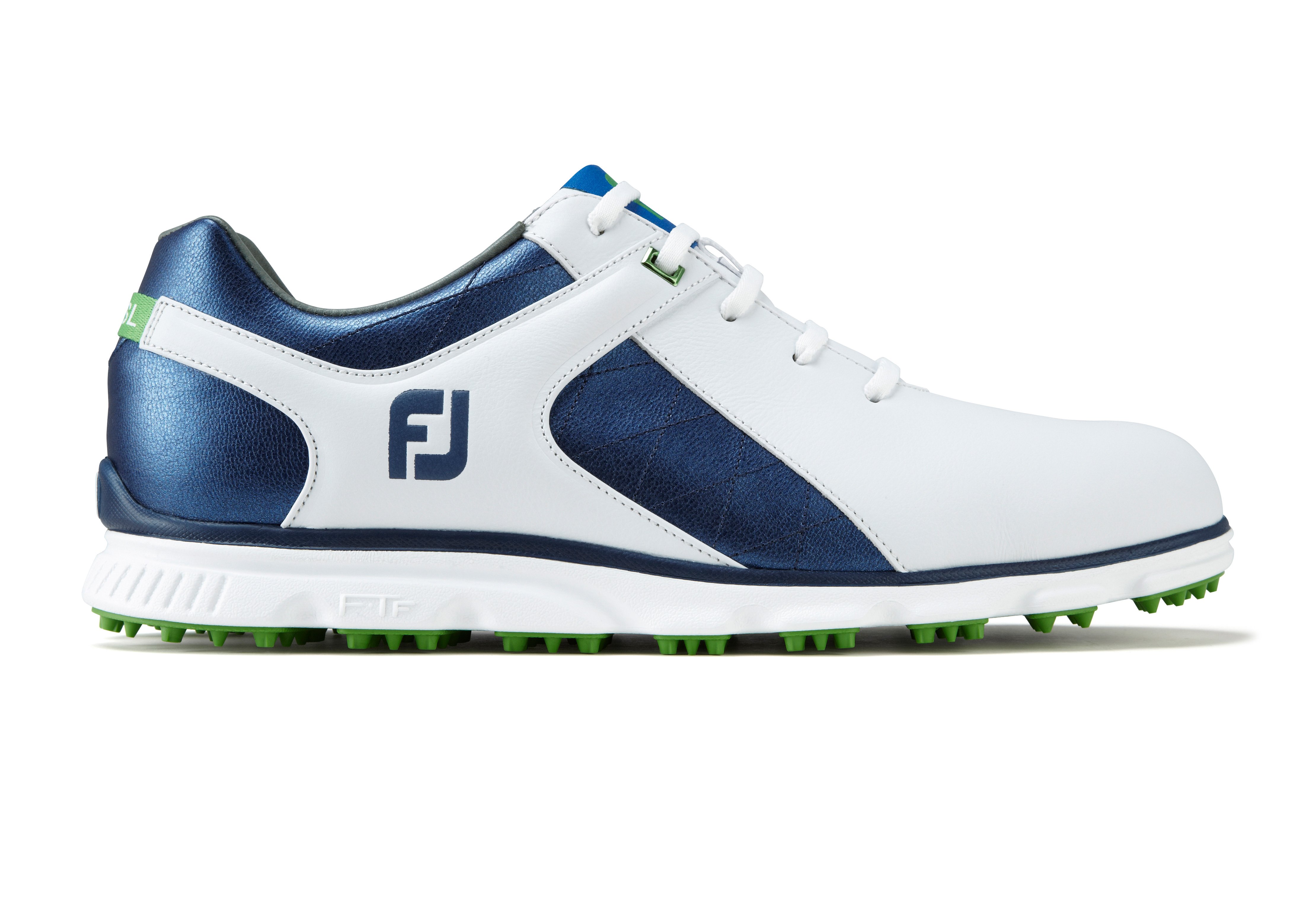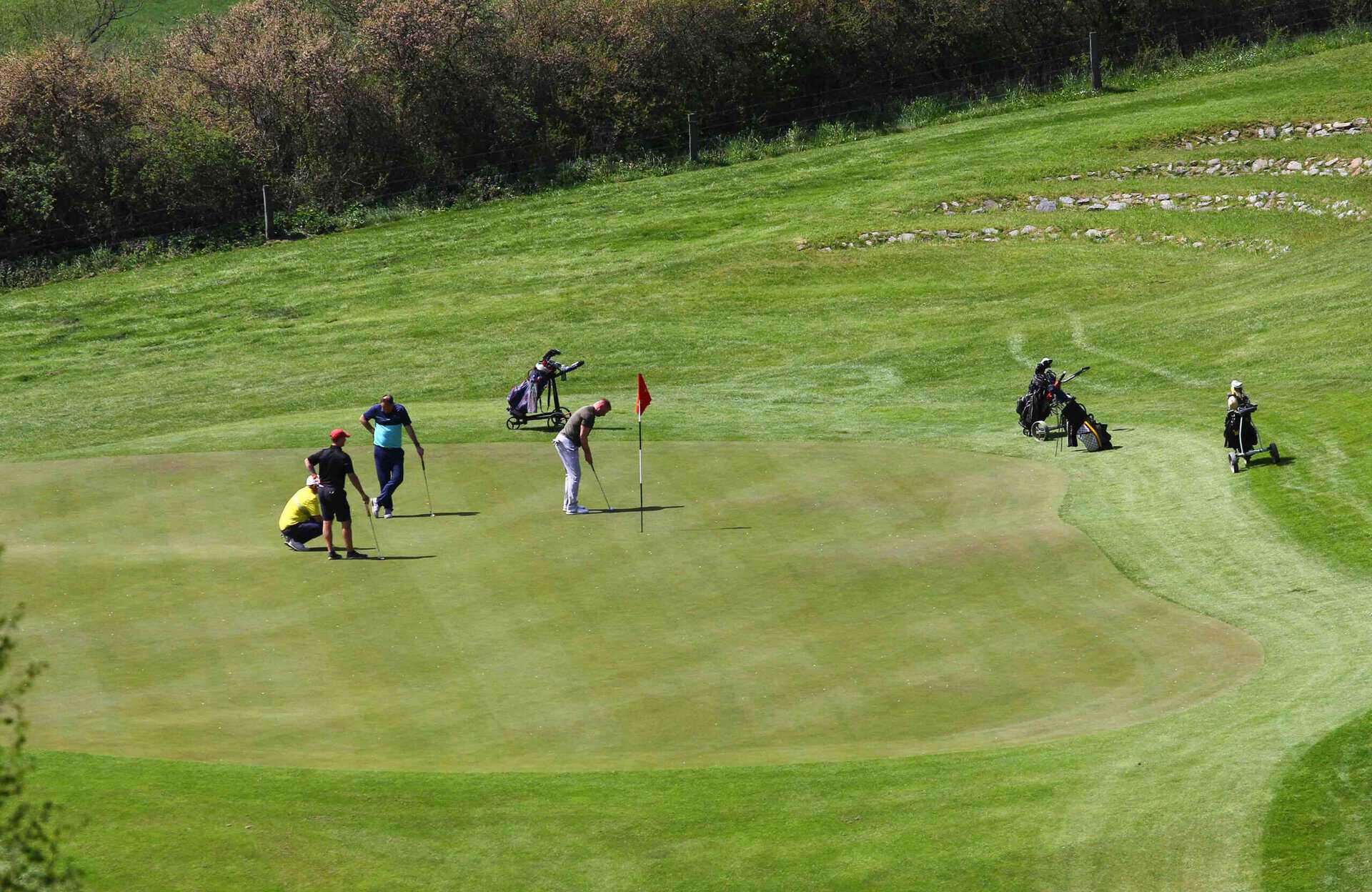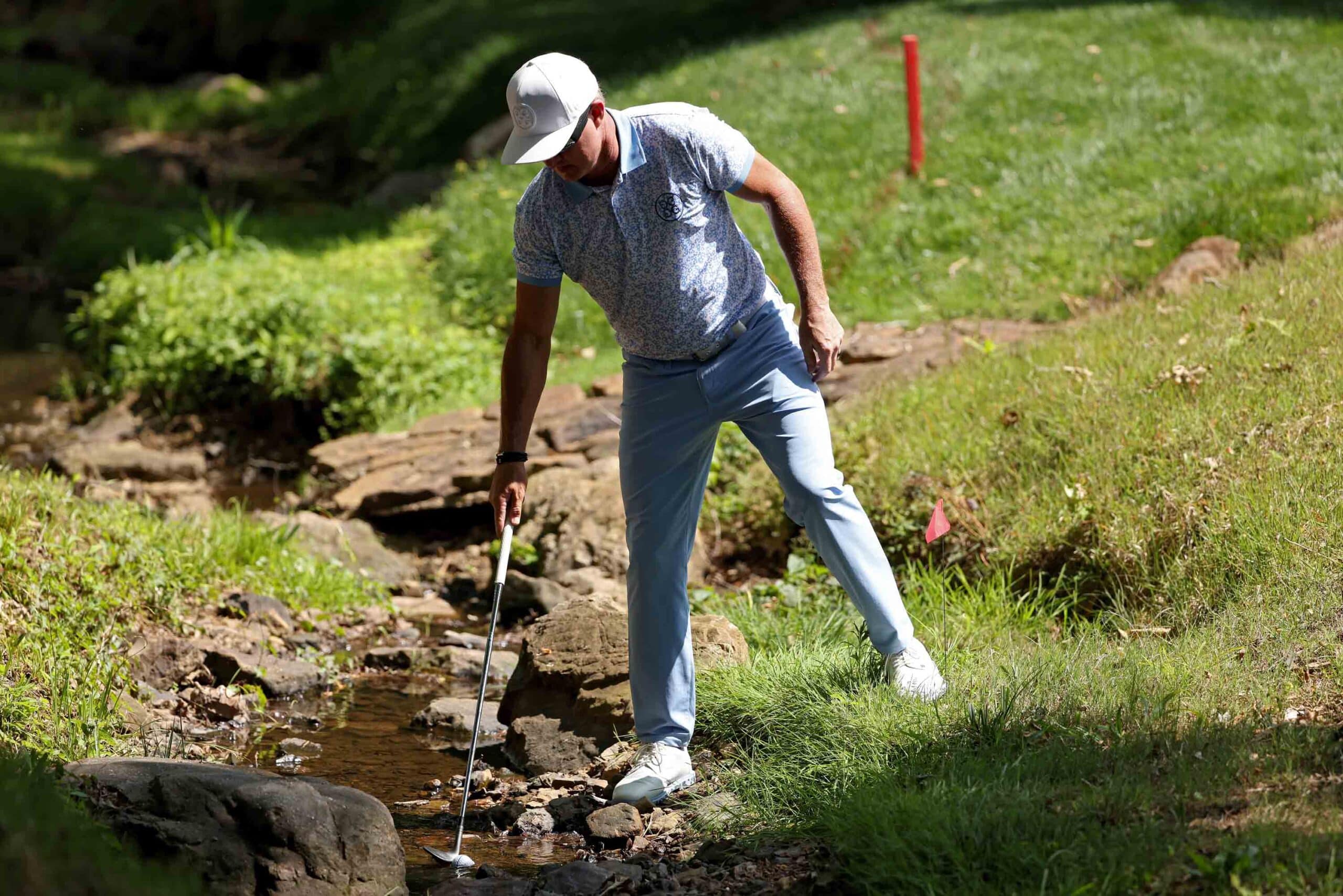



Our FootJoy DNA Helix review took place on the course at Moor Allerton in Leeds and Castleknock in Dublin where the shoes were launched to the UK media.
There have already been two generations of the FootJoy DNA – the original model and then the 2.0. So what’s the deal with Helix? And, most importantly, where have FootJoy looked to improve the previous models?
FootJoy DNA Helix review – The technology

You may remember tour players such as Adam Scott were quick to adopt the original DNA. But Scott and others soon found their way into other models.
Now Scott, and dozens, hundreds maybe of Tour players are wearing the spikeless Pro SL model.
FootJoy insist there is still a huge appetite for spiked shoes so we may see some Pro SL players switching back to spiked with the launch of DNA Helix.
One thing FootJoy have done – in direct response to tour feedback – with DNA Helix is make them more stable around the heel area. But they’ve also kept the shoe light and flexible.

There’s actually wider cleats on the sole which is good news for those people who maybe felt like they were falling off the heels in the original DNA models.
FootJoy say the DNA Helix will give players a more stable base to ‘go after’ the ball from.
The original DNA was classed as more of a ‘mobile’ shoe but the Helix sits more in the ‘structured’ category now – just behind the super solid Icon Blacks and DryJoys Tour.
One of the biggest issues I had with the original DNA was that they were too big. I’m always a 9 medium in FootJoy shoes but this size in DNA was too big for me.