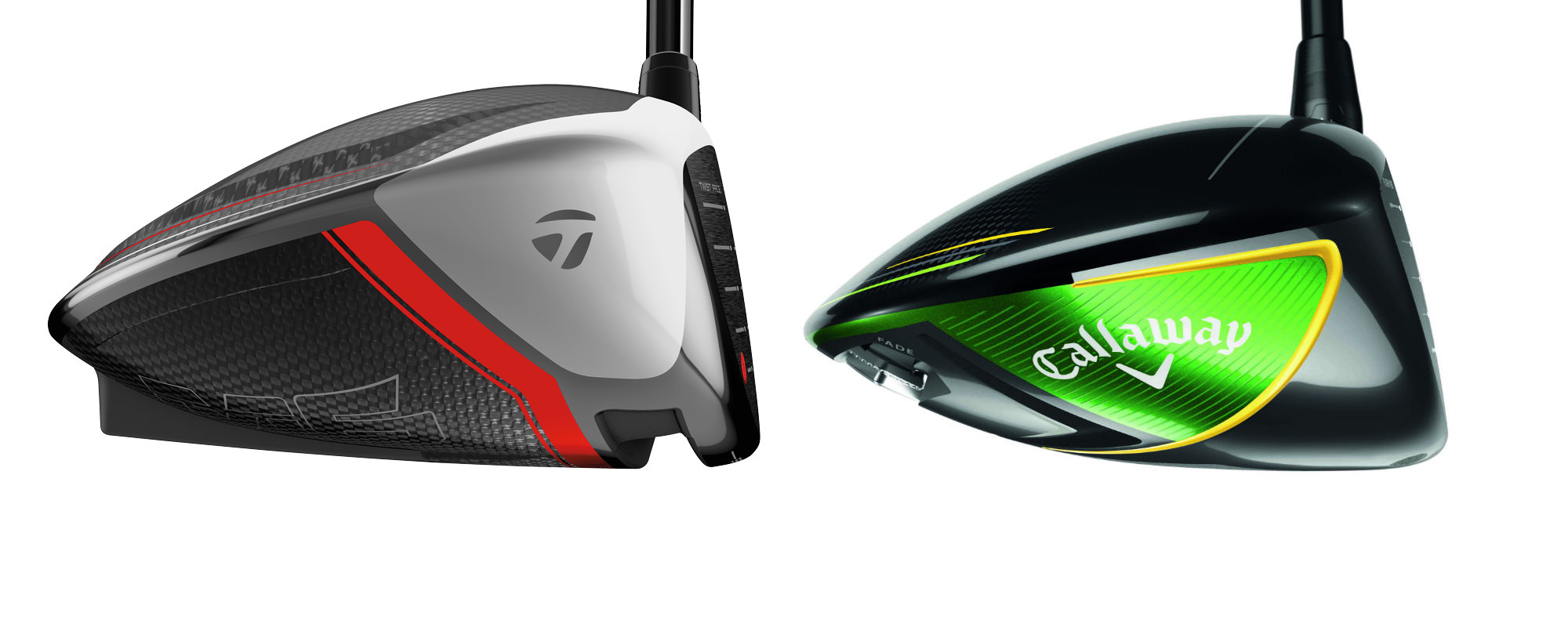
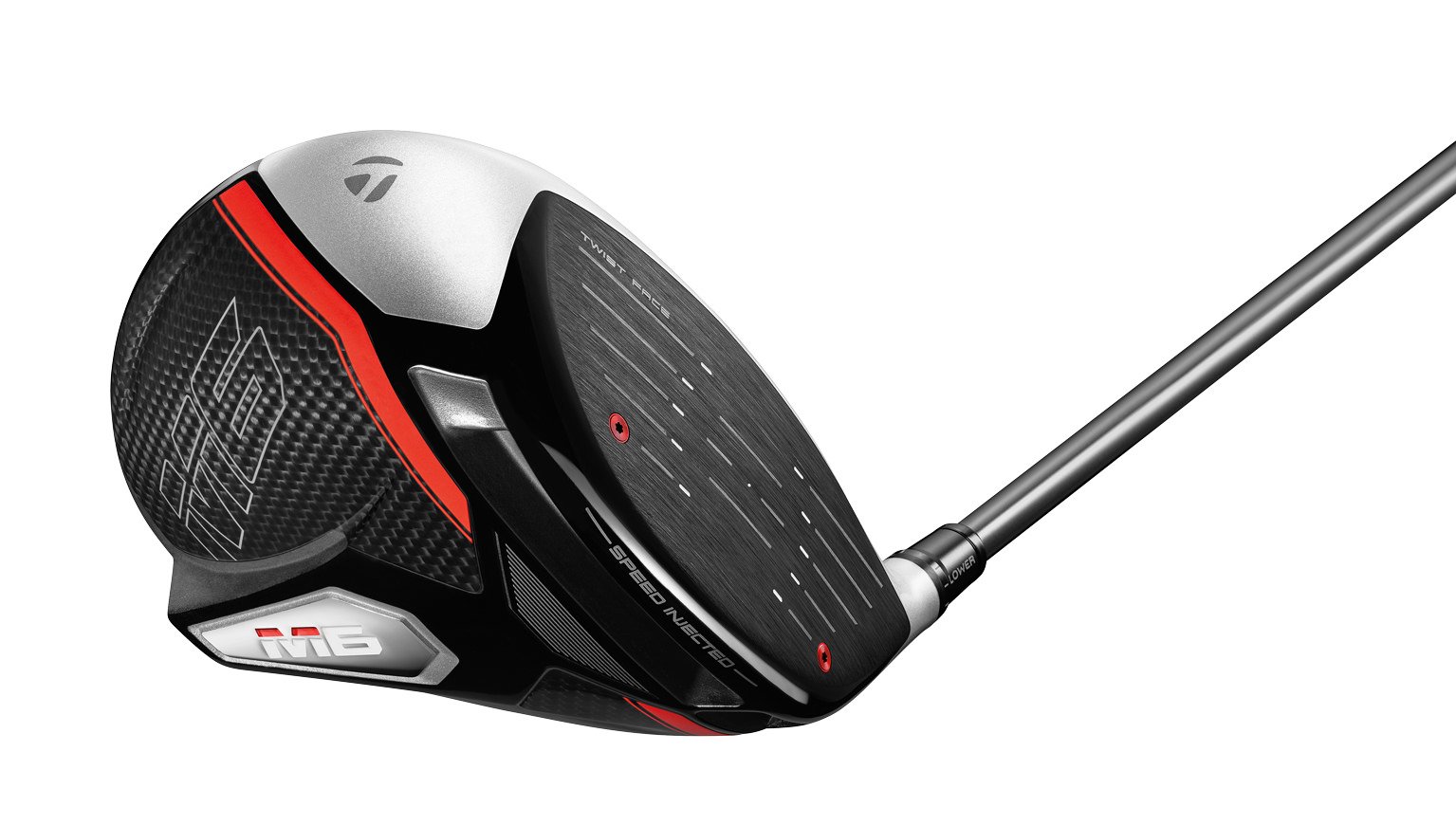
“Utilising a new manufacturing process, each head has been individually speed tested on multiple locations before being strategically injected with a tuning resin to achieve the tightest tolerance possible.
“The M6 delivers a hot, yet accurate package. When you combine the speed injection technology, Twist Face and the added clubhead speed through through advanced aerodynamics, it’s a driver that delivers on all fronts.”
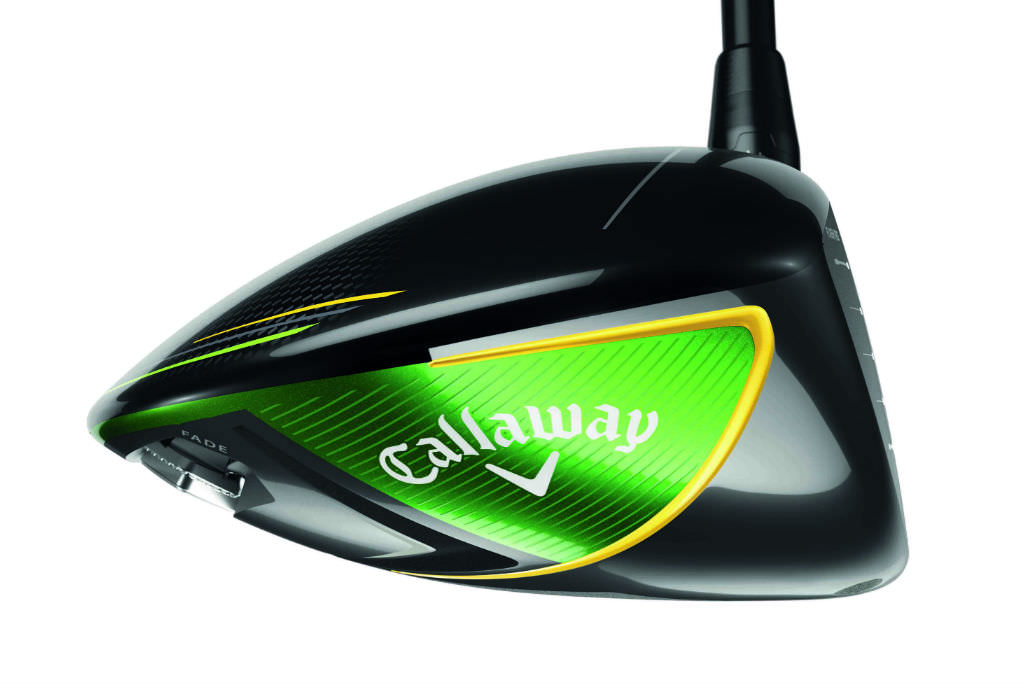
But it’s the way Callaway created this face which is most interesting.
They invested a lot of money in what they are calling a “super computer” where they were able to input all of the relevant data about how to make a fast driver. What materials, what size and shape, what tolerances it has to work to.
After around 15,000 iterations, this is the driver face the computer came up with. They say it would take a normal computer or laptop around 34 years to run the same calculations.
The result is a face which claims to offer 1.5mph extra ball speed on their existing models.
The Epic Flash and Epic Sub Zero drivers also have the Jailbreak technology we saw two years ago in the original models.
This helps to add further ball speed by allowing the face to take more load at impact thanks to two titanium bars connecting the crown and the sole.
And the use of a super-light triaxial carbon crown means enough weight has been saved to add a moveable weight on the rear of the sole of both new drivers.
Callaway are certainly talking a good game with the Epic Flash, but how did it perform against the TaylorMade M6? Find out on the next page…
TaylorMade M6 vs. Callaway Epic Flash Sub Zero: The results
Both these drivers look exceptional in the address position, I felt really comfortable standing on the tee and giving them a rip.
As you can see from the data below both drivers were offering great ball speed and carry distance. The Callaway was carrying slightly further on average than the TaylorMade. However on total distance the M6 came out on top.
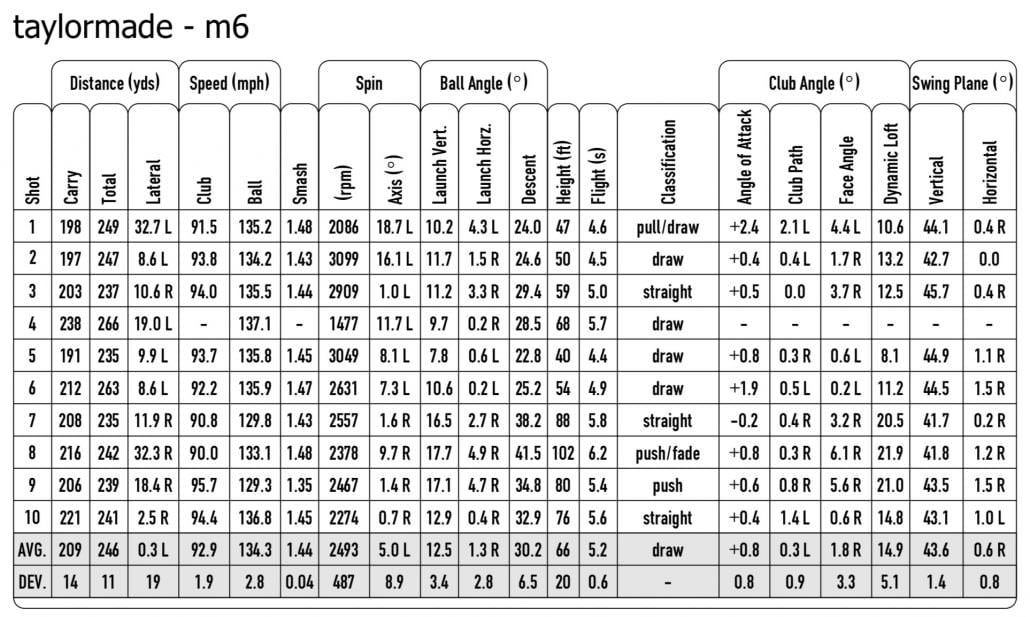
Overall the TaylorMade M6 generally had a lower ball flight but this was expected with the driver being 9° compared to the 10.5° head in the Callaway. When I was out using them on the course the TaylorMade was actually flying slightly higher than the Callaway but I think this was due to wind and shot shape on the holes we tested.
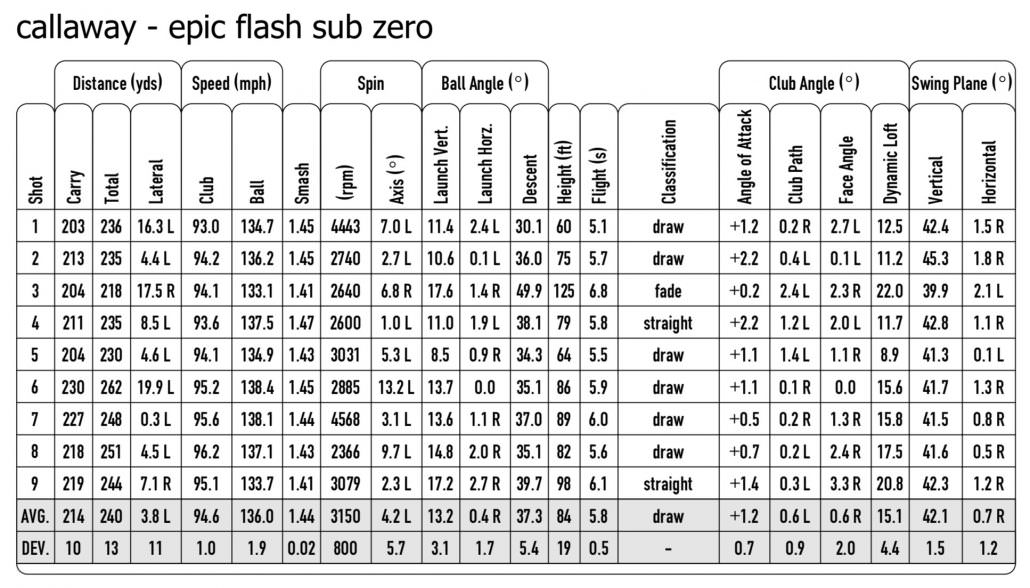
Generally for spin I’m looking for around 2,800 rpm (LPGA Tour average is 2,611 rpm) so the Callaway is spinning slightly above this while the TaylorMade slightly less. The spin levels were more consistent with the TaylorMade and I suspect if I had been testing a 10.5° head the spin numbers would of been at the level I am aiming for.
My favoured shot shape off the tee is a little draw and I did feel this was easier to achieve with the Callaway Epic Flash Sub Zero.
TaylorMade M6 vs. Callaway Epic Flash Sub Zero: NCG Verdict
Overall I did find that my dispersion was slightly tighter with the Callaway driver and I feel I would benefit more on the course from tighter dispersion over an extra few yards in distance. I also found it easier to control the shot shape using the Epic Flash Sub Zero.
Having said that I often struggle with hitting my driver too high into the wind so the lower ball flight of the TaylorMade M6 would benefit me in those situations.
The details
SRP: £449 (TaylorMade M6); £499 (Callaway Epic Flash Sub Zero)
Available: Now
More information: TaylorMade website and Callaway website