


Distance-measuring devices have become as common in the amateur game as double bogeys. Watches tell us front–middle and back yardages with a tap. Lasers can zap every tree, bunker and flag. Apps now estimate temperature, elevation, wind and effective playing distance. We’re becoming so indebted to technology that we’ll be using robots to hit our shots for us next.
- RELATED: Best Golf Rangefinders 2025: Top Models for Every Budget
- RELATED: Why are club players banned from using Slope? It’s time to change the rules
- RELATED: MILESEEY GenePro G1 Touchscreen & GPS Rangefinder review
Is all this technology making golf better? Or is it quietly stripping away skills that once defined the game? That was the debate on a recent episode of The NCG Golf Podcast, where Tom Irwin and Steve Carroll pulled no punches in arguing that distance-measuring devices may be doing golf more harm than good.
From pace-of-play myths to the erosion of course design principles, and from rules confusion to creeping technological dependence, the case for banning DMDs has never felt stronger.
The Pace-of-Play Myth
Many golfers claim that rangefinders make rounds faster, but the evidence simply does not support that belief. Even trials on the PGA Tour, where caddies currently spend time pacing yardages with meticulous precision, shaved only around five minutes from round times.
At club level, it can be argued the opposite is often true. Irwin challenged the broader assumption that rangefinders actually speed up amateur play.
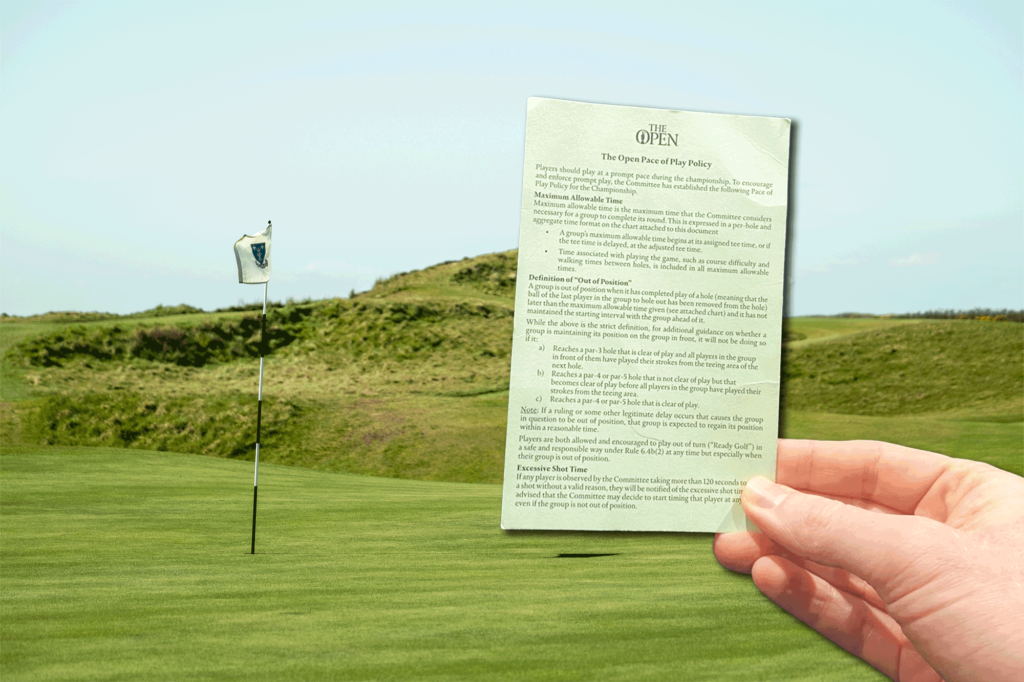
“People have lost touch with how quick you can actually play golf without any information,” he said. “Any information you give the amateur golfer is slowing them down because there’s just more information in the decision-making pot.”
This creates layers of decision-making that slow the game down. Golfers are no longer making instinctive decisions. Instead, they are scrolling, tapping and second-guessing.
Technology Is Making Golf Brainless
Rangefinders strip away some of the judgement and creativity that make golf strategic and enjoyable. To an extent, golf today does feel a bit more automatic and robotic than before the mass influction of technology into the game. The watch gives a number, the number dictates the club, and the golfer swings without truly understanding the shot they are attempting.
Advertisement
“The use of range finders and the use of DMDs makes the game automatic… it removes the thought,” Carroll believes.
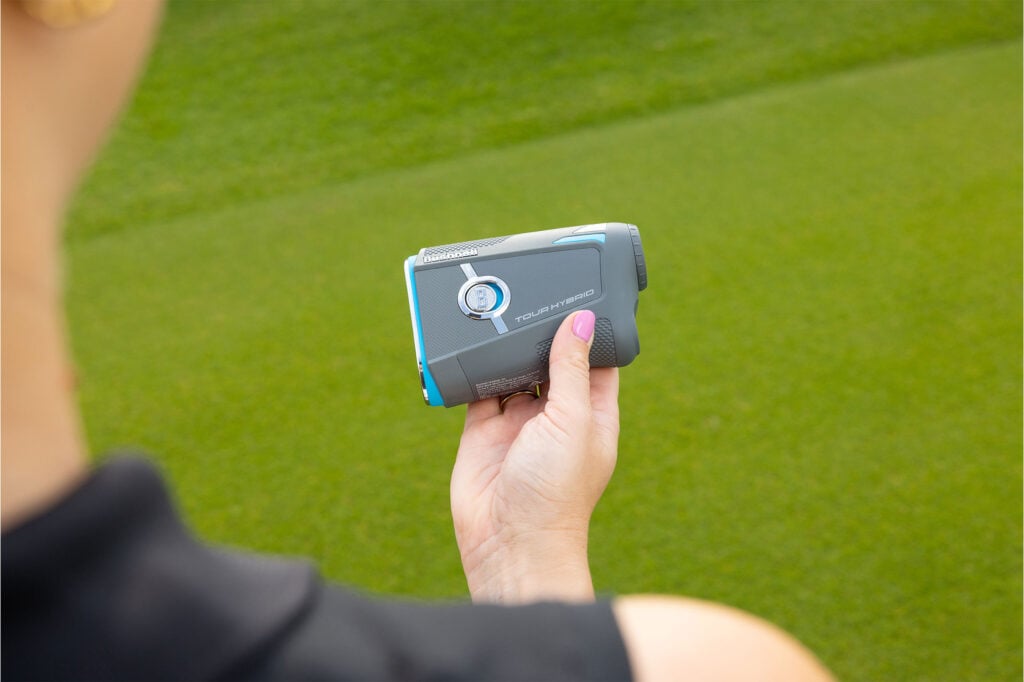
Golf use to demand feel, an understanding of trajectory, ground conditions, and wind. Now many players simply fire at the number displayed on their device, even if the lie, temperature, moisture or wind suggest something entirely different.
Many new golfers insist they hit a certain club a fixed distance because a range session once told them so. As a result, they have a tendency to ignore all the variables that actually influence ball flight on the course.
Course Architecture Is Being Undermined
Historical course designers, Alister MacKenzie among them, built their strategy around deception. False fronts, cross bunkers, and visual illusions were intended to disrupt a golfer’s depth perception and encourage thought and creativity.
A hole that looks 145 yards but is actually 162 is no longer a puzzle. A bunker that appears tight to the green but is really 40 yards short can no longer fool the eye. Golf becomes less about reading the landscape and more about interpreting a number on a screen. It feels as though we may be loosing the spirit of the game.
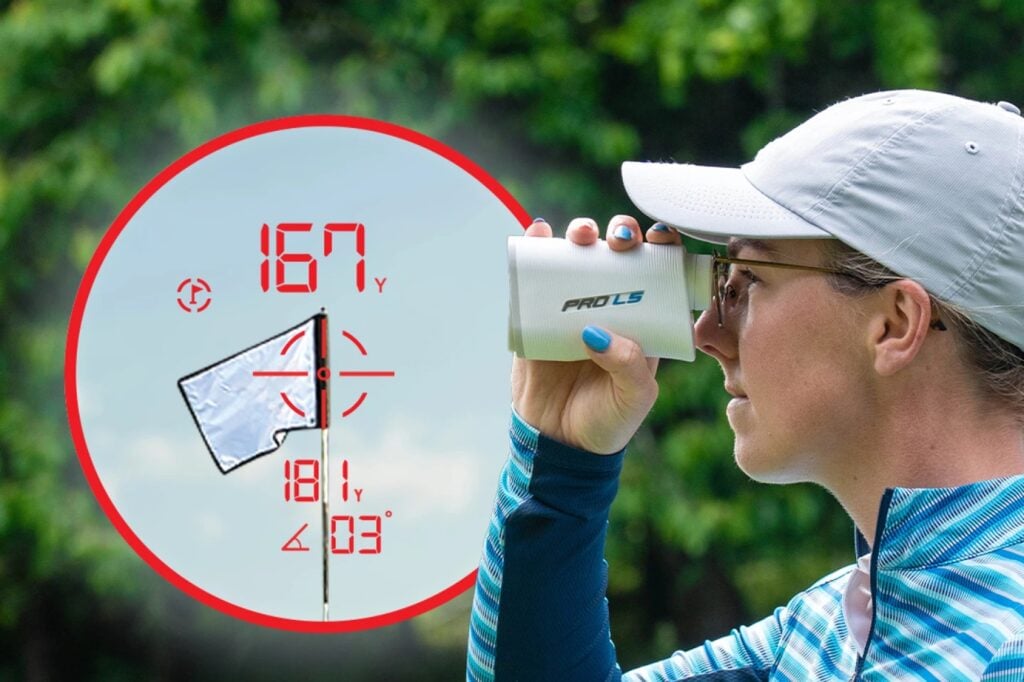
Irwin is under the impression that: “By adding in range finders and the ability to know how far something is, factually, you’re removing such a big part of the architect’s toolbox that you’re making golf less fun because you’re basically taking away the mystery.”
DMD Rules Are a Minefield
The modern Rules of Golf allow distance-measuring devices — unless they include prohibited functions. But the line between “allowed” and “not allowed” has become so blurry that even experienced players fall foul of it.
“I penalised myself for this in a competition earlier this year because I inadvertently accessed something that I wasn’t allowed to,” said Carroll.
“The rules on range finders and DMDs are a mess and they’re completely unenforceable.”
Golf Should Be an Escape from Technology
For a lot of people, golf’s value is partly in what it doesn’t share with the rest of modern life. Every inch of our work and social life seems to revolve around the use and dependence on technology. Golf has historically been a reprieve from this, but now it too feels engulfed with the latest technological developments.
“The whole world is mired in technology,” said Irwin. “Perhaps golf would be better placed if it actually rejected some of this stuff and said, ‘Actually, that’s not for us.’”

In a world of notifications, analytics, and digital overload, golf could stand apart. Instead, many golfers now spend their rounds looking at numbers on screens rather than the shape of the land or the feel of the wind.
It’s not as if this is helping to bridge the skill gap between your average club golfer and a scratch or better player. Although some may argue that giving amateurs more information simply replicates what the best players get from their caddies, it’s a hard sentiment to get behind.
“You can’t level the playing field,” Irwin claimed. “You can’t level it between you and a tour player, because the tour player is doing nothing but golf every day.”
Final Thoughts
It’s time to make golf more of an experience again. Golf isn’t supposed to be perfect information.
It’s supposed to be imperfect judgement. It is a sport that thrives on imperfect judgement in a way. There is far more merit in golfers utilising their own ability rather than a calculation.
Advertisement
Although technology can be incorporated efficiently into practice and driving range session – with trackman etc – on course it is may be time to rediscover what golf feels like when we trust our instincts again.
“If I was kind of like the boss of the USGA or the R&A, I think I’d be trying to say, ban them… let’s just say you can’t know how far it is,” said Irwin.
Whereas Carroll is under a different impression: “I am very much a tech person, I do like all my gadgets, I always have and I think I always will. So I wouldn’t ban them.”
Which side of the fence do you sit on? Let us know on by leaving a message!
Don’t forget to check out and like our YouTube channel – YOUR GOLF NCG – where you will find lots of hints, tips and equipment reviews.
Advertisement