


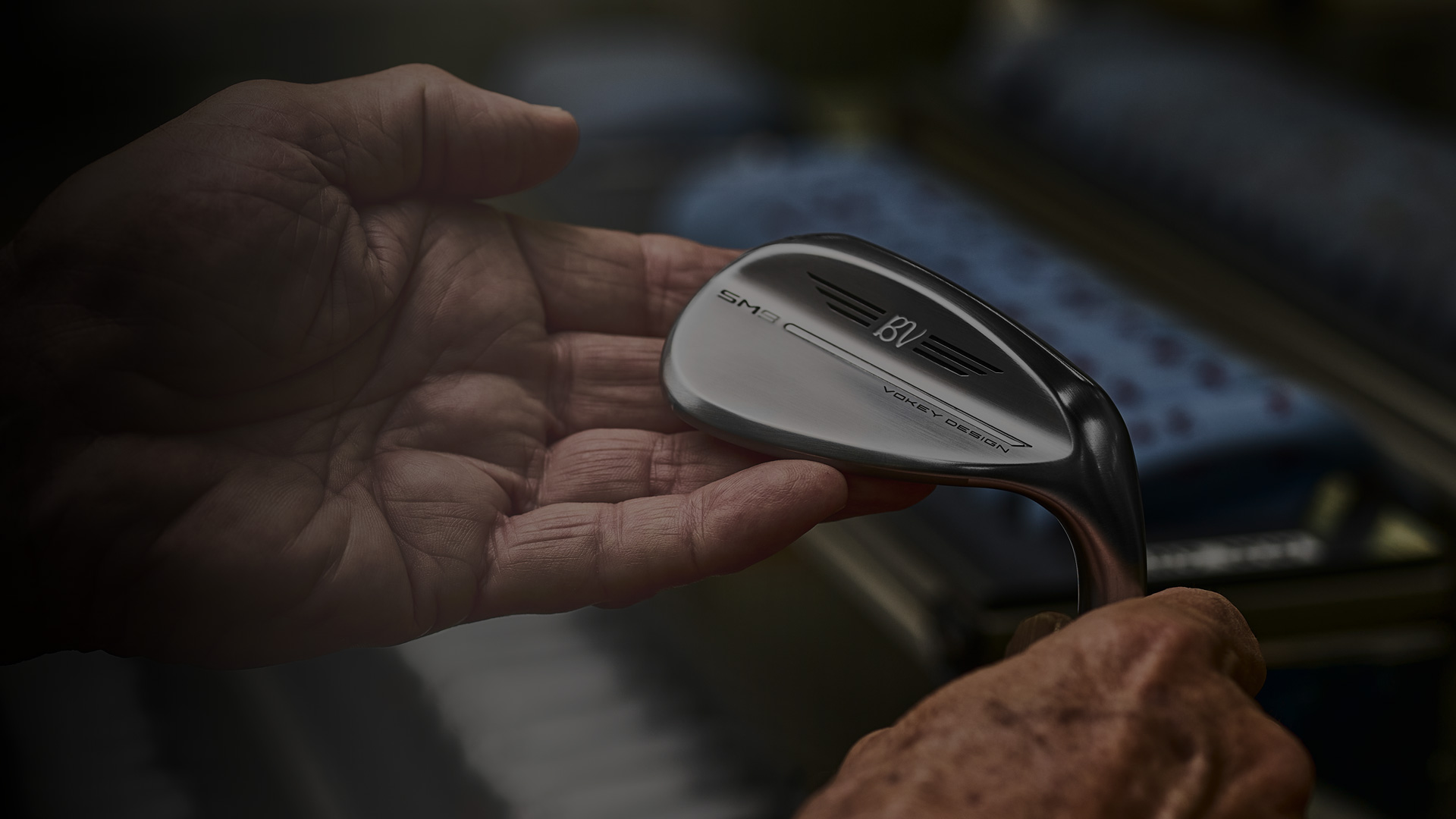
Aaron Dill is Titleist’s Director of Wedge Relations. In this blog for NCG, Aaron discusses how often should you change your wedges and well as explaining the key signs of spin decay you should look out for…
If you were to go through any club locker room and look at all the bags, you’d see tonnes and tonnes of old wedges, old clubs, and old grips.
The reality is on tour we learn every single week that spin plays an important role in performance and performance comes from control.
These guys on tour are really fortunate to have the support staff from Titleist, or whoever they are sponsored by, in the vans who travel to site every week. We are there to support the guys with whatever their equipment needs are. But spin plays a key role in performance and control, so we make sure those guys have sharp grooves.
How often should you change your wedges
On tour we have an annual calendar with a 1, 2, 3, 4 rule. Let’s use Justin Thomas as an example. He has 46-, 52-, 56- and 60-degree wedges in his set, so he’s going to replace his pitching wedge maybe once a year, his 52 twice, his sand wedge three times, and his lob wedge four or more times in a calendar year.

Of course that depends on the player. Some may use a 60-degree wedge for an entire calendar year, some will change it every two weeks. We have to create a general rule that we follow that way we are reminded to keep the players sharp and make sure they have everything to be successful every week.
As far as club level and amateur players go we would try and tell them if they are playing 75 rounds plus practice a year the wedge is going to start showing spin decay. Those are studies we ran, not just because we are in the business of selling golf clubs, but because the performance does change as your spin decays and the ball flies a little higher.
Advertisement