



If you want to ask someone about the weather, there is probably no one better to consult than your club’s course manager.
Greenkeepers are weather experts. Few spend more time peering at the skies, and poring over apps, as they try and predict if the forecasts are correct.
It’s imperative they’re on the ball as work on the golf course can depend on what happening mereologically. An unexpected storm can put the breaks on winter projects, or a sudden dry spell can change a club’s irrigation plans.
So what’s happening on the ground and how are they dealing with it? Over the next few weeks, we’re going to find out.
For Your Course, produced by the British and International Golf Greenkeepers Association, we spoke to three course managers from across the UK to understand how they overcome common problems that arise on golf courses during winter.
This week, we’re looking at the golf weather patterns your greenkeeping teams have been seen and how that has changed in the time they have been in their jobs.
Tackling those questions are Michael Rogers, course manager at York; experienced greenkeeper Jez Ward; and Antony Kirwan, the course manager at Romford and a BIGGA board member.
Golf weather: What have you been seeing at your course?
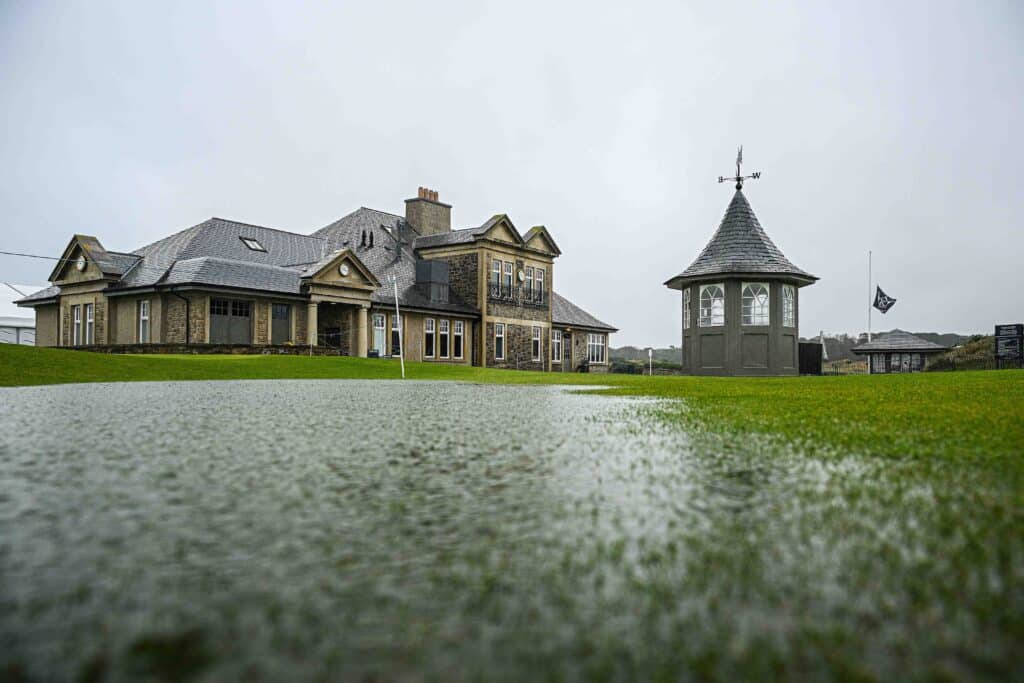
Jez Ward: In my relatively short time in greenkeeping, I’ve been through the Beast from the East, two severe droughts, the 46 inches of rain and then severe flooding of last year and then another extremely wet winter.
I don’t think I worked through a normal weather pattern, just a normal British summer that wasn’t extreme or a winter that’s not a white over or had dramatic rain figures.
Michael Rogers: Every year is different. The last 12 months have been extremely wet with constant heavy rain almost every other day.
Advertisement
February is traditionally one of our driest months, which is usually welcome after a wet winter and we often get a dry spring during the middle of March through April.
From Christmas until the start of spring, there is often not a lot we can do to keep the course open or closed. It’s down to the weather at that point.
That’s usually followed by a dry spell from the middle of March through until May, when we can go seven weeks with very little rain. However, the last 12 months have been very different and we’ve had constant rain since June 2023.
We got to October and November and the course was at saturation point. There was no room in the ground for any more rain.
An additional 5 or 6mm of rain at that point would have closed the course and we stayed at that saturation point through until May.
Antony Kirwan: I’ve been collecting data for the last six years at Romford and that’s shown me that extremes of weather are becoming more common.
In 2022, we had three heatwaves within the space of 12 weeks – all touching 39 to 41 degrees over four or five days. Then you’ll get no rain for 60 days.
We’re seeing more extreme weather and there doesn’t seem to be a pattern to it. We’re so different in my area, Romford, compared to Birmingham – two hours up the road – where they’re probably getting twice our yearly rainfall. West Lancashire will be comfortably double what we are in the space of a year.
And it’s coming in big hits, which golf courses can’t cope with. They can’t cope with 30mm in a day, or even an inch in an hour, and that’s what we’re seeing a lot more.
Advertisement
We’re not seeing the pattern where it rained for a day or two days and you got an inch. You could get that inch of rainfall in two hours and that causes more flooding, not only on the golf course but also in town centres and urban areas.
The data I’ve gathered has shown that the total amount of rainfall actually hasn’t increased and we continue to average 650mm a year.
However, what has changed is that rather than being spread evenly throughout the year, we might get 100mm of rainfall in three or four days and then not a drop for a month. We can’t predict when this heavy rainfall events are going to happen, which makes it difficult to plan ahead.
How much have weather patterns changed in the time you have been in the job?
Michael: What we are seeing is extremes. It’s hotter summers and wetter, milder winters. I’ve been a greenkeeper for 33 years and we used to get a lot of snow in September, October and around Christmas.
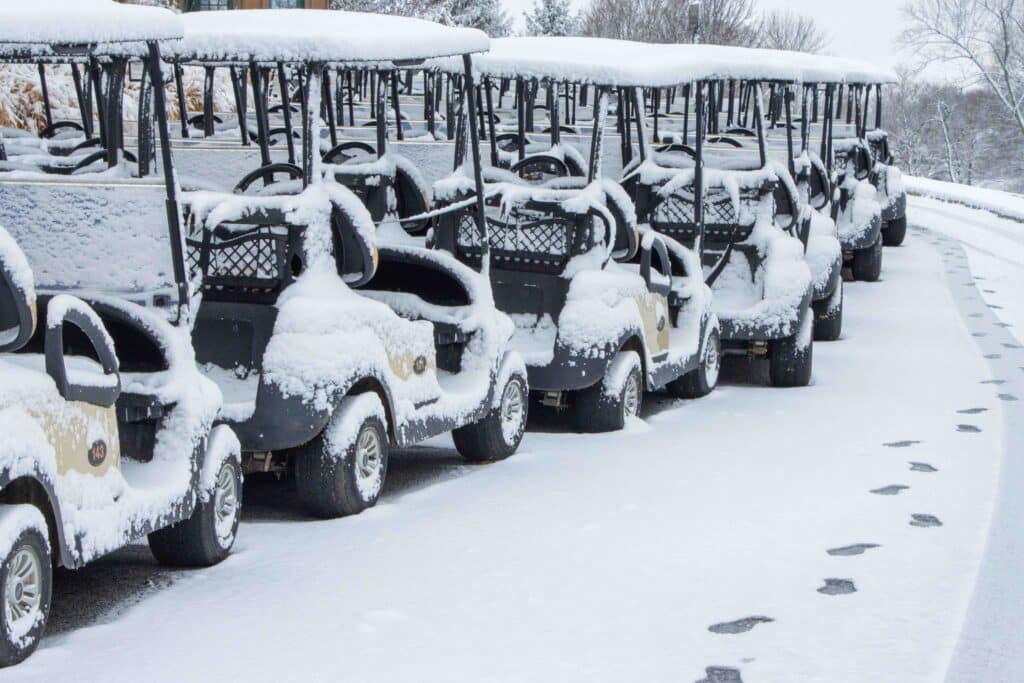
If you get two weeks of hard frost, that’s our winter these days. Last year, just before Christmas, we had a couple of weeks where it was -4 and -5 degrees Celcius for probably two weeks.
But other than that, we’re just getting a little morning frost most of the time and we’re getting a whole lot more rain. When it’s frosty and cold, you don’t normally get rain because you’ve got clear skies. When it’s a bit milder, the clouds come across and it leads to constant rain.
- This article appears in Your Course, the twice-yearly publication from the British and International Golf Greenkeepers Association. Your Course invites golfers to gain a deeper appreciation of what preparing and maintaining a golf course really involves. Head to www.bigga.org.uk to find out more.
Now have your say
Golf weather: What do you make of these comments? Have you noticed a change in the weather at your golf course and how it looks? Let us know by leaving a comment on X.
Advertisement