



Slow play – it’s the gift that keeps on giving for those of us in the golf media. Whether it’s five-and-a-half and six hour rounds on tour or Tiger Woods getting pinged by a shot clock in a simulator game, the length of time it takes to hit a ball into a hole does ruffle many of our feathers.
So it should too. While we’ve got to accept that walking six miles essentially around a big field is going to take time, unnecessary delays are a frustration.
I’m not going to sit at my keyboard advocating that speed golf is the future. But competition and social rounds at your club that regularly pass the four hour mark shouldn’t really be happening and I don’t care how they are justified. When golf is taking that long, there are definitely things you can do to trim the time.
So if the clock face is whirring like something out of Back to the Future when you’re on the course, it’s not just up to us but clubs as well to play their part in getting everyone round a little faster.
It hardly needs to be sending a rocket to the moon. Here are five easy things you can press your clubs on to help us all save some precious seconds the next time you’re at the course…
Here’s how you can sort out slow play at your club

Bring in a pace of play policy
The Rules of Golf offer a number of ‘recommendations’ to ensure a prompt pace – making a shot in 40 seconds is one that everyone mistakes for a rule.
They, of course, are open to interpretation.
But that doesn’t stop your club jumping in with both feet to set some strict limits. Committees can adopt a local rule setting a Pace of Play policy.
That actually gives them some pretty wide powers. The policy can set a maximum time to complete a round, a hole, or even a stroke, and those who don’t follow those rules can be penalised for causing an unreasonable delay.
Advertisement
Sanctions can range from a stroke, in the first instance, to disqualification. So just because the tours aren’t getting to grips with slow play doesn’t mean your club can’t. And it doesn’t need a load of marshals to enforce either. It’s a purely stopwatch exercise. Write down the round times and find the culprits.
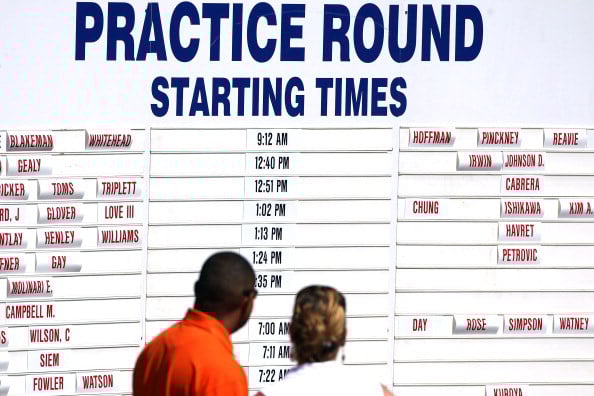
Spread out tee times
Such an easy starter for 10, but just try and convince your golf club.
They are businesses and the more tee times they can cram in the better they think it is – whether that’s satisfying member demand or cashing in on visitor play.
Clubs are also under big pressure on Saturdays. The days of golf membership as a status symbol are long gone. If you’re paying £1,500 a year, you’re going to play and you’re largely going to try and do that on a weekend.
But eight-minute starting intervals are utterly ruinous for pace of play. Too many players are on the course at the same time and, as soon as you hit an early par 3 or a group gets into a bit of trouble, a traffic jam ensues.
Increasing those intervals to ten minutes for threeballs and 12 for fourballs, as recommended in the R&A’s Pace of Play Manual, would dramatically reduce the amount of time you’re stood idling around on the tee fighting frustration.
But when they’ve got members moaning because they can’t play when they think they’re entitled to, or they’re relying on hitting a green fee income, you can understand why this entreaty often goes in one ear and out the other.
Advertisement
If people are walking off, though, or visitors are saying the round took too long, it’s foolish not to listen.
Cut the rough
I twitch uncontrollably when I see an average layout describe itself as a ‘championship course’. Royal Birkdale is a ‘championship course’. Yours is not.
Yet those two words are also synonymous with a couple of other things – back tees stretching to the limits of the property and rough that makes a US Open look like an American Ryder Cup venue.
There is no surer path to a five-hour medal round then knee-high, ball hiding, confidence destroying, fescue that is reaching up to your hips in mid-summer.
The three-minute rule for ball searches helps, for sure, but if you’ve got three groups on a par 5 all spread out left and right vainly hunting for a ball in the thick bund then it doesn’t really matter if it’s three or ten minutes. The hole is still going to take an eternity.
There are some people, though, who don’t think a course is a proper test unless it’s playing like Carnoustie. I’m sorry to point this out, but most of you are just not good enough to deal with this challenge – and everyone else would rather they didn’t spend 30 minutes a day vainly looking for balls.

Name and shame?
If the carrot of cajoling isn’t working, and you’re not appealing to the better nature of these tortoises, it’s time to wield the stick.
Most of us know the culprits – the players who make eight practice swings before every shot and then chunk it 20 yards before going through the whole tortuous process again.
Next time they’re holding everyone up – and are unrepentant about it – get the committee to do something about it. Ask them to move to the back of tee times so they can’t hold everyone else up. Would naming and shaming spur them into quicker action?
Advertisement
If that doesn’t work, then stop them playing in competitions until they’ve learned how to get a move on.
Mix up the tees
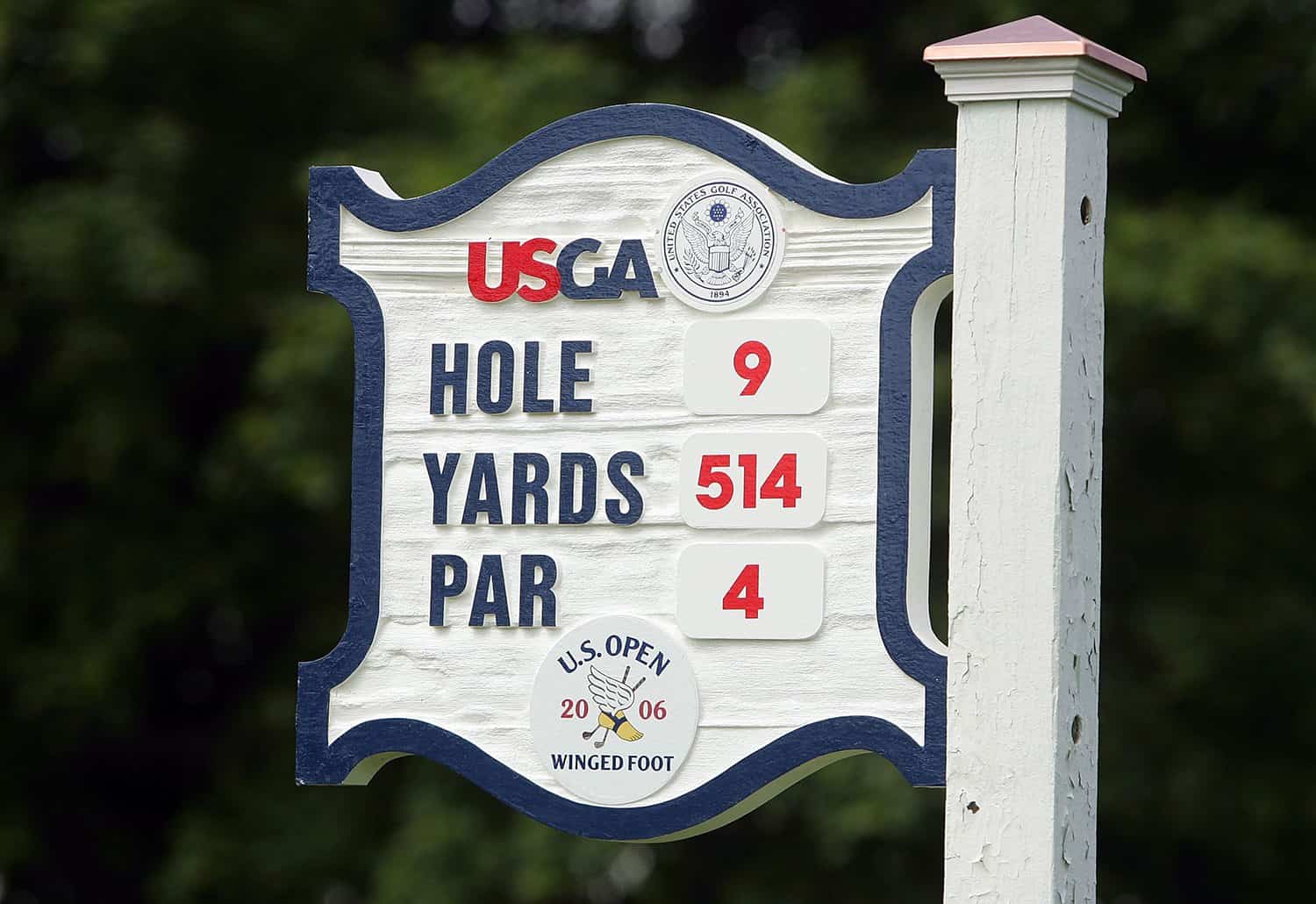
I know a lot of men out there think any event that isn’t held off the very back tees is somehow questioning their masculinity, but does every single competition have to be held off the tips? Don’t you get bored?
All a competition has to be played on is a rated course. So what does it matter what colour you choose to tee up.
A shorter course can very often mean a quicker round. And, even better, why not just get rid of the traditional colours and rate those various options on ability rather than gender?
Most of us would probably have a much more enjoyable round on a 5,800-yard course rather than a 6,700-yard monster.
Now have your say on slow play
What do you think about these thoughts on slow play? Do you have a problem at your club? Let us know by leaving a comment on X.
- NOW READ: Forget the fines for slow play. There is only one penalty that will speed up the tour pros
Advertisement