


It will be at least another four years before any golf ball roll back measures apply to any of us.
The original implementation date of 2028 to reduce the distance of the golf ball at the top level of the game is now out of the window.
The initial announcement by the R&A and USGA at the end of 2023 heralded seismic changes in the game. But on the eve of the 2026 US Open at Shinnecock Hills, the R&A and USGA jointly revealed that after further consultation with everyone involved, the Overall Distance Standard (ODS) testing of golf balls will not change in any sphere of the game until January 2030.
Let’s get into the details of this, discuss why this has happened and what the future could hold.
Everything you need to know about the golf ball roll back

What is the golf ball roll back?
In December 2023, the R&A and USGA announced a universal golf ball roll back that would force everyone who plays the game – professional or amateur – to play a ball that travels a shorter distance.
The roll back was meant to come into effect in the professional game from January 2028 and apply to all players from January 2030. For club players, nothing has changed, except now, we could be looking at an even later date.
On June 17, 2026, it was revealed by the governing bodies that the intended phased implementation was addressed in feedback with major stakeholders. The statement also said the R&A and USGA would assess options to determine a path forward, and that there will be no change to the ODS testing approach until January 2030.
“Feedback from the industry on the Notice and Comment related to the date of implementation of the updated ODS testing approach indicated that the majority support a single-date implementation (2030) versus a two-date, phased implementation (2028 and 2030),” the statement read.
“Constructive discussions between the governing bodies, PGA Tour leadership, the PGA Tour Player Advisory Council (PAC), DP World Tour leadership and other stakeholders yielded three key outcomes: (a) recognition that distance continues to increase at the elite level; (b) a concern by the Tours that the updated ODS testing approach may not achieve the desired results; (c) a collective willingness to reconsider alternative approaches that may more materially impact the pace of future distance increases, while minimising disruption to the overall golf market.
Advertisement
“Given these developments, The R&A and USGA will take the appropriate amount of time to assess a range of possible options and determine the path forward. Specifically, the governing bodies will work closely with key stakeholders – including the PGA Tour, DP World Tour and their respective members – to review, test and implement options that have a meaningful impact on distance at the elite level.
“These efforts will ensure the elite game does not become too one-dimensional while continuing to emphasise the importance of shot-making. There will be no change to the ODS testing approach until January 2030 while these options are evaluated.
“The R&A, the USGA, PGA Tour and DP World Tour are confident in the path forward and committed to working collaboratively, and with other key stakeholders, to ensure the long-term health of the game.”
What’s the background?
The R&A and USGA said their decision was designed to “reduce the impact increased hitting distances have on golf’s long-term sustainability while minimising the impact on the recreation game”.
A Distance Insights Project, the results of which were published in 2020, said there had been a century-long trend of increased hitting distances in golf, a cycle that was “detrimental to the game’s long-term future”.
The project also found that the strategic challenge presented by many golf courses could be compromised, “especially when those courses have not or cannot become long enough to keep up with increases in the hitting distances of the golfers who play from their longest tees”.
This risked, it believed, many courses “becoming less challenging, or obsolete”.
The project also raised concerns that ever-increasing distance would undermine the range of skills needed to play the game successfully, would worsen pace of play, and that the game was getting too long – even off the forward tees – for many recreational golfers.
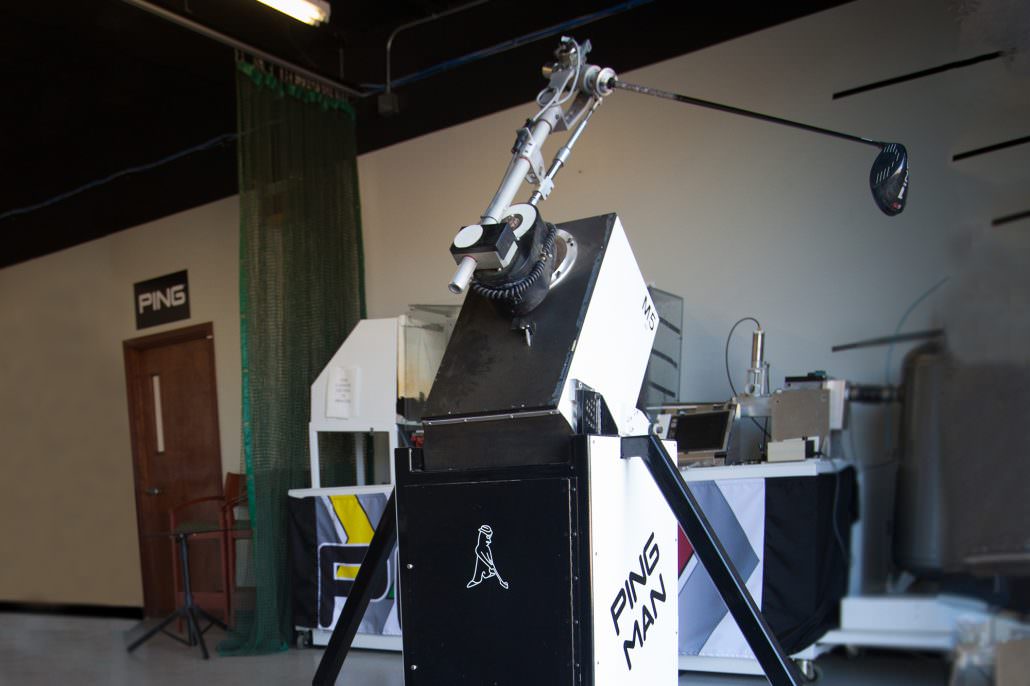
The governing bodies intended to update the testing conditions used for golf ball conformance under the ODS. This is the maximum distance a ball is allowed to travel when struck. It’s currently 317 yards with a three-yard tolerance.
While that standard would be the same, the clubhead speed used in testing would be increased from 120 to 125mph (176 to 183mph ball speed). There would be a spin rate of 2,220rpm and a launch angle of 11 degrees.
It was going to be the first update to those conditions since 2004, which were 120mph, 2,520rpm and 10-degree launch angle.
Before all of this, the R&A and USGA proposed a local rule that would give tournament organisers the option to require the use of a ball that didn’t travel as far.
It was designed only for use in elite competitions and was meant to have “no impact on recreational golf”. The issue was that it would have basically bifurcated the sport.
With the R&A and USGA committed to using it in their championships – including The Open and the US Open, and the Masters likely to follow suit – it would have meant professionals and club players using different equipment.
What constituted elite? The line was blurred at the top-level amateur competitions and there was a fear the leading men’s and boys would be chopping and changing between conforming balls depending on what event they were attending. Someone was bound to get disqualified.
Advertisement
So when the two governing bodies considered this, following a consultation period, they concluded that a Local Rule wasn’t the answer. The golf ball roll back would be universal. Now, we are in the present day to the latest update at the 2026 US Open.
What does the rest of the golf industry think of the golf ball roll back?
It’s a mixed picture. As you might expect, those who manufacture golf balls were far from happy.
“As a brand that prioritises improving product performance for golfers of all skill levels, the decision to proceed with the golf ball roll back is disappointing,” said TaylorMade chief executive David Abeles.
“While appreciative of the opportunity to have a seat at the table and a voice in the debate, we feel like the roll back is simply disconnected from what golfers believe is best for the game.”
“We do not believe this is in the best interests of the game. We don’t agree that there is a distance problem in the game,” said a Titleist spokesperson.
The PGA Tour have been equally unenthusiastic, arguing that the increase in test clubhead speed to 125mph was “disproportional to the rate of increase we see when analysing PGA Tour radar data on launch conditions”.
Commissioner Jay Monahan told members: “Therefore, we do not support today’s announcement regarding the increase to 125mph, believing a more moderate adjustment is appropriate.”
Golf course architects, on the other hand, have welcomed the plans. The European Institute of Golf Course Architects (EIGCA) and the Society of Australian Golf Course Architects (SAGCA) jointly backed the initiative.
“As golf course architects, we believe the reduction of hitting distances is vital to protect the game and reduce the environmental impact of courses,” said EIGCA president Caspar Grauballe.
“We are therefore very positive regarding the announcement made by the R&A and USGA on further limiting the distance of the golf ball.”
Advertisement
Rory McIlroy and Tiger Woods have also expressed their support of roll back and, crucially, Augusta National is in favour as well.
Advertisement