



Look at the picture. That’s not a bunker, it’s a crime scene. The distinctive treads of different shoe types dive deep into the sandy surface, as do the scars carved out by half a dozen attempted escapes.
I didn’t want to get in there and play my ball. I wanted to cordon it off, send in forensics and sweep for fingerprints.
Maybe you look at the image and are shocked. Maybe you don’t care. What bothers me more is that it is not an unusual snapshot.
There were examples of this all over the golf club. And this wasn’t a pitch and putt, either. It is a well-heeled club where it costs thousands a year to be a member.
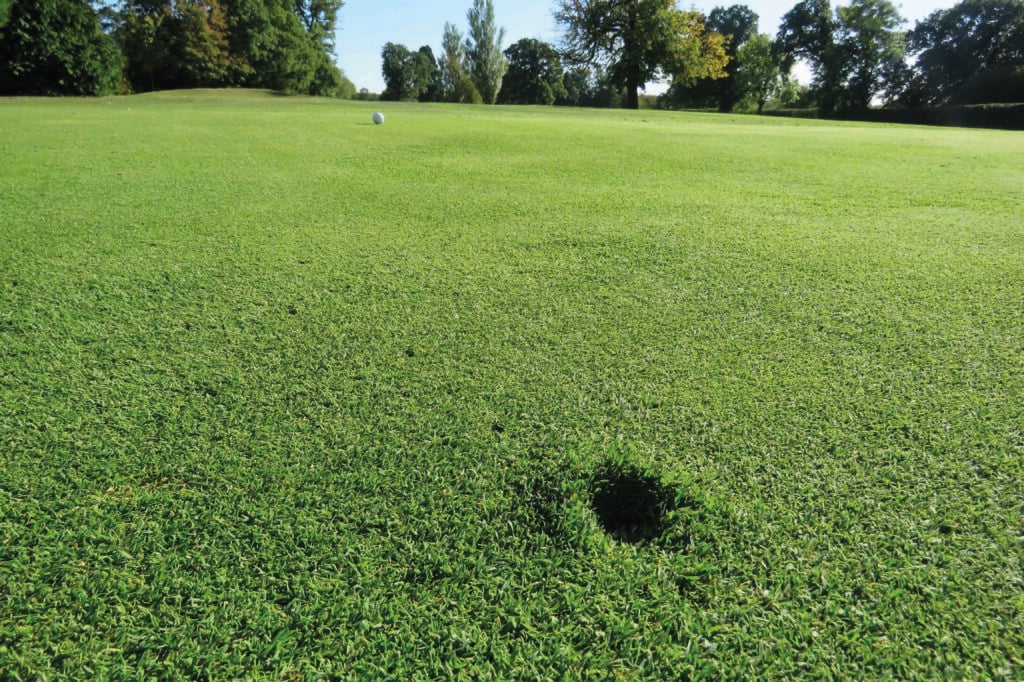
I could have shown you similar portraits of destruction on the greens. A busy tee sheet that day had left many looking like they had been hit by miniature mortars – the pockmarks wounding the otherwise superbly manicured surface.
Golf etiquette is atrocious and we’ve got to do something about it.
Of course, such failings are not new. Players have been bemoaning standards ever since someone had the bright idea of using a stick to whack a ball around a field.
More than 130 years ago in his seminal work, Badminton Library of Golf, Horace Hutchinson exclaimed that “no golfer is worthy of the name who does not put back his divot”.
Clubs have putting up signs and, latterly, sharing social media posts begging golfers to clean up after themselves for as long as I’ve been playing the game.
Some went the extra mile. Troon Golf once gave a free beer to those who got their attention by tweeting themselves repairing a pitch mark.
But, if anything, things have got worse since Covid. Being locked up for several months seems to have brought out the more feral aspects of some people’s personalities.
Advertisement
Whether that’s misbehaving during concerts or failing to rake a bunker after their size 12s have ploughed a route through it, there is a sense of entitlement that appears to have worsened after the doors were reopened.
On the golf course, that’s translated into, ‘that’s not my job’, ‘the greenkeepers are paid to do that’, or ‘I just can’t be bothered’.
It the equivalent of chucking the takeaway trash out of the car window. Someone else will sort it.
Golf etiquette battle: Does basic etiquette really matter?
While some of these things seem small fry – should someone get that upset about their ball appearing in some footmarks? – they add up to an image of a sport that is losing its way on the course.
That’s because etiquette does matter.
It has practical effects. Unraked bunkers divert greenkeepers from other jobs they could be doing. Unrepaired pitch marks damage the green and take weeks to heal.
A slower group that won’t let faster players pass through causes short tempers and a traffic jam on the golf course.
I’m not going to fall into the trap of arguing good etiquette is what sets golf apart from other sports. Plenty of others, just take martial arts as an example, are built on codes of respect.
But it is an important part of golf’s overall appeal – a rite of passage that teaches life skills and moulds people into citizens who show courtesy and respect for each other.
And contrary to what you might think, what you wear is an irrelevant distraction in that debate. It’s always been what you do that counts.
So if we’re agreed we’ve got an issue, what can we do about it? It’s time we all take responsibility.
Advertisement
That means leading from the front, going above and beyond in making sure our golf courses are as presentable as they can be. If that’s spending a few extra seconds tidying up someone else’s mess in a bunker, then so be it.
But it’s also about calling out those who don’t look after the course. It’s about making it socially unacceptable within the club environment to fail to uphold these basic tenets.
You wouldn’t play with someone who drops a ball from their trouser pocket. Why team up with someone who refuses to repair a pitch mark?
That kind of action can only be effective, though, if we’re a collective. Committees can appeal and plead as much as they like – and they do need to take a lead – but golfers have to be the ones to make it happen.
Because it’s only if we’re all in it together that we can reverse these slipping standards and perform a great etiquette reset.
- This piece also appears in the GCMA’s monthly Insights newsletter that is packed with expert opinion on matters relating to golf club management. Sign up to Insights for FREE here.

Now have your say
What do you think of this argument on golf etiquette? Let us know your thoughts by leaving us a message on X.
Advertisement