



We can’t seem to think about technology without imagining some world where robots are roaming the earth and
For Your Course, produced by the British and International Golf Greenkeepers Association, we spoke to three course managers from across the UK to understand how robotic mowers and other areas of automation are impacting their courses and the wider golf industry.
This week, we ask whether the ever increasing uses of robotic mowers might threaten greenkeepers’ jobs, if technology could actually help to bring in new blood to the industry, and how the job will develop in the future.
Tackling those questions on automation and technology are Steve Lloyd, Course Manager at The Worcestershire, and BIGGA board member; Deeside Course Manager Neil McLoughlin and Master Greenkeeper Sam Evans, who is Course Manager at North Hants.
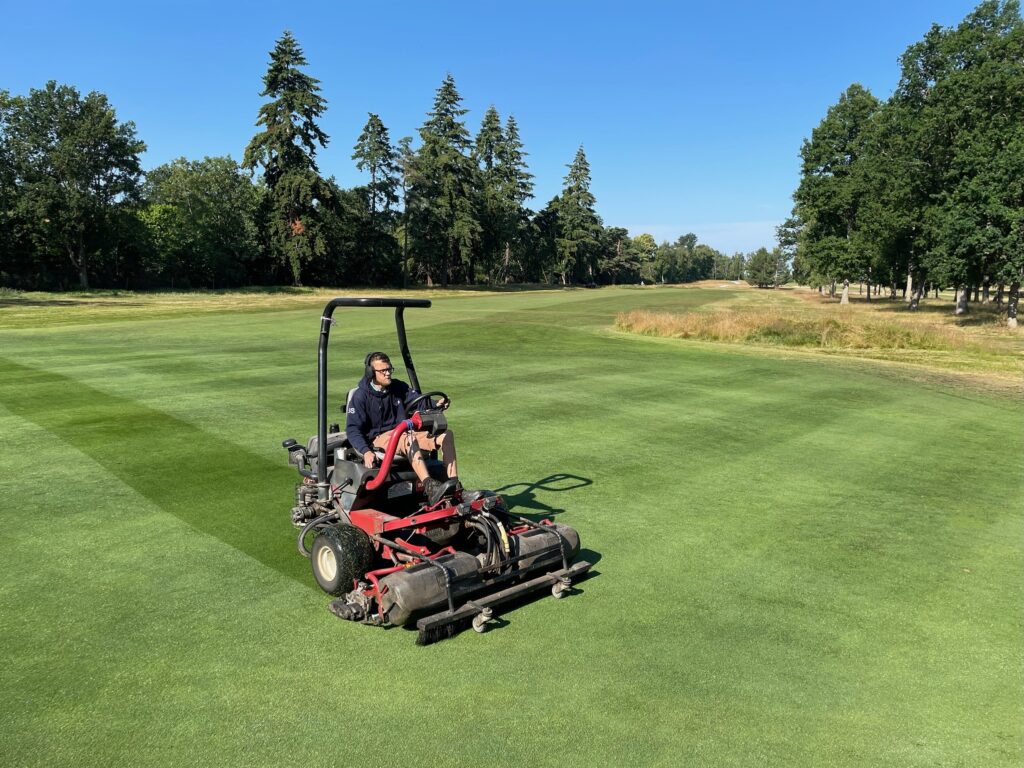
Do you worry that an increasing reliance on automation could threaten greenkeeping jobs?
Sam: I think automation can only enhance the golfing experience that we can offer. Any good greenkeeper should hopefully have nothing to worry about. There will always be a place for human intervention with our roles.
Steve: I don’t think anybody’s looking at it as a way to get rid of staff. Obviously, there are instances where clubs are short on staff, so they might see technology as a way to plug a gap, but primarily it gives you the ability to leave a more trivial job in the hands of technology and utilise your qualified staff to handle the skilled and technical side of things.
Neil: We’ve actually taken on a member of staff since we got the robots. There are obviously staffing challenges in the industry, but I think if a club is looking at buying robots to reduce numbers, then in my eyes that club isn’t being run properly.
If you could automate any task that forms part of your role, what would it be?
Sam: Having the ability to automate fairway mowing, the mowing of our practice facility and the clubhouse lawns would mean guaranteed quality and that staff resources could be allocated elsewhere. When we next look at a sprayer on our machinery replacement plan, I feel a GPS option would be a big benefit to ensure accuracy of application and consistent performance.
Advertisement
Neil: I’d happily let a robot take care of all the paperwork and allow me more time to be out on the golf course. To be honest, most people who come into this industry do it because they like being outside on the course doing the work that people can see the benefits of, not because they wanted to be sat in an office on the computer writing a report or keeping records.
Steve: Much like Neil, I’d love to just walk in and all my paperwork has been done, because that’s the real headache! But, for now, that’s still our job, and even on that front there are ways that technology can help. Out on the golf course, if I could get an autonomous solution that would deal with mowing fairways to the standard we require through the night so that I didn’t have the disruption for my members, and we walk in at six o’clock in the morning and it’s done, that would free up a huge amount of time in the season so that I could have my staff doing more detail work.

Could the growing role of technology attract people to greenkeeping?
Steve: Absolutely. I’ve got my two sons coming towards the end of their time at school, one of them wants to come into this industry and the other one’s very computer-savvy.
They both came in and helped out during the summer holidays and even Ethan, who is not looking at being a greenkeeper, likes the technology side of stuff. There’s a different avenue there that didn’t exist before and we can really show people this isn’t just a manual job.
Advertisement
Sam: I think the growing role of technology will mean the greenkeeping industry will attract different people from different backgrounds.
If we take the vehicle market into consideration, a vehicle mechanic used to need a screwdriver and spanner to make repairs, they now need a small computer to plug into a vehicle. I can see more people with computer backgrounds or technological knowledge being attracted to our industry in the same way.
How do you see technology impacting greenkeeping in the future?
Steve: I think the main thing it will do, in whatever form it takes, is allow us to make better educated decisions about course maintenance, and that will mean being more efficient.
With tools that give us access to more data, we can be a lot more precise in when, where and how we target our efforts.
There’s huge pressure on water resources, and golf clubs will need to demonstrate a high level of efficiency in how they’re using it. When you have the kind of data that new technology can provide, it makes that whole process a lot easier.
Neil: We should always be working smarter, not harder – and that’s where technology can make a difference. If we can come up with more efficient and effective ways to produce a better end product, then that makes sense to me.
I won’t jump on every bandwagon that I see, but I’ll investigate it, do a demo and then you get to see the proof in the pudding, as we did with autonomous mowers. That’s one of those examples of working smarter, not harder.
- This article appears in Your Course, the twice-yearly publication from the British and International Golf Greenkeepers Association. Your Course invites golfers to gain a deeper appreciation of what preparing and maintaining a golf course really involves. Head to www.bigga.org.uk to find out more.
Now have your say on robotic mowers
What do you think about the rise of autonomous mowing and robotic mowers in the greenkeeping industry? Is it making your club better? Let us know by leaving a comment on X.
Advertisement
Advertisement