

Finding the right set of golf irons is crucial for mid-handicap golfers looking to improve their game. With several top brands offering advanced technology and performance features, choosing the best irons can be a challenge. But fear not as we have done the heavy lifting for you.
- RELATED: Best Irons for High Handicappers 2025: Easy launch and distance
- REATED: The Most Forgiving Irons 2025
- RELATED: Best Game Improvement Irons 2025
Mid handicappers typically play off a handicap between 10 and 20, which means their iron needs fall somewhere between game improvement and players’ performance. Each iron set is designed with unique features to help mid-handicappers achieve greater distance, accuracy, and overall performance on the course.
In this article, we’ll be taking a closer look at some of the best golf irons for mid-handicappers in 2025. The NCG review team has put all the newest and best options on the market to the test to see which may be your new set of irons. Check out our guide below to see which irons could be helping you knock some shots off both your score and handicap this season.
Best Irons For Mid Handicappers 2025
Ping i240 irons

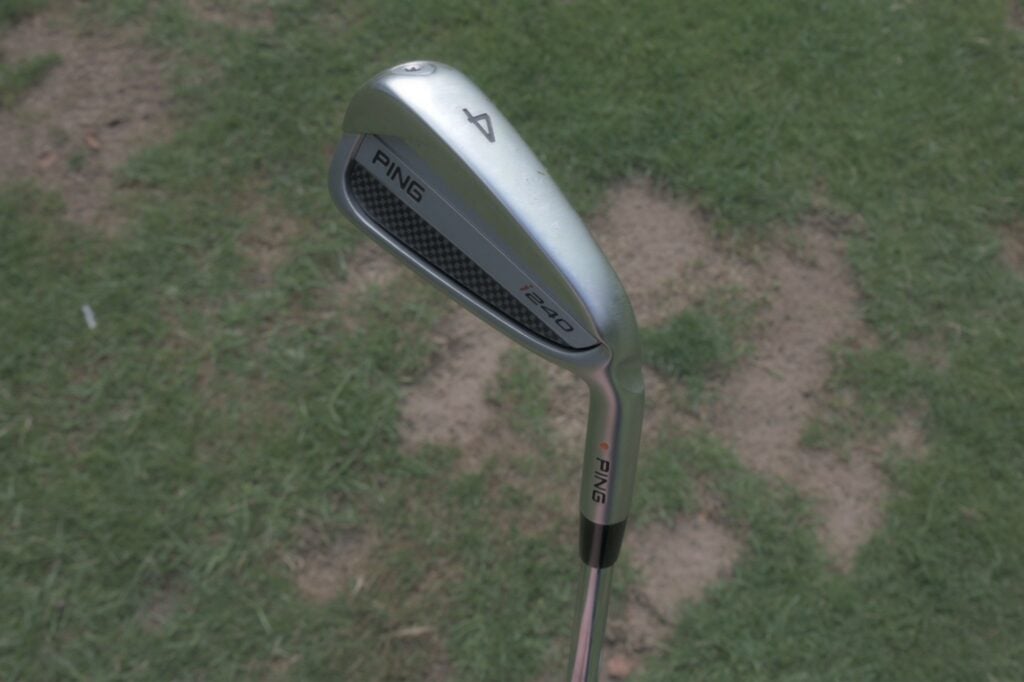
The Ping i240 irons really are a standout entry in the players’ distance category, offering a rare blend of precision, feel, and forgiveness. With smarter weight distribution, revamped grooves, and improved launch characteristics, they make a strong case for inclusion in the bags of all mid to low-handicap golfers.
They are the perfect bridge between Ping’s tour-grade Blueprints and their more club golfer friendly G-series. These are irons built for consistent ball-strikers and produce plenty of spin and height to attack those greens and pins.
Pros:
- Excellent spin and height control, especially from mid to long irons
- Top-tier forgiveness with minimal drop-off on off-centre hits
- Ideal for consistent ball-strikers who don’t want to sacrifice feel for forgiveness
Cons:
- None
- Read our full Ping i240 irons review


RRP: £1,069.00 / $1,498.99
More information: Clubhouse Website / PGA Superstore Website
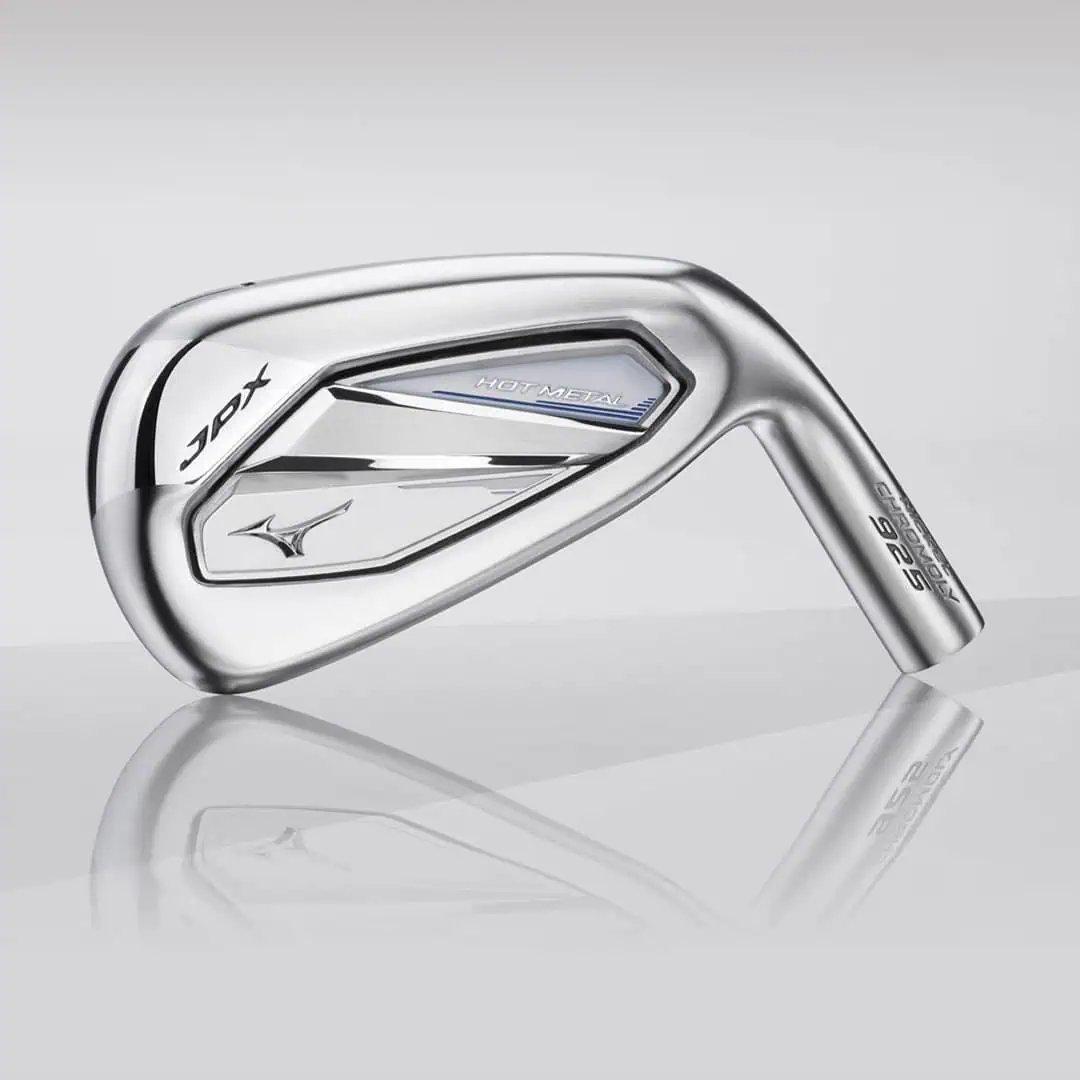
Mizuno JPX925 Hot Metal Irons

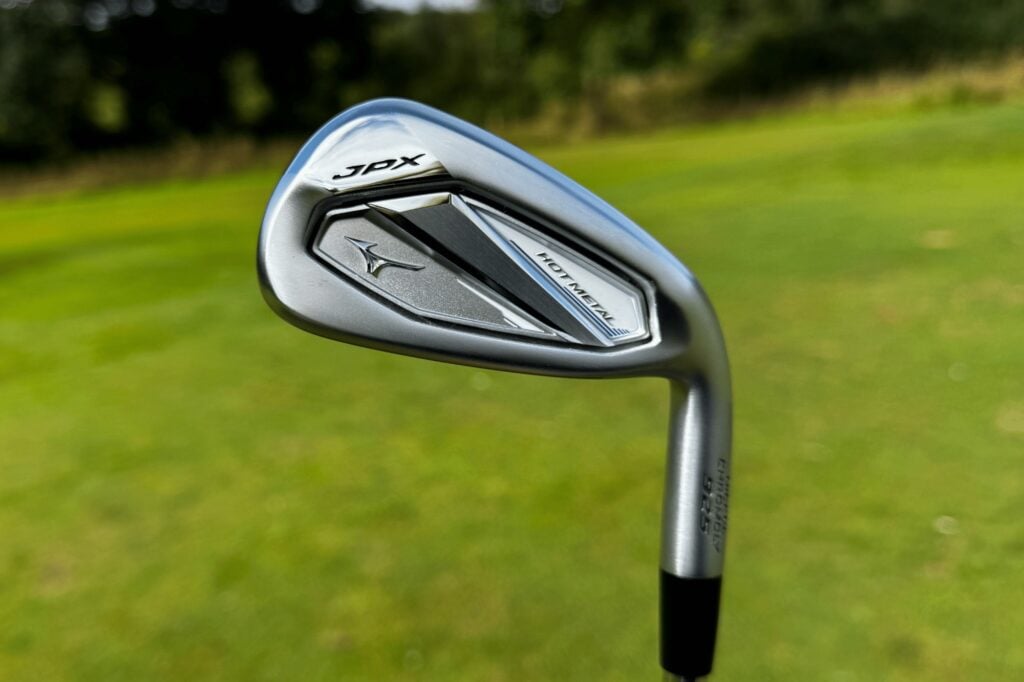
A great offering from Mizuno. A set of irons that offer that bit extra distance control, whilst still remaining forgiving enough.
The consistency of the shots is what stood out most, epecially impressive in the longer irons. They felt fantastic and offered plenty of club speed, as well as great turf interaction.
Advertisement
Overall, these irons were a joy to test. They offered plenty of performance gain, and the forgiveness that can be accessed from the longer irons is a real plus for less established golfers, like myself. Having a set of irons that you can rely on for control over a ball flight is great for golfers like me who struggle to hit a consistent one.
PROS
- Consistent throughout the set
- Easy to hit
- Great turf interaction
- Plenty of distance and forgiveness
CONS
- None
- RELATED: Read our full Mizuno JPX925 Hot Metal Irons review here.


Available: Now
RRP: From £899 / $1050
Stock Shaft: 50 shaft options with no upcharge
More information: Mizuno Website
Cobra DS-Adapt Irons
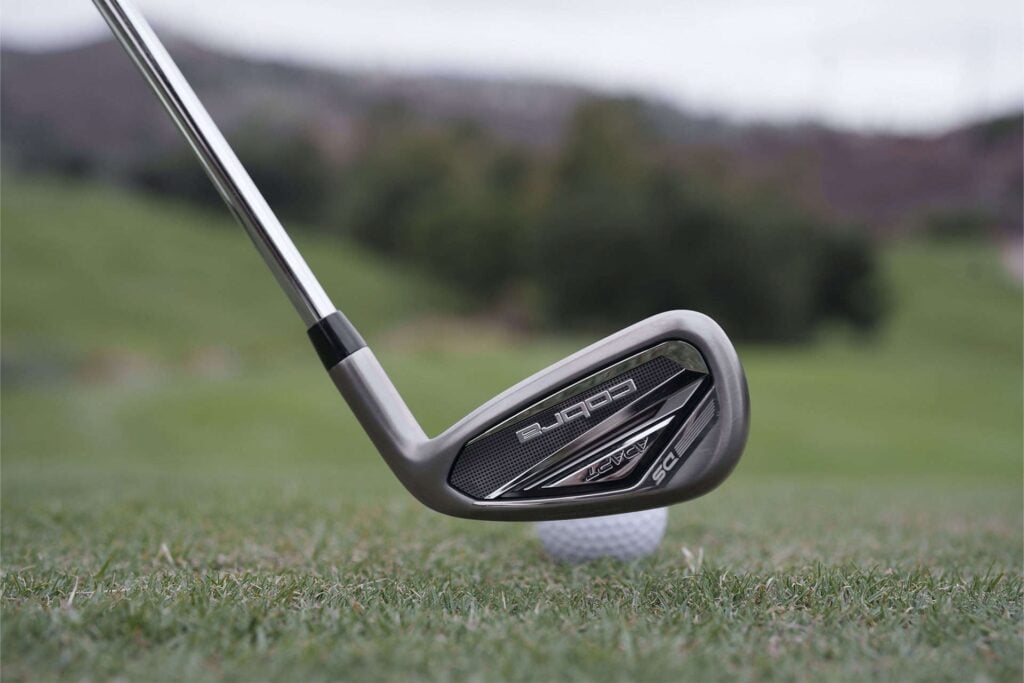
Although, I felt the irons felt really nice with strikes off the face they didn’t feel as firm as I thought they would be. The mid irons are extremely playable to allow shots into the green to be more controlled, despite being strong lofted and designed to have increased ball speeds.
I think these are exceptional game-improvement irons. The distances they offer up is extraordinary and are some of the longest game-improvement irons I have tested. They just fly off the club face.
As well as being long hitting these irons are all-round extremely playable clubs for a range of golfers. Easy to launch and feel great off the face thanks to a number of technological developments cobra have made.
PROS
- Incredible distances
- Feel nice off the face
- Very forgiving on off-centred strikes
CONS
- None
- RELATED: Read our full Cobra DS-Adapt Irons review here.


Available: Now
RRP: £799 steel, £899 graphite / from $999
Spec: 4-iron – Sand Wedge
Shafts: KBS Tour Lite steel shafts (S, R) or KBS PGI graphite shafts (S, R, A)
More information: Cobra Website
Callaway Elyte Irons
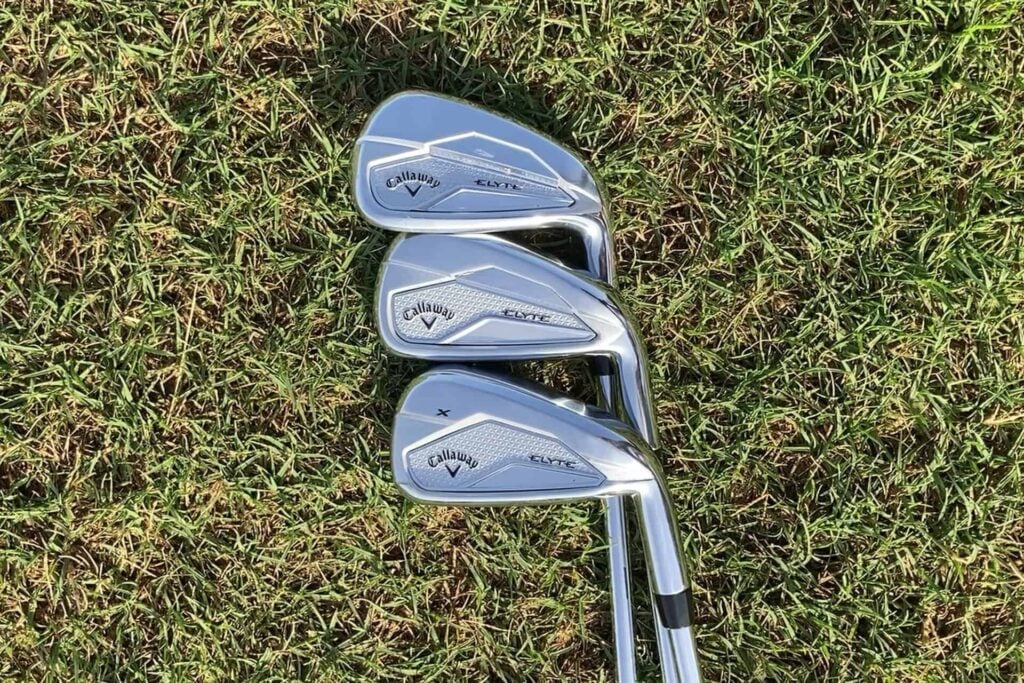
Despite the staggering distances and quick ball speeds, these Callaway Elyte irons still offer fantastic control.
As well as their brilliant performance benefits, these are simply classy looking irons. A step up from the previous Callaway irons in terms of looks, I think these will be quite the secret weapon for many club golfers.
I think Callaway deserve huge credit for creating well controlled distance irons. They have been built in a way that allows a wide range of handicappers to use these clubs. A lower handicapper will still have good control over their approach shots and a higher handicapper will see good distances.
Callaway have also done an amazing job in allowing the ball spin from this club head whilst delivering a quick ball speed, which gives us distance and control. The distances were staggering through the set and it isn’t too much of an exaggeration to say the golf balls were going miles.
I loved how tight my front to back dispersions were. There was very little difference between my best strikes and my worst strikes.
If you are interested in a good set of irons that will increase your distances these are definitely worth a try.
PROS
- Feel like a players’ iron
- Phenomenal distances
- Great turf interaction
CONS
- None
- RELATED: Read our full Callaway Elyte Irons review here.


Available: Pre-sale form the 15th of January. Retail from the 21st of February.
RRP:
US – 6 piece set at $900
UK – Steel (Per iron) – £167
UK – Graphite (Per iron) – £175
Spec: 4-S
Shaft: True Temper Vector and True Temper Project X Denali Charcoal
Grip: Lamkin Crossline
More information: Callaway UK / Callaway US
Benross BR-Pro Irons

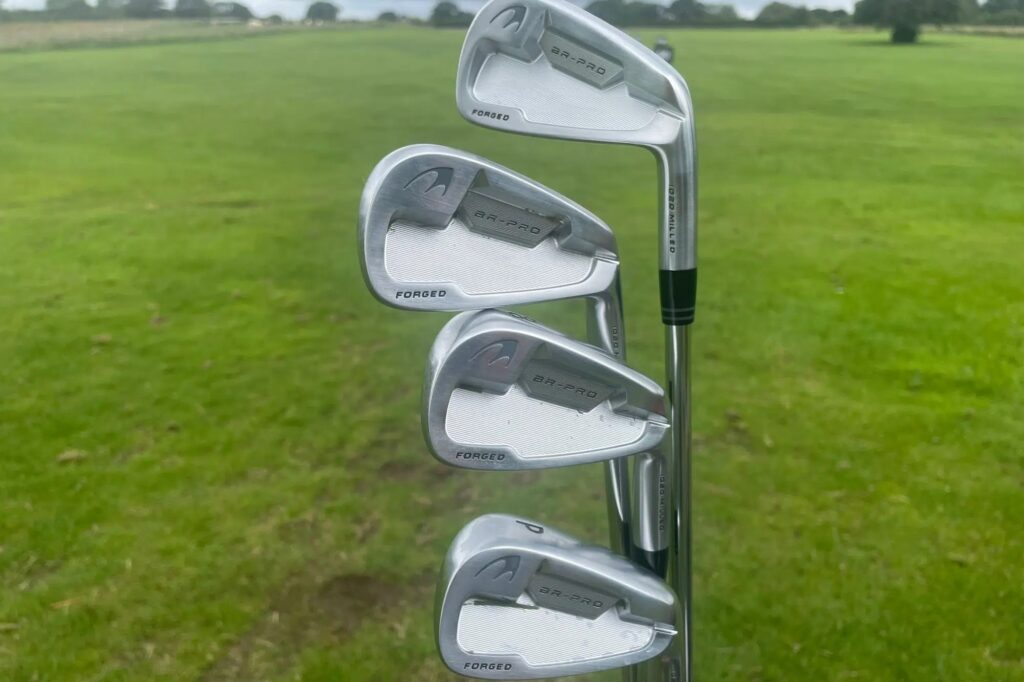
The Benross BR-Pro irons are a great, more affordable option for a low to mid-handicap golfer. They look great, have a nice feel to them, and have good performance capabilities.
Due to their target audience, these irons aren’t designed to be the most forgiving in their line-up, but I was surprised by how consistent I was with them. I did lose some distance on misstrikes and my dispersion was a tad wider than it would be with my game improvement clubs, but that is to be expected. The gains you are getting instead are in terms of look, feel and workability.
Advertisement
Feel is of course hugely important. A big plus, for me, was that I felt comfortable swinging the club at a fair pace and could make good contact. That’s something that I want and value as an average golfer, whose swing is often inconsistent.
At such an affordable price they are a great addition to the market. Overall, I was impressed by these players’ irons from Benross.
PROS
- Good price point
- Styling looks really sharp
- Impressive ball speed
- A lot of workability
CONS
- None
- RELATED: Read our full Benross BR-Pro Irons review here.

Available: Now
RRP: £499 4-PW
Shafts: Dynamic Gold
More information: American Golf
Benross Delta XT Irons
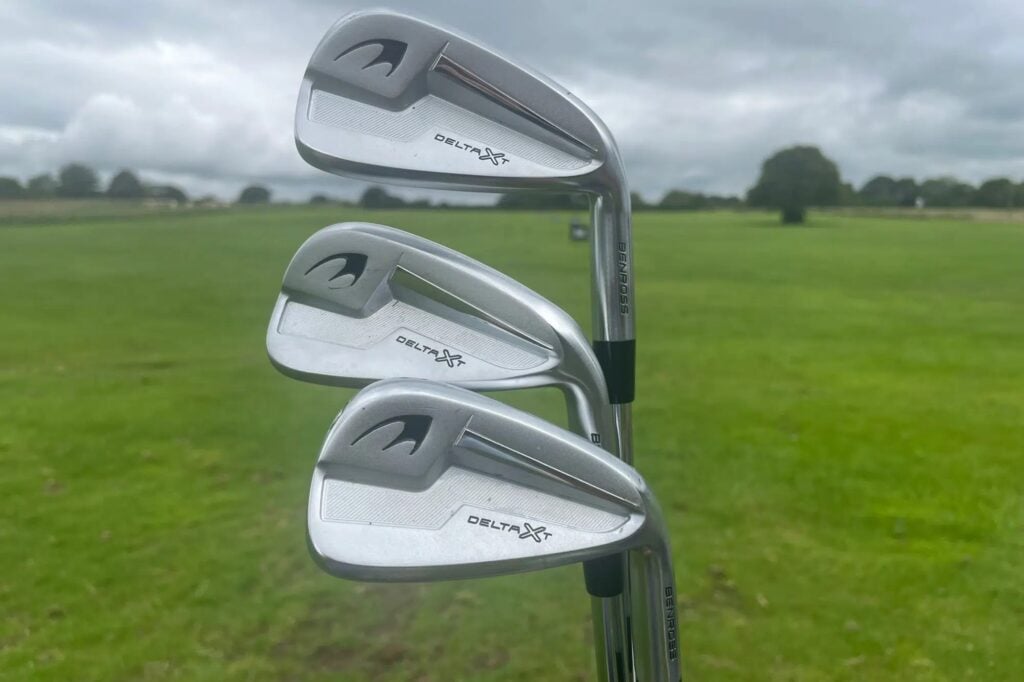
As far as distance goes, I found that the Delta XTs stacked up very well. I gained similar distance to what I get from my own clubs, which is great considering the price difference and the fact the Benross range hasn’t been custom fit to me at all.
I’m obviously not hugely consistent with my golf game, so not every swing was flushed, but the bad shots I did hit still carried a great distance. For mid to high handicappers, that’s what you ideally want from a set of irons.
I was also impressed with the level of ball and club speed I was able to reach with the various clubs from the set. According to Benross, the high-strength C455 stainless steel face provides more flexing at impact for improved ball speed, which ultimately allows the ball to go further.
Everyone wants their clubs to resemble the pros, don’t they? Well, these irons certainly look sharp, and their performance makes them a great option for a higher handicapper at a lower price. Overall, I was impressed with this set from the UK brand.
PROS
- Great price point
- Generates good distance
- Clean design
CONS
- Left to right dispersion could be tighter
- RELATED: Read our full Benross Delta XT Irons review here.
Available: Now
RRP: £499 5-GW
Shafts: KBS Tour Life R
More information: American Golf
TaylorMade P770 irons

I really like the compact players shaping of these over the ball. I think TaylorMade have done a great job of blending the smaller shaping while still providing something that gives you confidence and doesn’t look too difficult to hit. Even the 3-iron is a perfectly manageable size behind the golf ball.
Advertisement
With the long irons, my bad shot is a bit bottom-groovy, and I was impressed with how my distance and ball speed stayed up even on these slight misstrikes. I have the thru slot speed pocket technology to thank for this which allows the bottom of the face to flex more.
These offer enough help in terms of extra distance for players who are a bit shorter without being so hot that it ends up affecting your distance control. This is seen in how consistent my front-to-back dispersion was throughout testing.
I was really impressed by just how easy the long irons were to launch, even if you catch the ball slightly low of centre, the flexible speed pocket design means it is still easy to get the ball in the air and maintain a nice high ball flight. The sweet spot feels huge.
PROS
- Really attractive players irons
- Great overall distance
- Forgiving across the face
CONS
- Not as much feedback as smaller options
- RELATED: Read the full TaylorMade P770 irons review HERE


RRP: £165 per iron
Lofts: 3i – 19.5° 4i – 22.5° 5i – 25.5° 6i – 29.0° 7i – 33.0° 8i – 37.0° 9i – 41° PW – 46.0° AW – 51.0°
More information: TaylorMade Website
Srixon ZX5 MKII irons

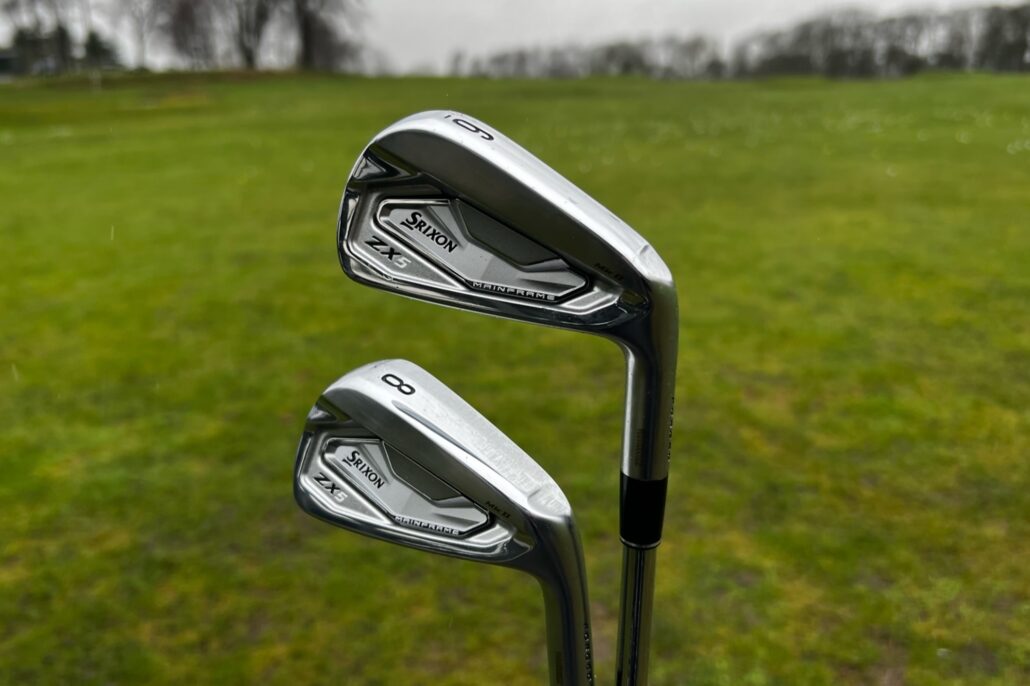
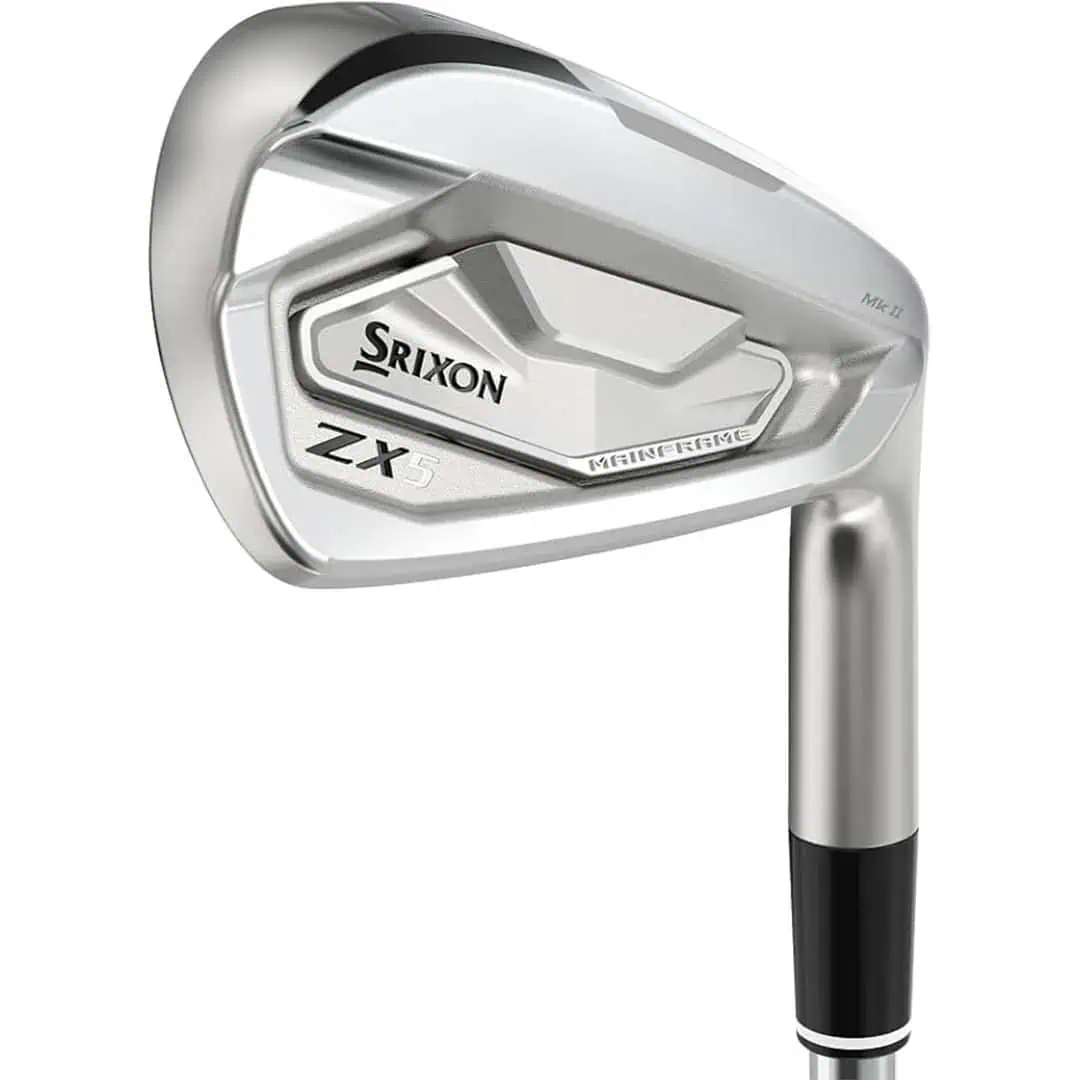
The ZX5 MKII irons have serious bag appeal. The sole design creates some intrigue, and like all Srixon irons, the back of the club is shiny and draws the eyes of onlookers.
The top line is fairly confidence-inspiring for a player’s iron, and with the thicker sole and weight behind the face, you do really feel like you’re going to get some performance out of the irons.
Straight away, these irons feel fantastic off the face. The ball comes off the face really strong, producing flights for me that would play well in the wind. These irons don’t have particularly strong lofts compared to other players’ distance irons out this year, but they are no slouch for distance.
Advertisement
The ZX5 MKII irons have quite a thick sole for a player’s distance iron, but for good reason. Srixon have implemented their Tour VT sole on these irons, which means each iron has a different sole width, bounce angle and notches on the heel and toe, which improves ground interaction.
This means a golfer should be able to get out of thick rough easier than before with less chance of the club head snagging up. I hit a few shots from the rough during my test and can confirm that I was able to get the ball up in the air easier than normal.
PROS
- Look brilliant behind the ball
- Plenty of forgiveness on off-centre hits
- A more controlled players’ distance iron than others on the market
CONS
- The other models in the ZX MKII range are so good the ZX5 MKII almost struggle for identity
- RELATED: Read the full Srixon ZX5 MKII Irons review HERE

RRP: £150 Per iron
Lofts: PW 44°, 9i 39°, 8i 35°, 7i 31°, 6i 27°, 5i 24°, 4i 22°
Shafts: KBS Tour Lite (steel) Diamana ZX Graphite (graphite)
More information: Srixon Website
Titleist T150 Irons
Reviewed by Hannah Holden
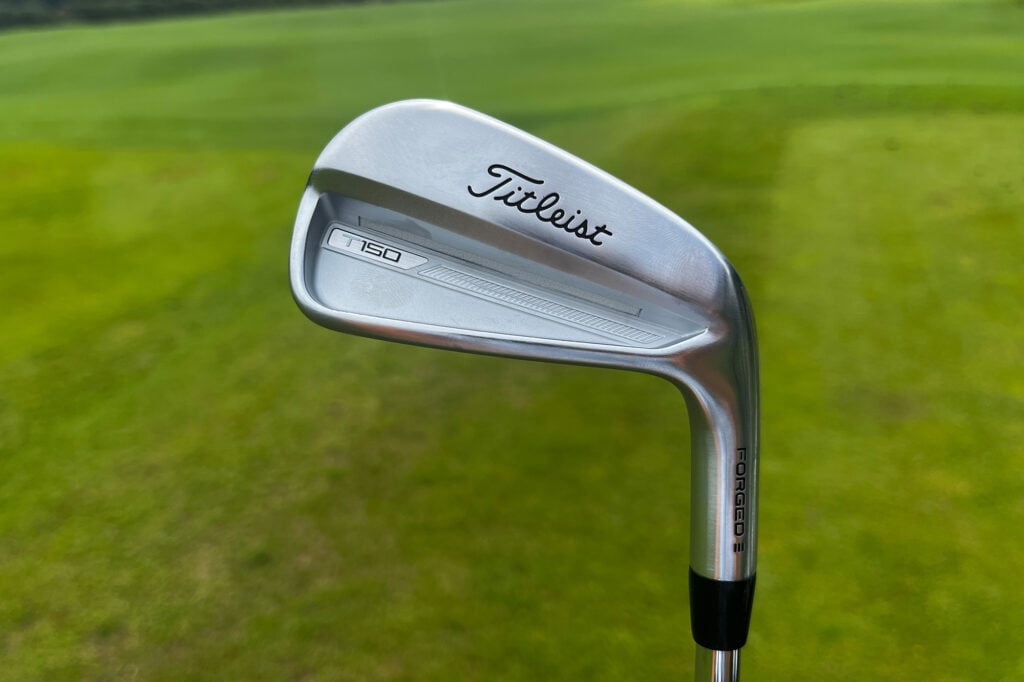
The T150 is a brand new model in the T-Series lineup, which comes into replace the T100 S, which was a stronger lofted version of the T100. Titleist recognised a lot of golfers appreciated the extra distance this model provided but would have liked an element of added forgiveness compared to the T100. They have worked on this a come back with the new T150 to deliver on that.
I love the fact that this T150 model looks almost identical to the T100 offering, so you still really have that tour player look, but you get the bonus of some added distance and forgiveness.
On average these carried 6 yards further than the T100 model which is just over half a club longer for me. The distance is very similar to what I saw with my previous T100S irons where I would have expected to carry my 7-iron 155 yards.
Overall I have really enjoyed testing these irons, and I think these T150 mid and long irons will be sneaking into my golf ball for the foreseeable future. I love the fact you can combo between so many models in this range so I can get the control, feel and workability I want in my short irons but get something with a little more ball speed and distance at the top end of my bag.
Pros:
- Great feel
- Look great behind the golf ball
- Excellent control
- Good distance
Cons:
- Tour-inspired club so won’t be for everyone.
- Read our full Titleist T150 Irons Review

RRP: £178.50 per steel club or £1,249.50 for a set of 7
£192.50 per graphite club or £1,347.50 for a set of 7
Shafts: 8 Featured shafts
More information: Titleist website
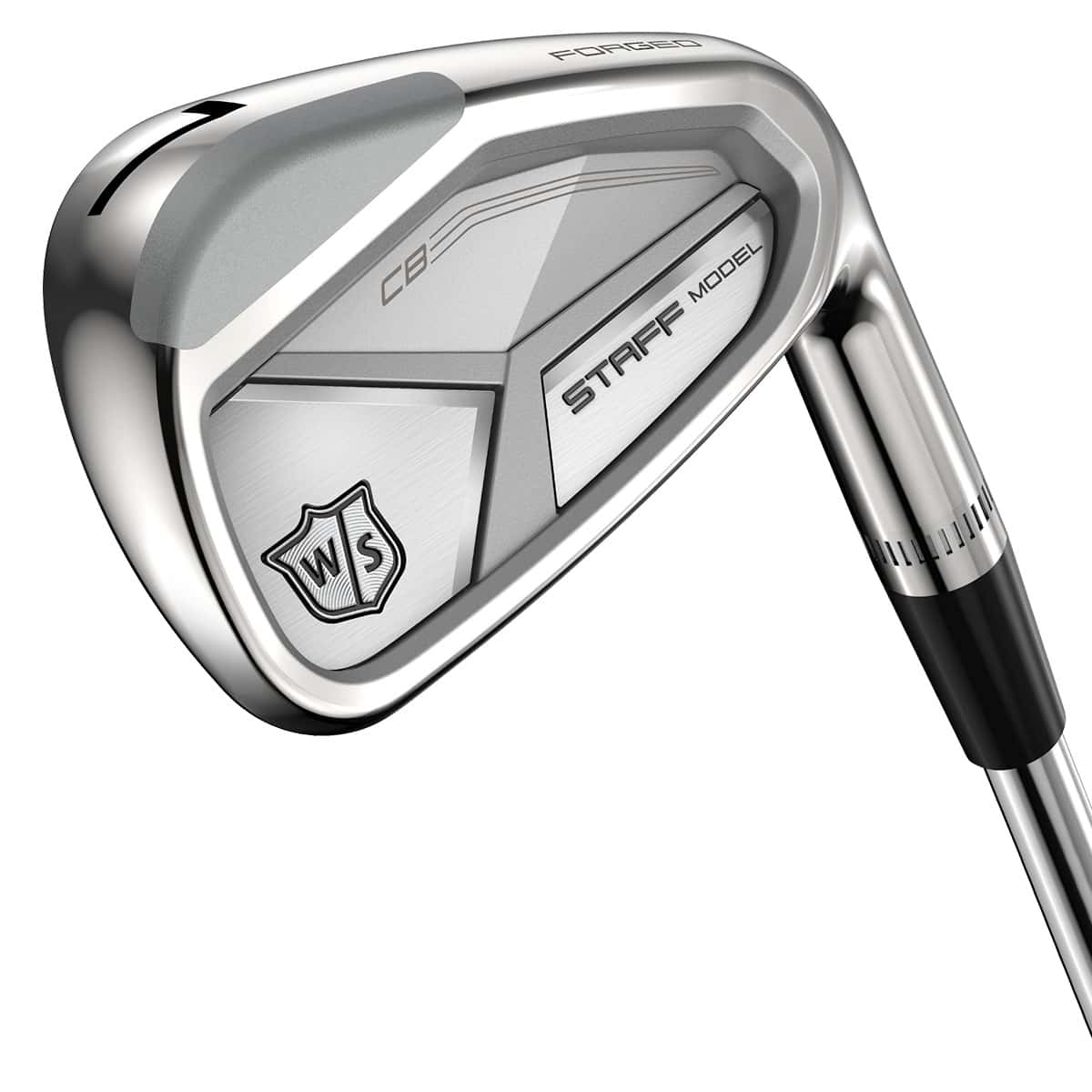
Wilson Staff Model CB Irons
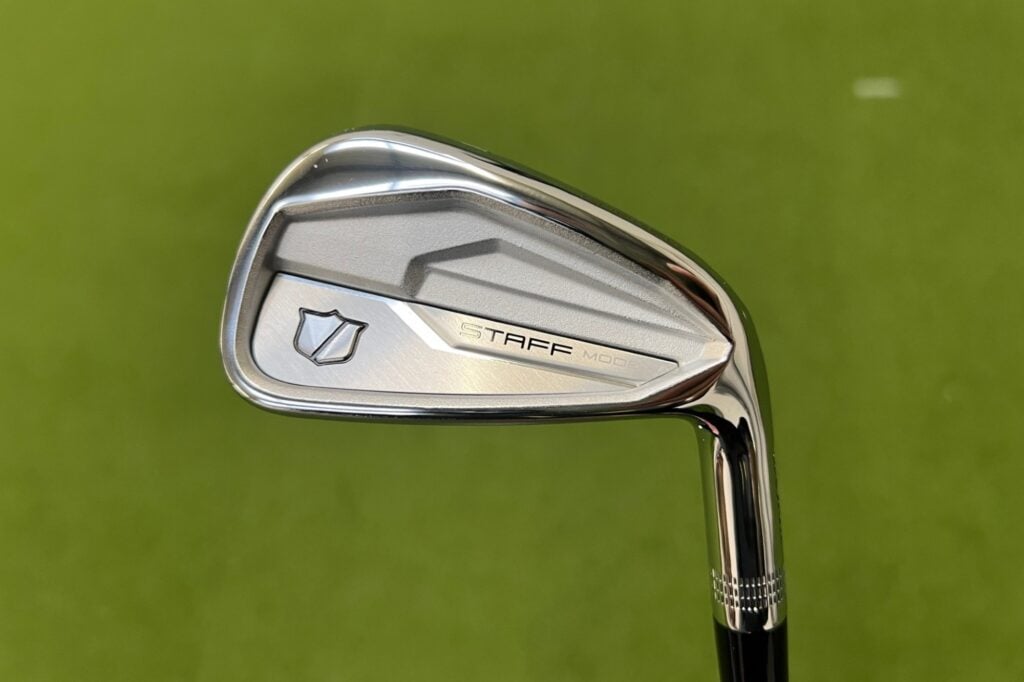
Reviewed by Matt Coles
From the start, I did note that the size of the club face was slightly smaller than the game improvement irons I currently use but not small enough that it is intimidating behind the golf ball.
This year’s Staff Model CB irons provide the added forgiveness of a cavity-back iron while maintaining their usual design. That comes through immediately, and the construction of the longer irons aims to aid in that respect as well.
With my current irons – the TaylorMade M5s – my average carry with a 7-iron is around 165 yards. This decreased with the Wilson Staff Model CBs, down to just shy of 160 yards, but that is not something that bothers me too much given the control I am gaining.
In conclusion, the Wilson Staff Model CB irons are all about precision and control but I found them much more playable than I expected. If you keep hitting greens thanks to that smaller dispersion rate, what does it matter if you have to hit one club more? I will definitely be trying these out some more, and they may even be going into my bag for this season…
PROS
- Great feel
- Very forgiving
- Low dispersion rate
CONS
- Shorter than more forgiving models
- RELATED: Read the full Wilson Staff Model CB Irons Review

RRP: £1,050 for a set of seven (4-PW)
Shafts: True Temper Dynamic Gold Mid 115 Shaft (R/S/X)
More information: Wilson website
Mizuno Pro 245 Irons
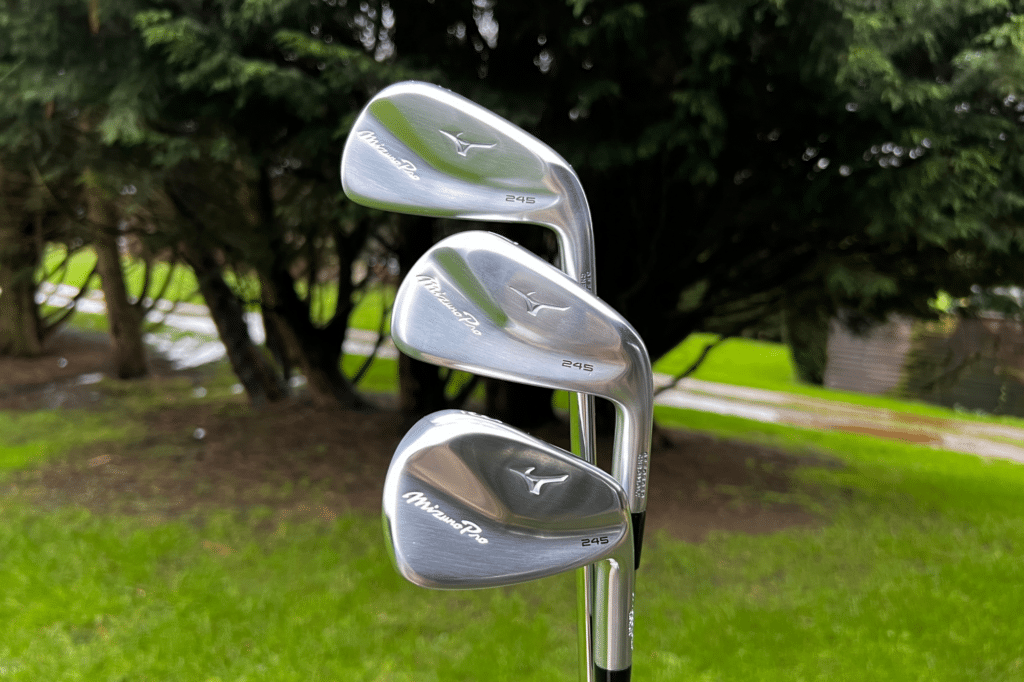
These irons look powerful behind the ball with a confidence-inspiring top line and generous sole widths. I really like how the sole, the top line, and the offset get progressively smaller through the long and mid irons into quite a compact-looking scoring iron.
The 2 iron down to 8 iron are hollow body irons with a suspended tungsten weight to allow the face to flex and produce elevated ball speeds. The irons are also built with a multi-thickness face, which contributes to this. The 9 iron to gap wedge are only partially hollow with a much higher CoG to produce a more penetrating flight.
The only thing that stops me from giving these irons 5 stars is how low I hit the ball with them. I could only average 60 feet in the air with a 5 iron, which is HALF the trajectory McIlroy hits his irons and about 30 feet lower than I hit my current gamers. This will cause me issues hitting into greens, but is not a problem for everyone. If you want a powerful, beautiful iron that looks and feels like a blade, then look no further. You are going to love the Mizuno Pro 245 irons.
PROS
- Very long
- Short irons are precision tools
- Sound excellent
CONS
- Go low
- RELATED: Read the full Mizuno Pro 245 irons review

RRP: £1399 4-PW
7 iron loft: (Degrees) 30
Shafts: 24 custom shafts available
More information: Mizuno Website
Ping i230 irons

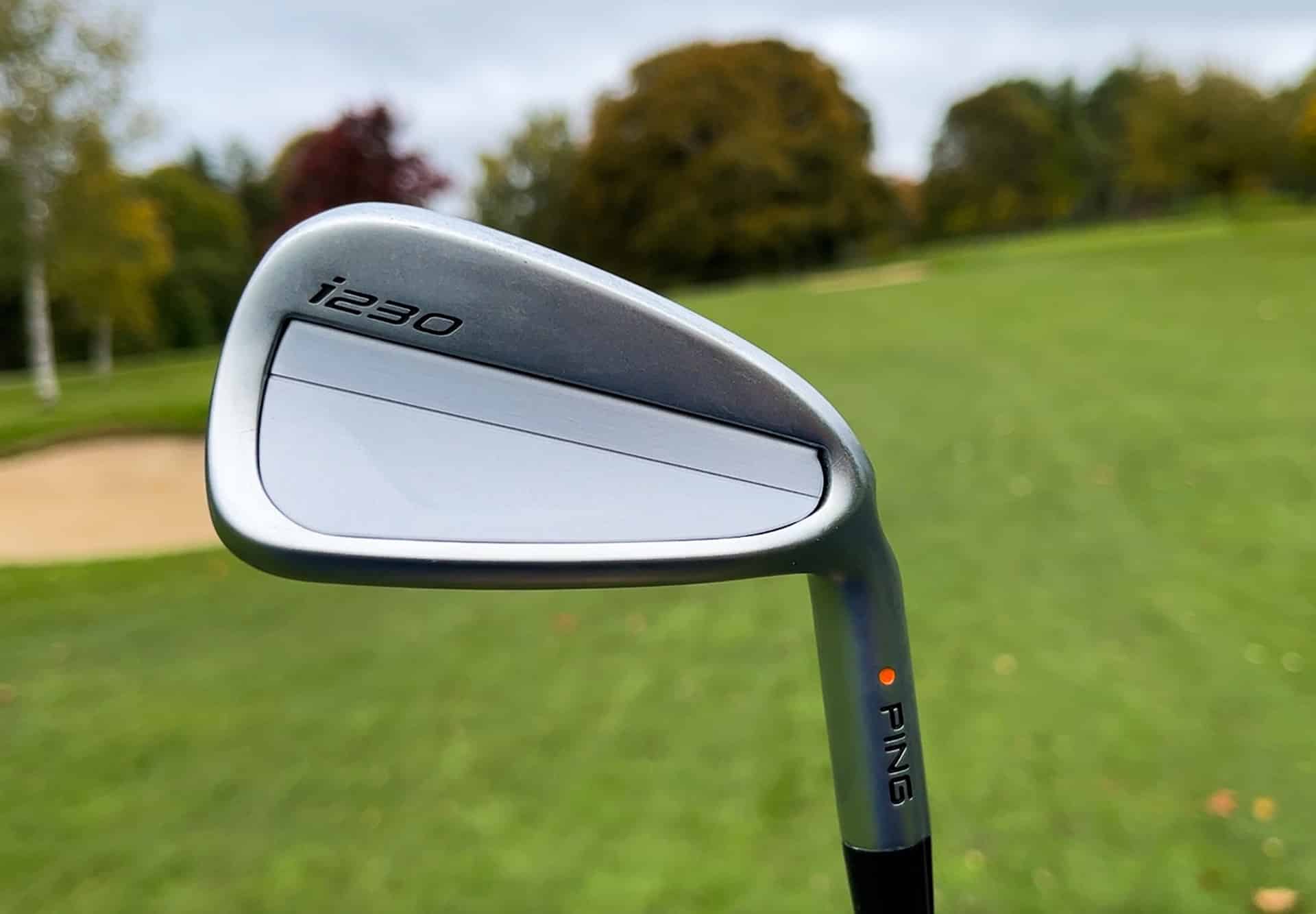
Reviewed by Hannah Holden
I can’t get over how much sleeker these look than the previous i210 irons from Ping. The whole club head looks so much more modern and stylish and I also like the overall more compact shaping.
Before Ping released the new i230 model, they were already racking up wins on tour. Straight away when I started hitting these I loved the soft, yet solid, sound and feel and could see why they have ended up in the bags of numerous tour players. It is quite surprising how players like these feel even with the slightly larger sizing.
Across the board, I had a consistent high ball flight. This was great for stopping the ball on the green but into the wind, it sometimes felt slightly excessive.
Overall this was a seriously enjoyable iron to hit. I found I didn’t want to stop testing as the towering ball flight, with its impressive control, was really fun to hit. For players who crave a club that allows them to use their touch and feel and be creative, this is a great option. But also there is an added level of forgiveness that you wouldn’t expect this type of iron to deliver.
Pros:
- Eye-catching to players
- Good workability
- Great spin control
Cons:
- Not the longest irons
- Read our full Ping i230 irons review


RRP: £180 per iron (steel) £190 per iron (graphite)
Lofts:
Standard 3 – 19°, 4 – 22.5°, 5 – 26°, 6 – 29.5°, 7 – 33°, 8 – 37°, 9 – 41°, PW – 45°, UW – 50°
Retro 3 – 21°, 4 – 24.5°, 5 – 28°, 6 – 31.5°, 7 – 35°, 8 – 39°, 9 – 43°, PW – 47°, UW – 52°
Power 3 – 19°, 4 – 22°, 5 – 25°, 6 – 28°, 7 – 31.5°, 8 – 35.5°, 9 – 40°, PW – 44.5°, UW – 49.5°
Stock shaft: Dynamic Gold 105 and Ping Alta CB Black
More information: Ping website
Titleist T200 Irons
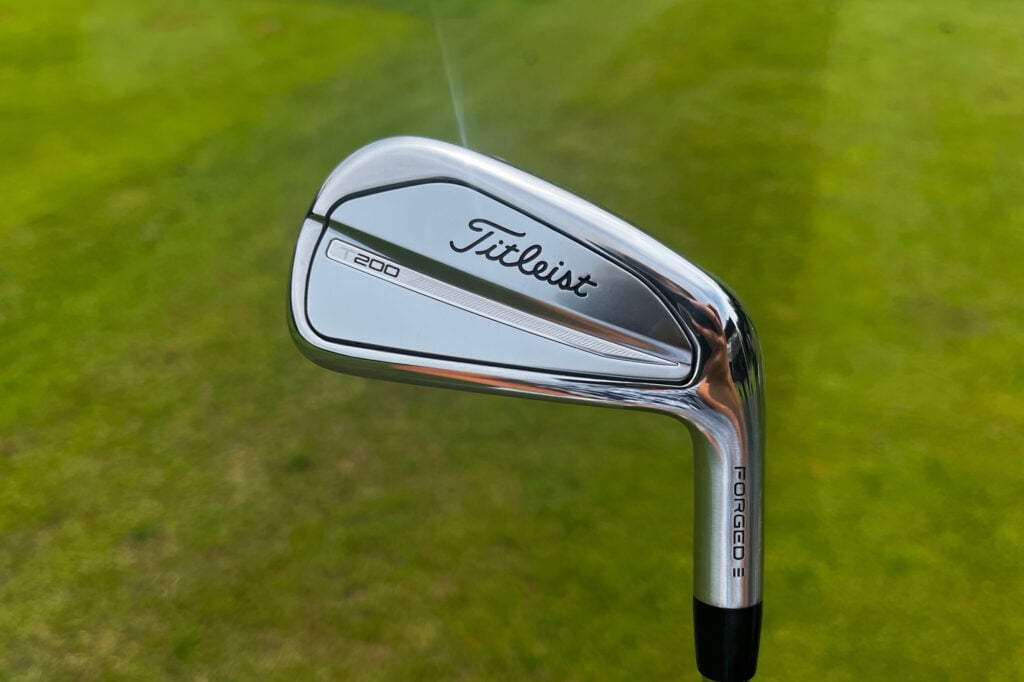
Reviewed by Hannah Holden
I am encouraged by the T200 irons purely based on their looks; shorter blade length, nice clean topline, and less offset than other irons in this category. I love the looks of a tour-inspired iron and this ticks all the boxes for me. I am not surprised that Titlesit have some tour players that put these heads in the bag.
I have used a variety of players’ distance irons over the years, and they never seem to last in my bag very long. I generally hit them too low, too far and with not enough spin, which has caused a few disasters, so I was interested to see if Titleist could solve this issue for me.
The first shot I hit with the T200 iron was pretty eye-opening. The strike felt great, but, like a tour iron, the ball had a high launch that I wasn’t expecting, and the peak height was up over 110ft! I genuinely couldn’t believe it.
The beauty of Titleist’s T series range is how well you can mix and match the clubs in a split set. You could easily mix and match the T200s into a set with the T100 or T150 irons, and maybe even add a T350 to the top end for some added distance and forgiveness. There are not many brands out there that can offer that.
Pros:
- Great distance
- Great spin for a hollow-headed iron
- Forged face feels great.
Cons:
- I have to carry two wedges!
- Read our full Titleist T200 Irons Review

RRP: £178.50 per steel club or £1,249.50 for a set of 7
£192.50 per graphite club or £1,347.50 for a set of 7
Shafts: 8 Featured shafts
More information: Titleist website
PXG 0311 P Gen6 Irons
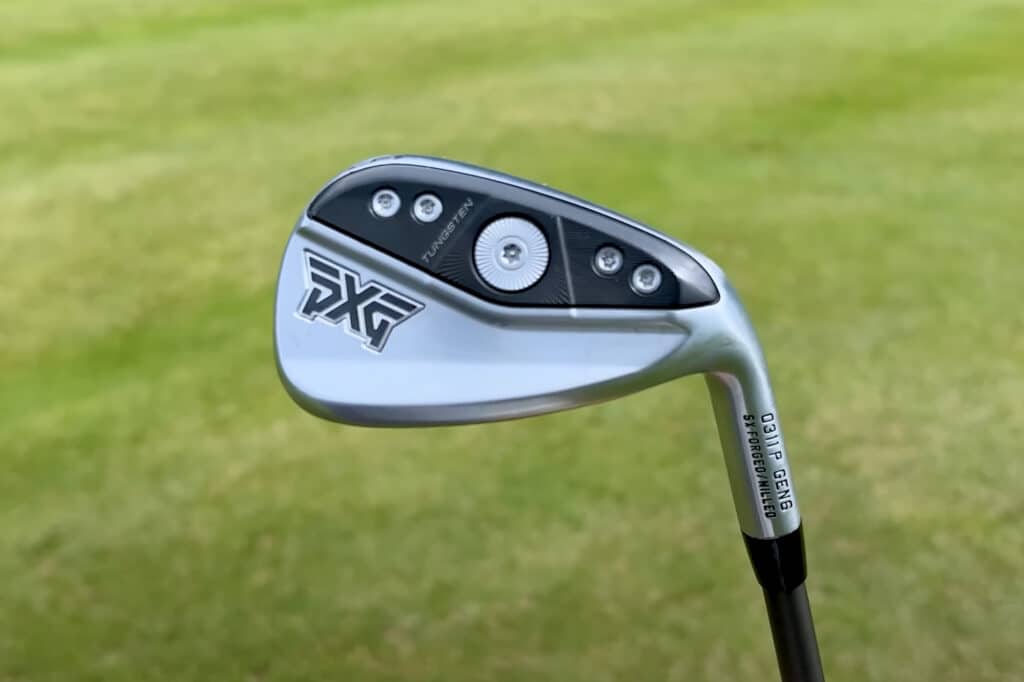
Reviewed by Hannah Holden
Let’s address the elephant in the room straight away. Are these irons too big to be a true player’s iron? Well, Hannah isn’t sure. If the ball performs just like you would expect a player’s iron to, with high ball flight, plenty of spin, and bags of control, what difference does it make if the head is bigger than your standard MB or CB?
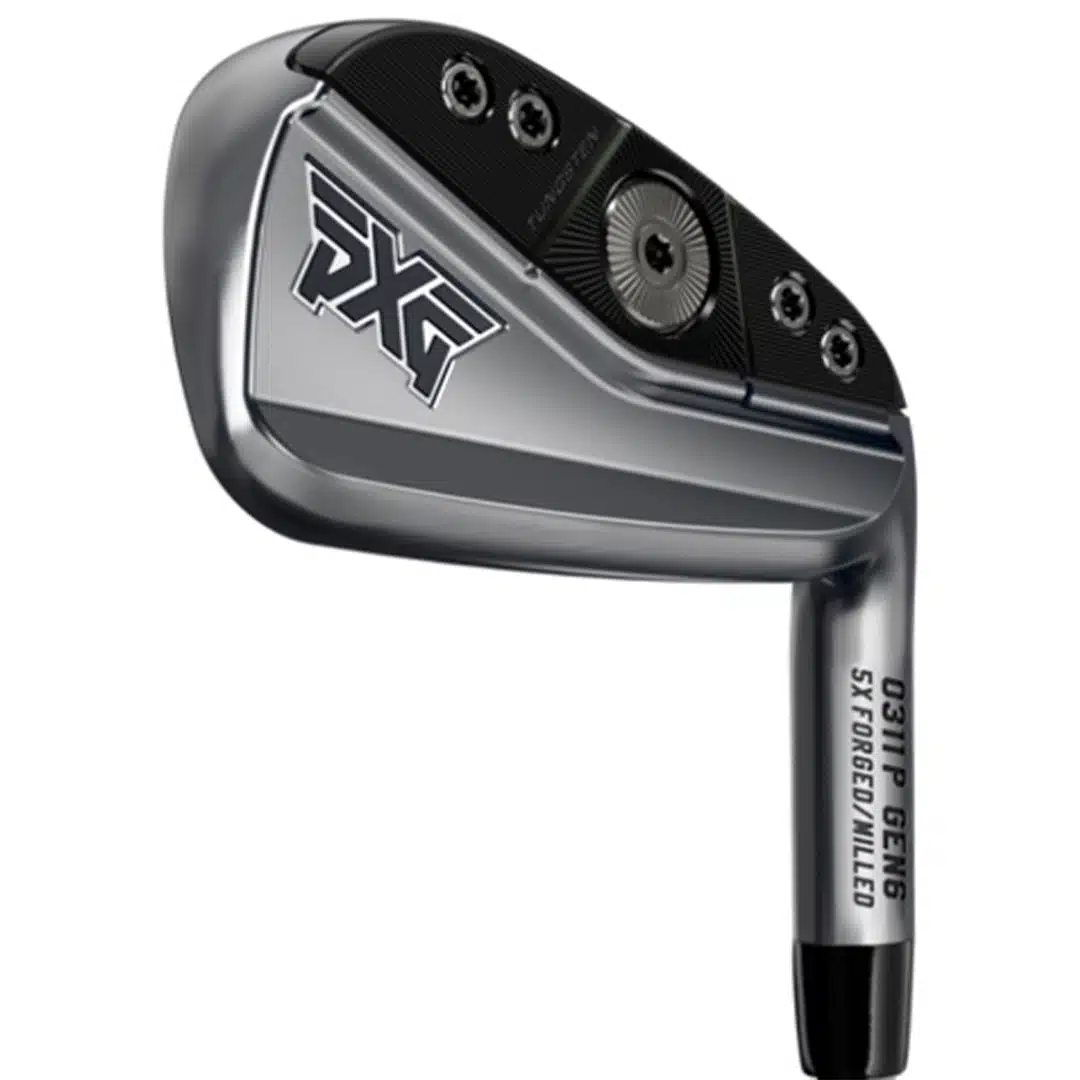
Hannah is a big fan of how the PXG 0311 P Gen6 iron looks. The top line is cleverly shaped in a way to make it appear thin and conceal the mass behind the ball; the club looks strong and inviting, boosting your confidence that you are going to hit the green.
Hannah couldn’t believe how long these irons were. The standard carry of her 6 iron is around 165, and in the fitting with PXG, the 0311 P Gen 6 iron carried an AVERAGE of 183 yards. Yes, you read that correctly. PXG have always had the thinnest face in golf, but the Gen 6 iron now has a 15% thinner face, which boosts ball speeds to numbers not normally seen.
The PXG 0311p Gen 6 irons are seriously impressive and well worth testing out if you want more distance out of an iron that looks seriously good. There is more technology in these clubheads than a lot of player’s distance irons available to buy, so they are well worth the investment.
Pros:
- Well designed top line
- Huge ball speeds
- Excellent custom fitting process
Cons:
- Stronger lofts make gapping tricky in the long irons
- Read our full PXG 0311 P Gen6 Irons Review
RRP: £189 Per Iron
Right-handed lofts: 7 iron 30°
Shafts: 53 Shafts available
More information: PXG Website
Best Irons for Mid-Handicappers 2025
Choosing the right set of golf irons can have a significant impact on a mid-handicapper’s game, and top brands like Ping, TaylorMade, Srixon, Mizuno, and Callaway are offering some of the best options in 2025.
Consider your own preferences and skill level to determine which iron set is the right fit for you and get ready to enjoy improved performance and greater confidence on the course.
Upgrading for irons for the 2025 season could help to shave a few shots off your handicap. If you’re after a total bag refresh why not also check out our other buying guides for mid-handicappers…
Check out our other buyers guides for 2025:
- RELATED: Best Golf Pants 2025
- RELATED: Best Golf Mid Layers 2025
- RELATED: Best Golf Shorts 2025
How do we test irons?
At National Club Golfer we are passionate about producing accurate and thorough reviews and make sure our testing process is rigorous so we get a good understanding of how each club performs.
Each iron is hit with TaylorMade TP5 golf balls to allow us to collect launch monitor data with our in-house TrackMan and Flightscope. After this, it is time to head out onto the golf course and test the clubs in practice and competition play. We do this across various golf clubs in our base of Yorkshire.
What is important when buying a new set of irons?
When buying a new set of irons, it is important to know what you want from the clubs to help you improve.
Most people are looking for more distance, each iron model is optimised for different things. Depending on your swing and your impact conditions, you may not actually hit the model that is advertised as the longest, the furthest. So if you want more distance, it is always worth giving different models a hit before you make a decision.
For most golfers, especially high handicappers, something that is more forgiving is going to yield the best performance. Most forgiving golf irons have a slightly bigger club head with perimeter weighting for high MOI. Cavity-backed irons also have a centre of gravity that is further back to help players get more height on their shots.
If you are a mid-handicapper, you probably are looking for a combination of distance and forgiveness. Mid-handicap players generally will want an iron that offers some forgiveness on off-centre strikes but want to look down on something that doesn’t feel too much like a game-improvement iron.
Don’t forget about the shaft, either. Getting the correct shaft can help dial in your spin, and launch angle and can also give you some extra distance. Having a club fitting or trying different options with your local pro can really improve the performance of your new irons.
Golfers should also consider club selection. Gone are the days of just ordering a standard four-to-pitching wedge set. With brands no longer conforming to traditional iron lofts, it is very important a golfer has their irons gapped properly so that there is no yardage issue between the pitching wedge and the next lofted wedge, or long irons and hybrids.
Why You’re NOT Striking Your Irons Properly
Striking your irons well is a vital ingredient to improving your golf and being a good player. It is very rare you see a top player miss-hit a ball. Understanding what should happen at impact and then getting your head around the mechanics that allow that to happen is a huge step towards shooting better scores.
Check out this video where Equipment Editor Hannah Holden and PGA Professional Jack Backhouse go through some drills and ideas you can implement in your practice and play to start to see lower scores out on the course.
5 Tips to Break 80
If you are a mid-handicap golfer, it’s likely you have parred or birdied every hole on your golf course, which means there’s no reason why you shouldn’t be able to put that all together in one round to shoot a low one. This can often come down to poor strategy or decision-making out on the course.
Have a look at a video with PGA Pro Jack Backhouse on 5 tips you can use to break 80.