



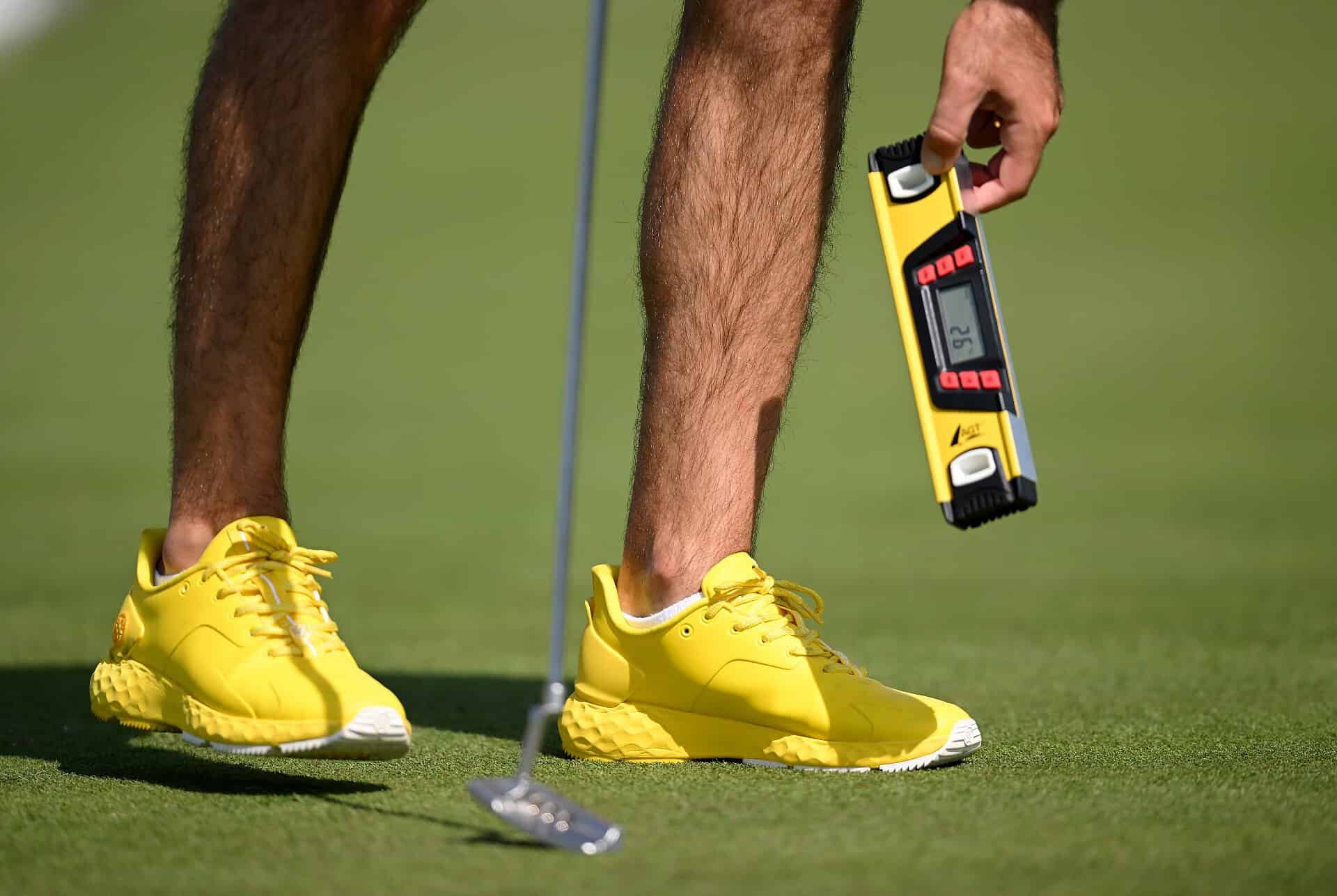
Take a walk down a practice putting green on tour, or indeed at many top amateur tournaments, and you’ll might see a host of players going through their drills accompanied by a little box. While it doesn’t look like the kind of tool you’d see a carpenter or a bricklayer toting, it is a spirit level and golfers use them to measure slope on a green and gauge the contours.
Now you might ask, do golfers really need to use spirit levels? Some top players and coaches swear by them, but if you’re thinking of getting stuck into a new trend will it get you into bother with the Rules of Golf?
Can you measure slope on a green, and what else do you need to watch out for if you’re trying to figure out a many layered putting green? Let’s take a look…
Can you measure slope on a green? Restrictions on using equipment
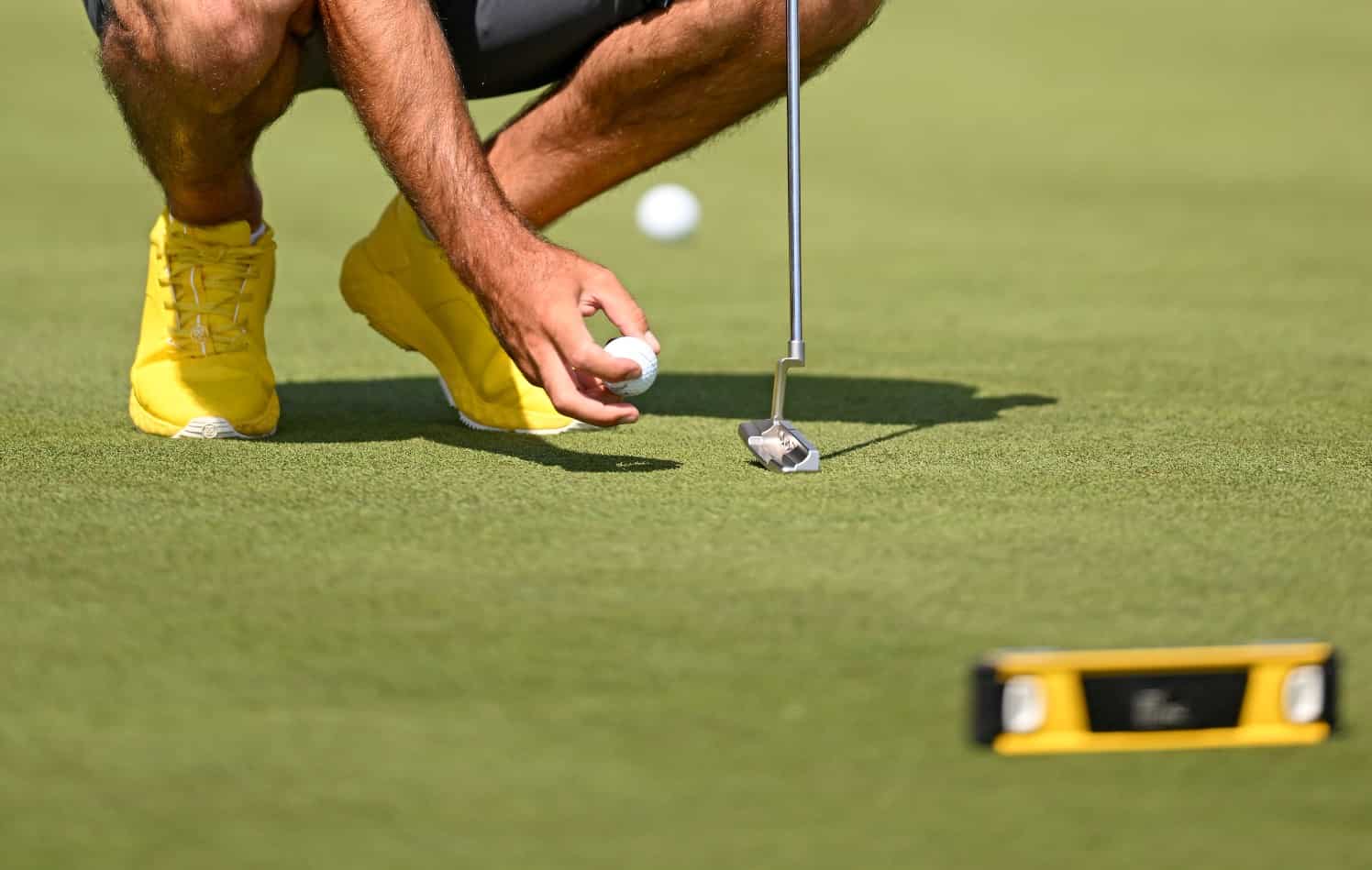
You can use a compass. Did you know that? You can get information on distance or direction from a range finder, watch, or other distance measuring device (unless there’s a Local Rule in place preventing this).
But Rule 4.3a (1) prevents you from doing anything that measures elevation changes, using an alignment device to help align the ball, or using a device that would give you a recommended line of play or help you with club selection based on where your ball is positioned.
A clarification to this rule reveals that you can use your club as a plumb line to help you work out the slope, but that’s where the leniency ends.
You can’t hold or place a “bubble level”, you can’t use a weight suspended on a string to act as a plumb line (have you ever actually seen anyone do that?), and, probably more pertinently for amateurs like us, you can’t place a bottled drink to act as a level.