We sometimes use affiliate links to products and services on retailer sites for which we can receive compensation if you click on those links or make purchases through them.
What’s new? How much do they cost? And how do they perform? Matt Coles brings you the low down on the new Wilson Staff Model CB irons
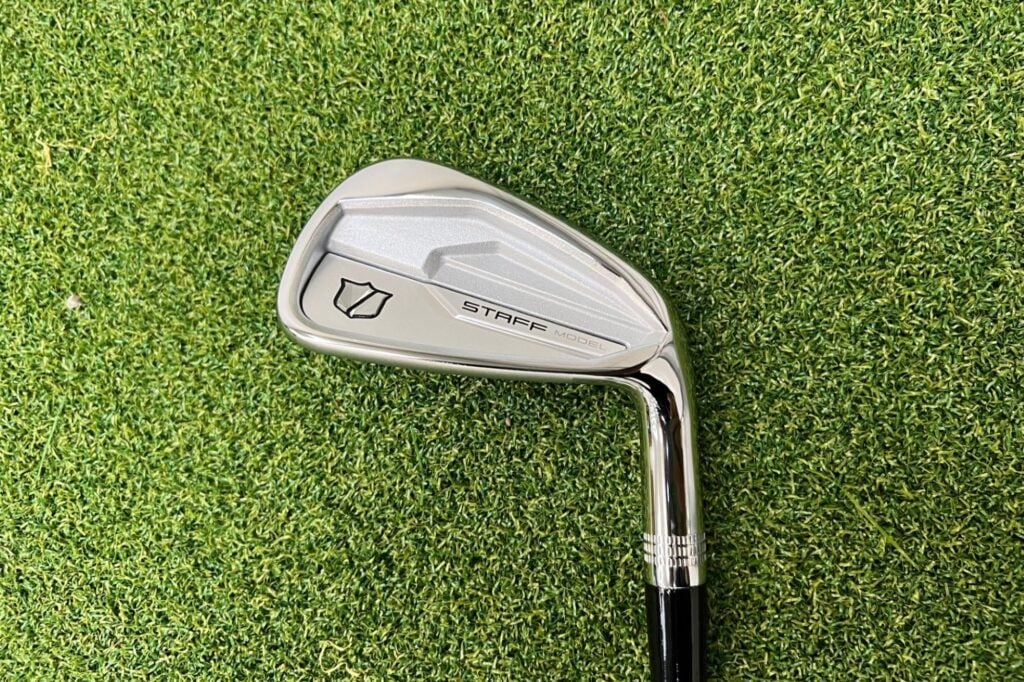
Wilson have brought out a new set of Staff Model CB irons as part of their 2024 range. How do they perform? Find out in our review of the Wilson Staff Model CB irons.
The Wilson Staff Model irons have been around forever, and the new 2024 edition of the CB irons could well be a game-changer for mid- to high-handicappers.
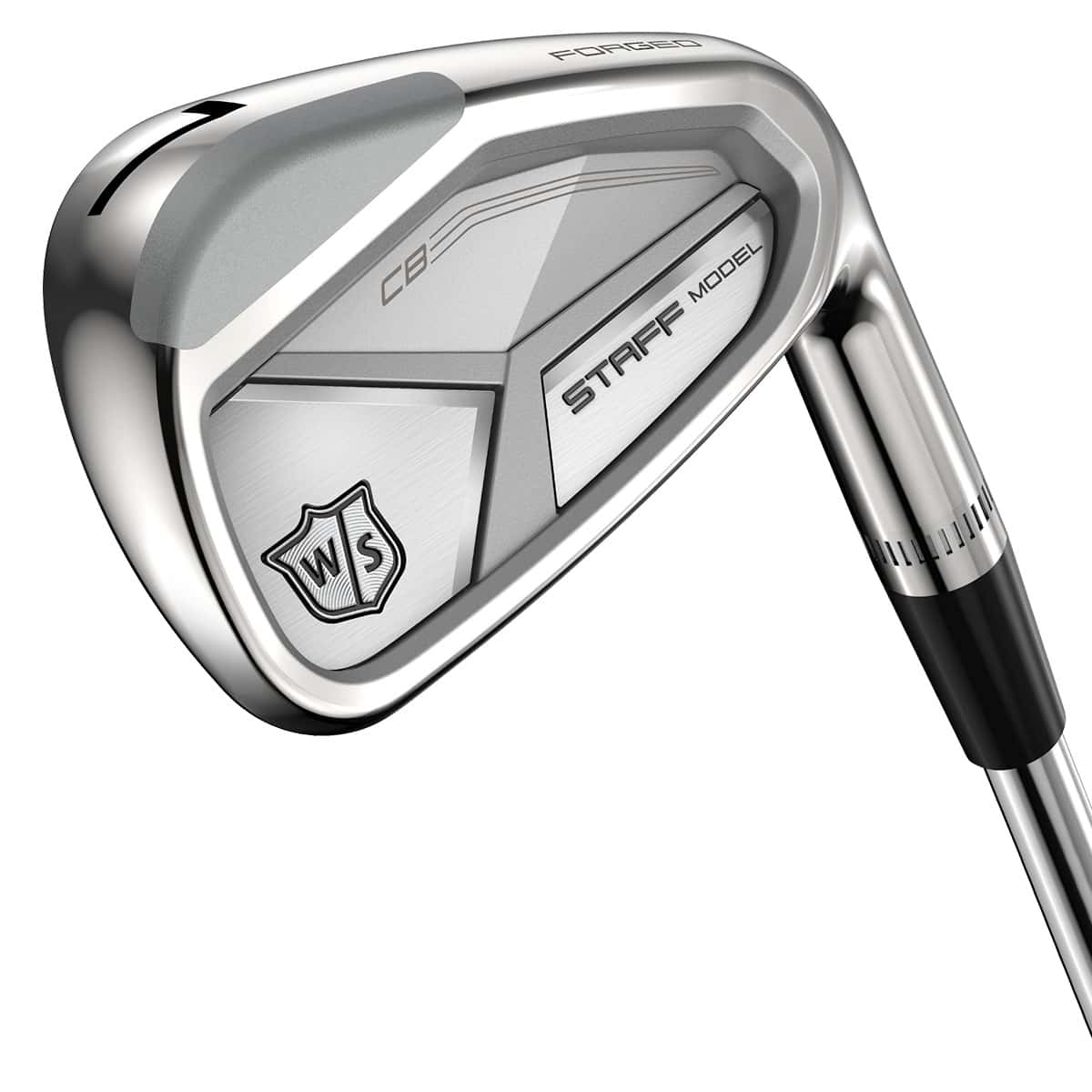
The shape and design of this year’s CB irons is very similar to those from the last few years, and they look clean and sharp.
When it comes to performance, the Wilson Staff Model CB irons are very consistent and forgiving. Although they are not the longest, the grouping on these irons is much closer, allowing for more confidence when standing over those approach shots.
Wilson Staff Model CB Irons Review: First Impressions
It is going back a few years, but my first proper set of irons were a hand-me-down set of Wilson Staff Model irons. They would have been at least ten years old when I first hit them, but they always felt good.
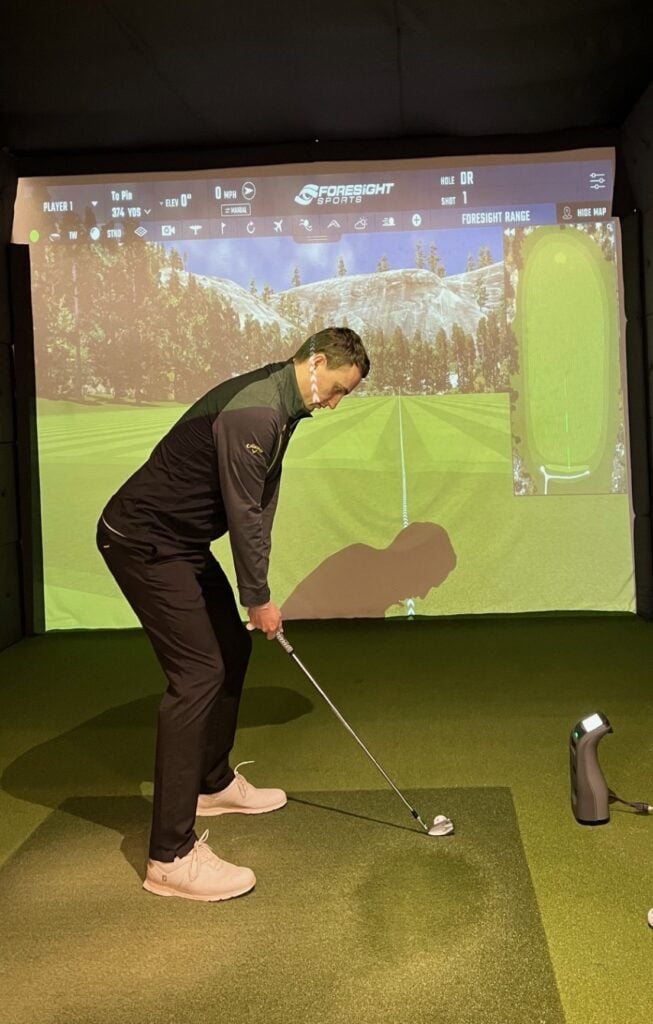
On the drive down to Worksop Indoor Golf Centre (which is where we tested these clubs due to the British weather in December), I was certainly hoping that all these years on, the latest edition of the Wilson Staff Model CB irons would provide the same level of consistency and feel throughout the set.
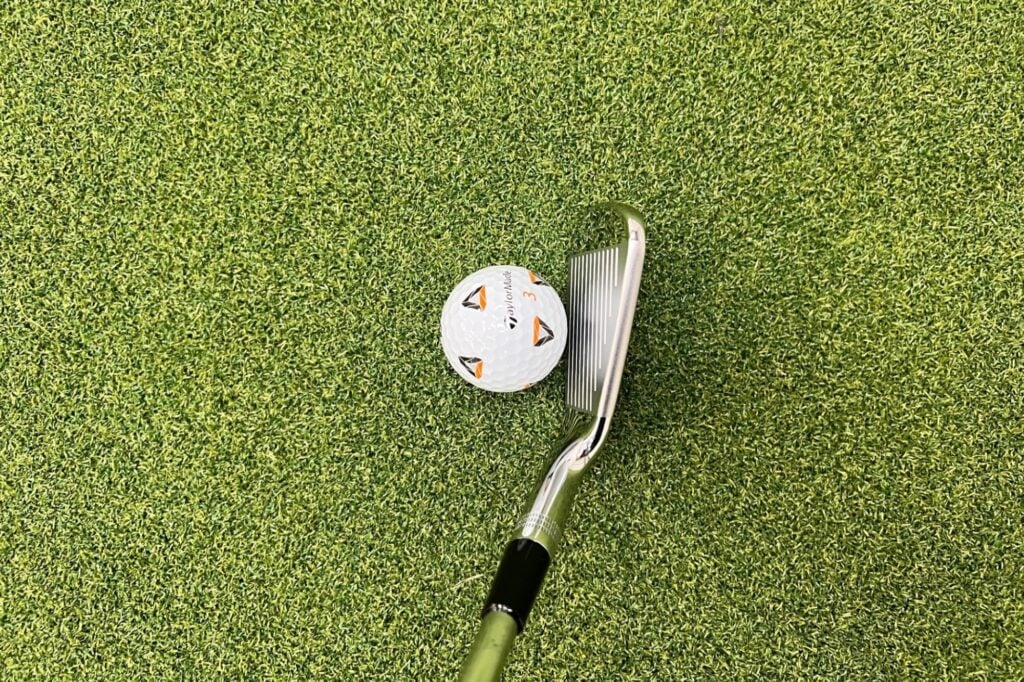
The Wilson Staff Model irons have always had a timeless look, remaining pretty much the same throughout its history. That has continued with their 2024 iteration, and once again, these irons look sharp, clean, and beautiful when addressing the ball.
NCG Verdict
From the start, I did note that the size of the club face was slightly smaller than the game improvement irons I currently use but not small enough that it is intimidating behind the golf ball.
This year’s Staff Model CB irons provide the added forgiveness of a cavity-back iron while maintaining their usual design. That comes through immediately, and the construction of the longer irons aims to aid in that respect as well.
Precise Toe Weighting and a Fluid Feel Hosel, are just some of the new technologies that have been put into play with this year’s edition of the Wilson Staff Model CB irons. There is also Forged Carbon Steel, which can allow players to work the ball in both directions.
As an amateur golfer who is currently struggling to maintain a single-figure handicap, being able to work the ball in both directions is not the first thing on my agenda when it comes to a new set of irons. Instead, I am more looking for consistency and forgiveness.
Advertisement
Luckily for the Wilson Staff Model CB irons, those both come in abundance. Distance is traded for these, but that is not the worst thing in the world. For instance, a usual PW with my current TaylorMade M5s carries around 130 yards.
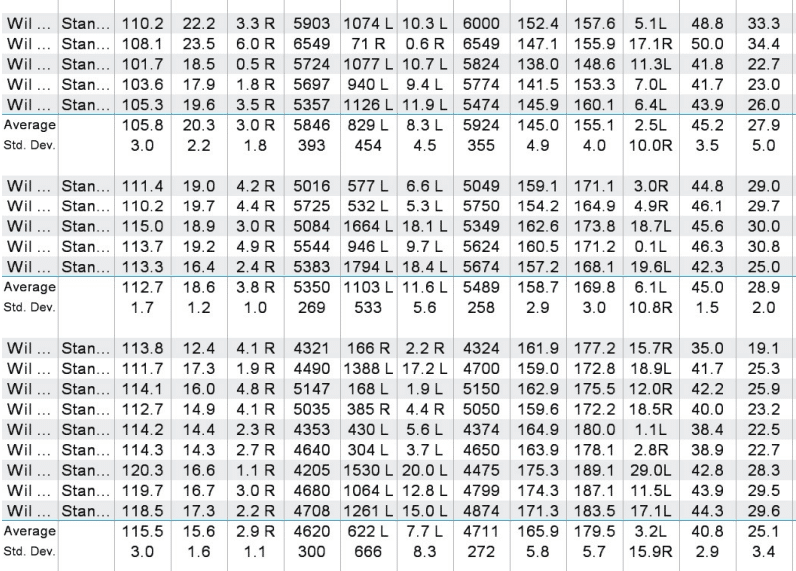
As the data above shows, with the new Staff Model CBs, shots with the PW were carrying an average of 125 yards; I was pretty impressed with this distance, given how much smaller these clubs are than my gamers. The dispersion was also minute for an 8-handicapper. There was an average of less than three yards left of the target, which was playing with a slight draw as well. Those numbers really give you confidence standing over the golf ball.
That sort of data continued into the mid-irons as well. With my current irons – the TaylorMade M5s – my average carry with a 7-iron is around 165 yards. This decreased with the Wilson Staff Model CBs, down to just shy of 160 yards, but that is not something that bothers me too much given the control I am gaining.
Below is the data for the 8-, 7- and 6-iron shots during my testing with the Wilson Staff Model CBs. The carry distance (fifth column from the right) shows smaller numbers than I hit with my current irons. However, there is consistency across the board. There are only a couple of anomalies.
Again, like the PW data, the dispersion rates are relatively small, and certainly smaller than other irons I tested on the same day. That is a huge plus point for the Wilson Staff Model CBs. Another key point for these clubs is the descent angle. With both the 7- and 8-irons, the average descent angle was around 45 degrees, which would give the ball every chance of stopping quickly on the putting surface. That did come down to 40 degrees with the 6-iron, but that is not the worst thing in the world.
Advertisement
The last three shots in the data above come from hitting the 6-iron off the tee. Again, there is consistency in the distances with just a four-yard spread, and with decent roll-out as well, which is exactly what you would be after if you are playing an iron off the tee for safety.
In conclusion, the Wilson Staff Model CB irons are all about precision and control but I found them much more playable than I expected. If you keep hitting greens thanks to that smaller dispersion rate, what does it matter if you have to hit one club more? I will definitely be trying these out some more, and they may even be going into my bag for this season…