

Skip to content
    • Tour Homepage
    • PGA Tour
    • LIV Golf
    • DP World Tour
    • LPGA
    • LET
    • The Masters
    • The Open
    • The Players
    • US Open
    • PGA Championship
    • Ryder Cup
    • Solheim Cup
    • WITB
    • Betting
    • News
    • Features
    • Equipment Homepage
    • Reviews
    • Drivers
    • Fairway Woods
    • Hybrids
    • Irons
    • Wedges
    • Putters
    • Golf Balls
    • DMDs
    • Apparel
    • Shoes
    • Trolleys
    • Features
    • News
  • Buying Advice
    • Rules
    • WHS
    • Features
    • News
    • Instruction Homepage
    • Driving Tips
    • Long Game
    • Iron Play
    • Short Game
    • Putting
    • Learn from the pros
    • Course Management
    • Fitness
    • Mental Game
    • Nutrition
  • Giveaways
    • Top 100 Rankings
    • Travel
    • Top 100s Tour
    • Society Guide
    • NCG Golf Podcast
    • NCG Top 100s Podcast
    • Your Golf Podcast by NCG
  • Digital Magazine
National Club GolferNational Club Golfer Logo
  • TourHas submenu items

    Tour Homepage

    • PGA Tour
    • LIV Golf
    • DP World Tour
    • LPGA
    • LET
    • The Masters
    • The Open
    • The Players
    • US Open
    • PGA Championship
    • Ryder Cup
    • Solheim Cup
    • WITB
    • Betting
    • News
    • Features
  • EquipmentHas submenu items

    Equipment Homepage

    • Reviews
    • Drivers
    • Fairway Woods
    • Hybrids
    • Irons
    • Wedges
    • Putters
    • Golf Balls
    • DMDs
    • Apparel
    • Shoes
    • Trolleys
    • Features
    • News
  • Buying Advice
  • ClubHas submenu items
    • Rules
    • WHS
    • Features
    • News
  • InstructionHas submenu items

    Instruction Homepage

    • Driving Tips
    • Long Game
    • Iron Play
    • Short Game
    • Putting
    • Learn from the pros
    • Course Management
    • Fitness
    • Mental Game
    • Nutrition
  • Giveaways
  • CoursesHas submenu items
    • Top 100 Rankings
    • Travel
    • Top 100s Tour
    • Society Guide
  • PodcastsHas submenu items
    • NCG Golf Podcast
    • NCG Top 100s Podcast
    • Your Golf Podcast by NCG
  • Digital Magazine

Sign up here for our newsletter and you'll never slice a drive again. Promise.

Newsletter sign up

This field is for validation purposes and should be left unchanged.
National Club Golfer Logo

© 2026 National Club Golfer | 2 Arena Park, Tam Lane, LS17 9BF

🇬🇧UK🇺🇸International
  • About
  • Advertise
  • Contact
  • Terms & Conditions
  • Privacy
Country: us Page generated at: Wednesday, 7 January 2026 at 6:27:44 Greenwich Mean Time
equipment
What is bounce on a wedge?

published: Mar 10, 2020

|

updated: Oct 3, 2023

What is bounce on a wedge?

Hannah HoldenLink

FacebookXInstagramYouTubePodcast0 comments

We’re all told we need to “use the bounce” on our wedge shots. But what is bounce and why is it so important?

gap wedge loft

You’ll hear everyone talk about wedge bounce and how important it is – but what is it?

  • Related: What is wedge grind?

What is bounce on a wedge?

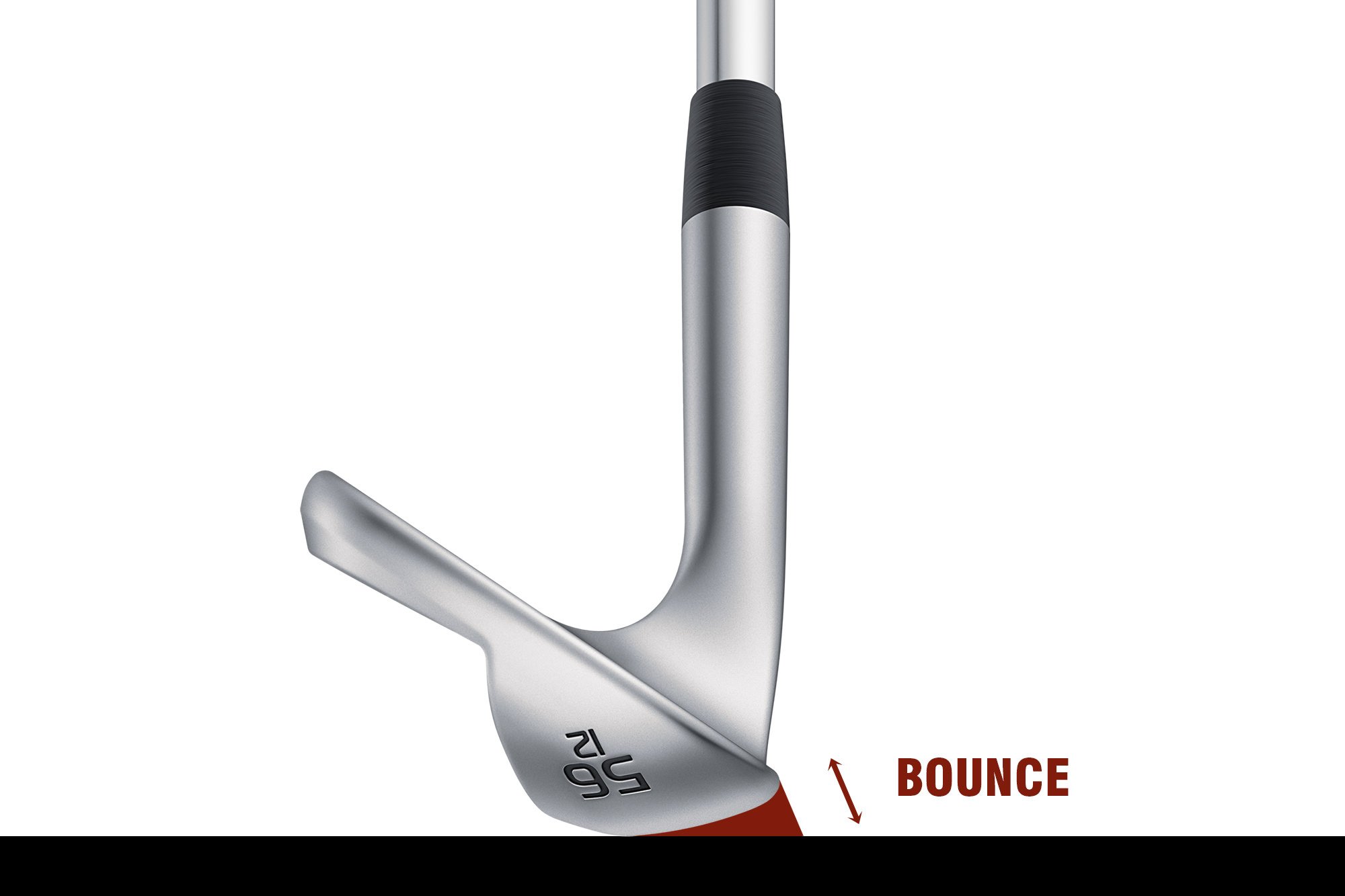
The bounce is the angle between the leading edge of the club and the lowest point of the sole. In layman’s terms, the bottom of the wedge that hits the ground at impact. If you look at a wedge you can see the back of the sole is lower than the leading edge, this is the bounce angle.
Bounce

If a wedge has a high bounce degree the leading edge will sit higher off the ground at address, a wedge with less bounce will have the leading edge sitting tighter to the ground.

Why is it so important?

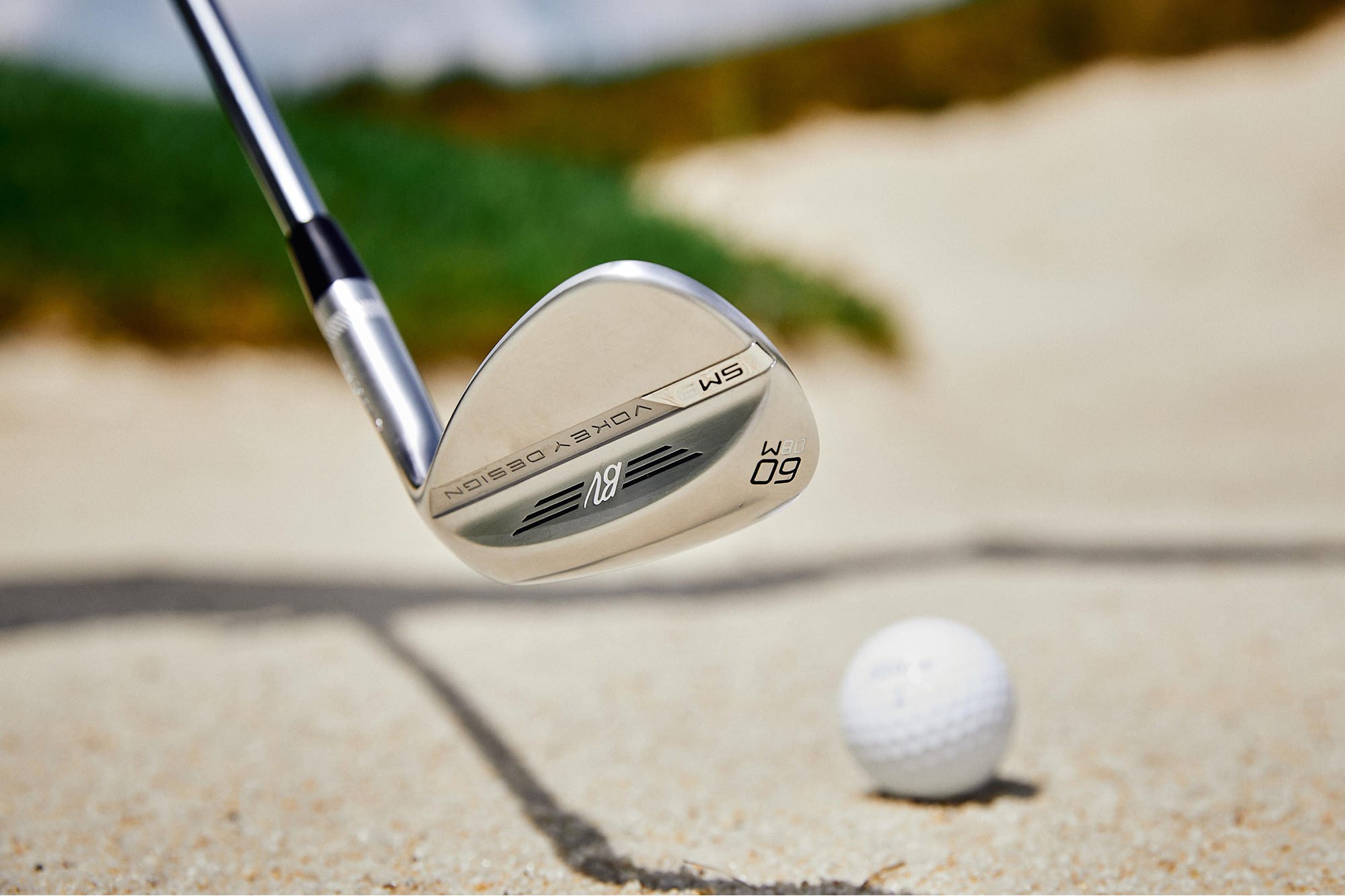
Having the proper wedge bounce and grind option promotes optimal contact, control, and ball spin. In fact, Bob Vokey says that “bounce is your friend” because it provides forgiveness on all wedge shots, allowing you to still strike the ball properly even if you make mistakes.

what is bounce

Low bounce wedges are designed for clean ball contact and would typically have between four and six degrees of bounce. Mid bounce wedges range between about seven and 10 degrees and are a more versatile for distance and flight control.

A wedge with 10 or more degrees of bounce is said to have high bounce. They stop the leading edge of the club from dragging too much in the sand or ground.

Do turf conditions dictate how much bounce you should have?

Yes, turf conditions are huge in deciding how much bounce you need to have on your wedges. Low bounce wedges are ideal for firm turf conditions and bunkers with harder or coarse sand.

Softer turf conditions can require more bounce in the same way that bunker shots are likely to be played with wedges that have more bounce. Fluffier lies warrant the higher forgiveness of the extra bounce angle.

Mid bounce wedges are the most versatile and can be used for a variety of conditions but are best on normal to slightly firm turf.

Advertisement

what is bounce

But why do you need more bounce for softer conditions and less for firm conditions? Well, something that PGA professional Thomas Devine told us a few years back is a good analogy: “If you had a pot of soft butter, you’d be better with a larger, thicker knife. If the butter was rock solid, it will be more effective to use a thinner, sharper knife.”

What else effects how much bounce you should have?

Technique plays a massive part. Low bounce wedges are are great option for players with a sweeper swing style who have a shallower angle of attack and take minimal divots.

High bounce is better for players who have a digger swing style creating a steep angle of attack as it will help the club move through the turf. If you have a neutral swing you’re best with a mid bounce option.

what is bounce

Then there is shot selection. Low bounce is also good for players who want to open the face up to hit high flop shots without the leading edge sitting too high up so you can slide the face under the ball. Attempting this on firm ground on a wedge with lots of bounce will likely result in a thin.

However if you like to place your hands forward and de-loft your wedge shots you would benefit from having more bounce.

So how can you tell if your wedge has the right amount of bounce?

Most wedges have the amount of bounce marked on the sole, it is usually a number between 4 and 14. Four or six would be classed as low bounce, eight or 10 is mid-bounce, 12 and 14 is high bounce.

If you have too little bounce you may have noticed the only the leading edge of your wedge is showing any wear. Your divots are also likely to be too deep.

Advertisement

However if you have too much bounce your divots are probably shallow and you may feel the club bouncing off the turf too much.

If you have any questions about wedge bounce then let me know in the comments below or you can tweet me and I’ll be happy to answer them.

Advertisement

Comments (0)

Leave a Comment

No comments yet. Be the first to comment!