



Aaron Dill is Titleist’s Director of Wedge Relations. In this blog for NCG, Aaron discusses how the right amount of bounce on a wedge is individual to each player.
- Related: What is bounce on a wedge?
Bounce is a great way to minimise shot patterns and control what kind of contact you make. There is a spot we look for on the face, right around grooves two, three, four and five, low on the face. That is the spot you want to be in, we use bounce to try and keep you in that place.
The bounce on the bottom of the golf club is your insurance policy for when you’re making mistakes and you’re struggling or your conditions have changed. We use bounce to help with that. But we also use bounce to help us ensure our strike patterns remain in that groove location because we know that’s a great spot to manage that spin and launch.
Any time the grooves start to show wear higher up the face you’re going to see that ball go little higher and the spin numbers are going to go down too. Really we use that bounce to protect people and to ensure our strikes can be lower on the face more often.
Bounces are very based on the player and where you play golf. So if you are playing in firm conditions or if you are playing in soft conditions those are going to influence the bounce you choose.
You will also be influenced by your swing path, your technique, things you do, how you miss. What kind of bunkers are you in? Maybe the bunkers that have loads of sand, really powdery sand, maybe its heavy core thick sand? Those things are going to make a big difference.
When we fit, we fit with purpose and we ask about the conditions you play in. We ask about your technique, we ask about mistakes and misses you might have and more importantly we try to educate you. We try and decide what kind of bounces you use based on how you use them.
Advertisement
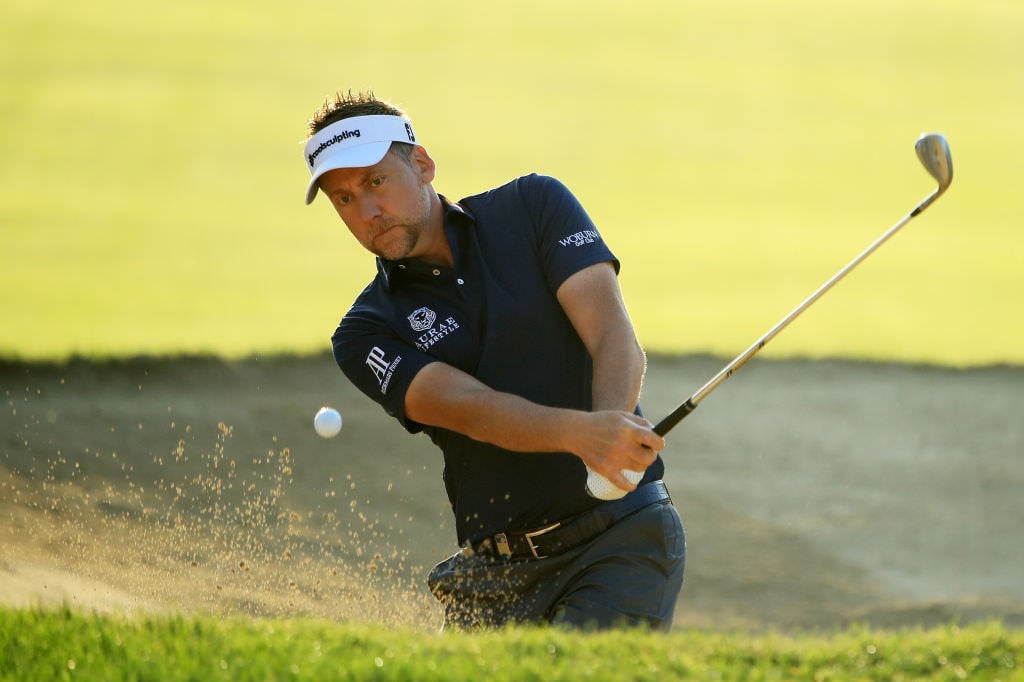
Ian Poulter is a very good example of someone who has a very high bounce sand wedge. He uses that sand wedge around the green, in the sand when it’s soft and into the grain, so that bounce is there to help him.