


Where will The Open be decided? What are the key holes on the golf course? Let Sam Cooper, Royal Liverpool member and associate at golf course architects Clayton, DeVries & Pont, be your guide
Hoylake is a brawny golf course. This year, it will boast the longest back-9 in Open Championship history. At 3,795 yards on the way home, and a closing par 5 of 611 yards, there will be no opportunity for complacency.
Early indications suggest we’ll be set for a brown and bouncy Open this year. Reminiscent of 2006, when Tiger Woods used his 2-iron to dissect the baked-out links, distance off the tee shouldn’t be an issue.
Keeping it on the fairway, though, when a ball can merrily bounce into longer grass, will be key.
With firm greens, the additional spin generated from the tight fairway turf will be essential. Compared to 2014, when McIlroy claimed the Claret Jug, there are far fewer obvious birdie holes. Then, Rory finished -17. He played the par 5s in -12. Nine birdies, two eagles and one bogey. This was where the bulk of his winning score came from.
This year, it won’t be as easy. The 10th hole, Far, has been reduced by only 10 yards or so and will feature as a par 4 on the scorecard. Of the remaining three par 5s, the 5th, the only one he bogeyed in 2014, is no longer, but far tighter. The gorse has been grown in on the left-hand side, and new bunkers added to the right of the drive.
The remaining par 5s, the pair he eagled on Friday’s round, have both been lengthened by almost 70 yards. Now, they stand at 614 and 611 yards respectively. In addition, the out of bounds on Championship 18 has been brought in significantly – leaving one of the narrowest fairways on the Open Rota.
Advertisement
The par 5s are no longer the scoring opportunities they once were. Instead, I’ve looked across the course to showcase some of my favourite holes – and some where an aggressive strategy could yield an unlikely birdie.
Five key Open holes
Key Open holes: Hole 17 – Little Eye
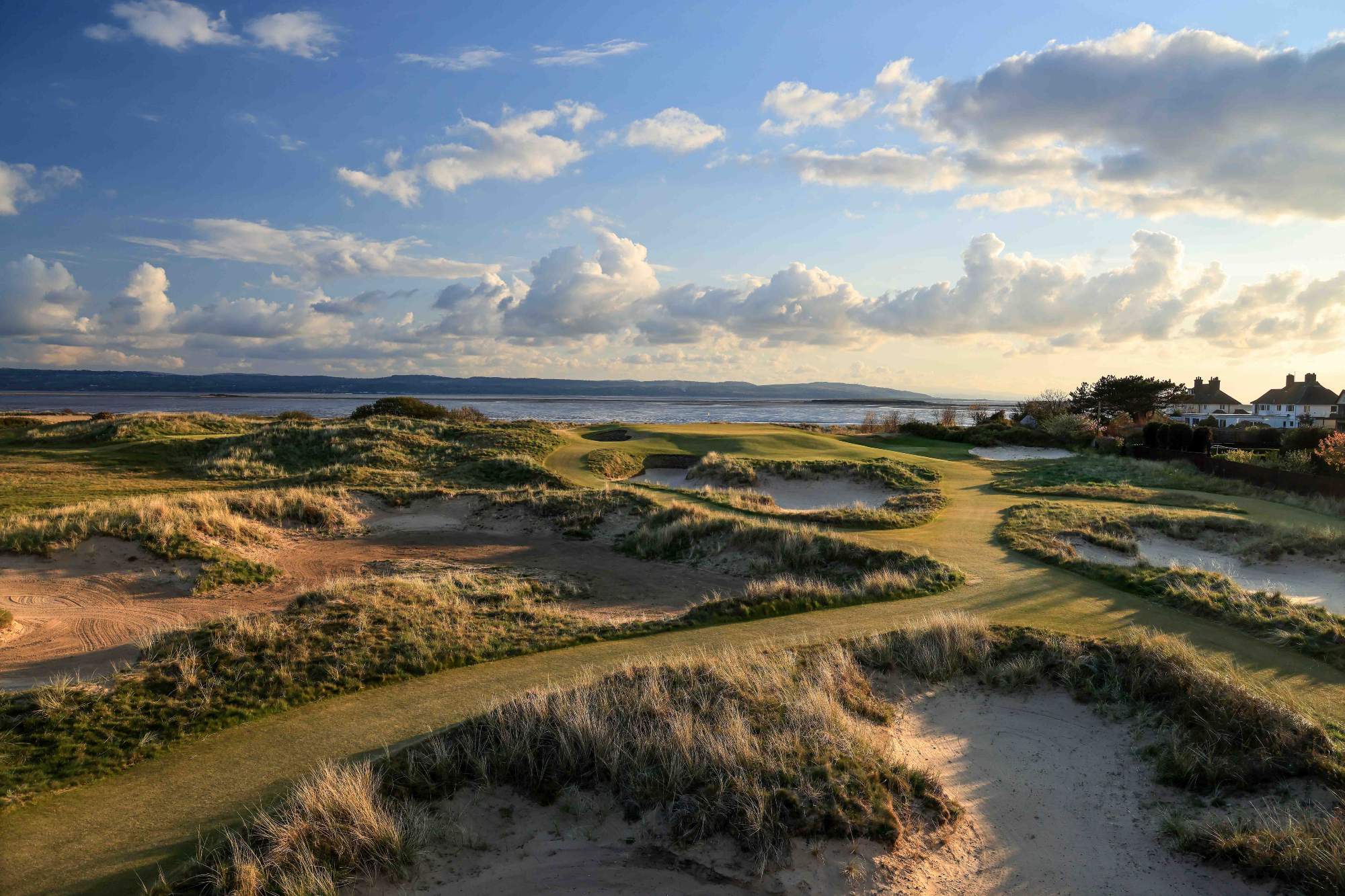
From the green, the view is out over the Dee Estuary. An archipelago of islands can be seen and the one sticking sharply out of the sand, with a minute table top, is ‘Little Eye’. This is the island which lends its name to the hole and it is entirely appropriate.
At 134 yards, this diminutive hole is architect Martin Ebert’s ode to Sawgrass. A penal hole with nowhere to miss, it could influence the outcome of the Championship. The crucial difference here will be in the wind and firmness of turf.
The green at Sawgrass is a little over twice the size as Little Eye, and there’s no elevation change.
The conditions at Hoylake could be very different. If the greens approach the firmness seen in 2006, and if the wind blows (especially down wind), holding the green could be a real challenge.
Key Open holes: Hole 3 – Course

During the last two Open Championships, the professionals have largely tackled the members’ opening hole in the conventional way. A long iron to the corner, and a mid iron to the green. While the Open routing order (normal holes 17 and 18 played as 1 and 2) means this hole isn’t tackled ‘cold’, it is still a daunting prospect.
Most people assume the difficulty is in avoiding the out of bounds. The internal boundary which flanks the right hand side of the hole is ordinarily the club’s practice ground – but hosts the tented village during Championship week.
Rather than this being a one dimensional challenge, it’s the nature of the asymmetric defence which causes the issues.
So determined to avoid the obvious penalty, most players err on the ‘safe side’. Playing left off the tee only lengthens the approach, and the up and down from short left of this green (a popular spot) is particularly tricky. It is standing up to the out of bounds which is the challenge of the hole, not simply avoiding it.
Advertisement
This time, though, I wonder if they’ll go one step further. The carry from the pro tee to the corner is only 240 yards.
A carry of 300, running out into the rough on the other side, could get within 70 yards of the green. As the conventional lay-up would leave 175 yards plus, it might be a tactic the longer players employ. Watch this space.
Key Open holes: Hole 10 – Far

In the 1930 Championship, the great Bobby Jones almost lost the Open leg of his ‘impregnable quadrilateral’ with a few duffed chips to the left of this green. Played for the first time as a par 4, as opposed to the usual par 5, ‘Far’ is a classic ‘half-par’ hole.
The green is defended asymmetrically. The bunker on the front right is the largest on the course, to be avoided at all costs. To the left is a steep run off of closely mown turf. The fact a long approach has such a mismatch of potential outcomes is what makes the hole so interesting.
This is only accentuated because most drives are played down the right-hand side of the fairway – safely away from the left side boundary.
Here, the fairway banks up to the hills, which separate this hole and the next. With a ball above the feet and with the prevailing wind down off the right shoulder (for the right-handed golfer), the shot against the green’s axis is particularly tough.
With the long-left miss being tolerable, and the short right being thoroughly unpleasant, most let the hands roll and end up in Jones’ spot trying to get up and down for their four more often than they’d expect.
Advertisement
It’s a brilliant hole to watch long approaches, and see how committed the pros can be to the centre of the green.
Key Open holes: Hole 13 – Alps
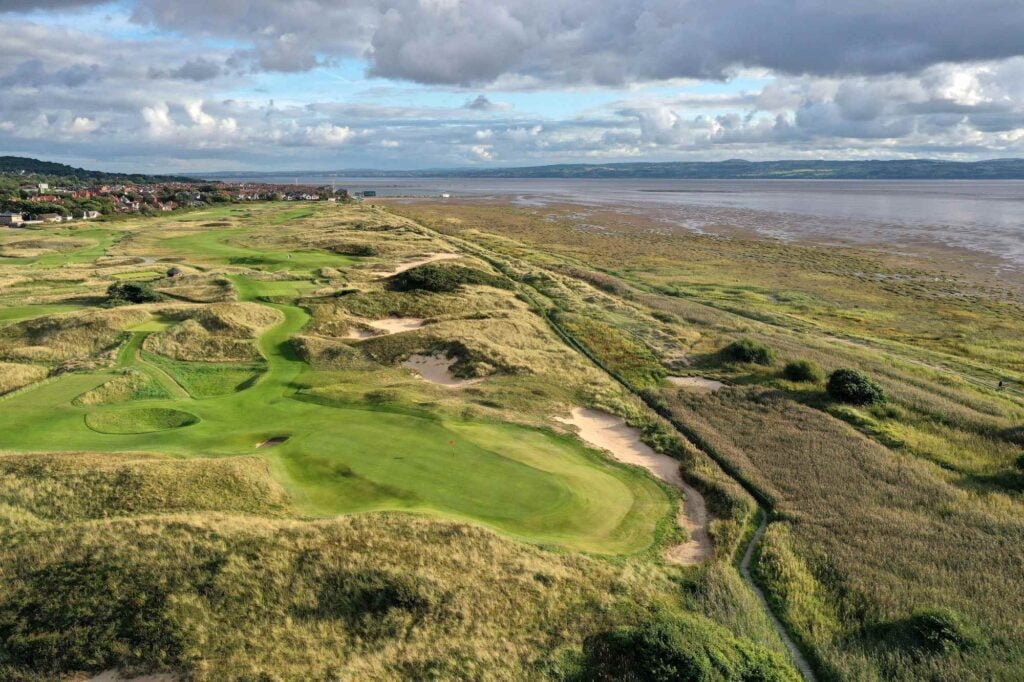
Alps is a Harry Colt masterpiece.
He turned this from a blind hole playing over a tall hill to the poised hole of today. It’s beauty is in its simplicity, as much about what he didn’t do as what he did.
The prevailing wind is straight down the mouth of the Dee estuary, meaning shots are played into the green largely into the wind and a little from the left.
With a wind and a yardage almost forcing a left to right ball flight, the green is angled in the exact other direction – requiring a draw shot instead. In classic Colt style, the tees and green are at very similar heights – allowing the best players to flight their shots with conviction into the green.
There is a single bunker which lurks short right, well positioned to trap those who have not met the brief. Now, there is a short grass run off down the left hand side of the green. If your ball runs down here, it is a treacherous up and down.
The view out across the Dee Estuary is also one of the finest on the links. While I’m sure the professionals will be unmoved by such a vista, it is a nice consolation for those of us who haven’t played it as the architect intended.
Key Open holes: Hole 14 – Hilbre
Fortune favours the brave, so they say. In 2006, fortune favoured Tiger Woods. While his long iron off the tee was more conservative than some of his peers, his pinpoint approach – blind and far enough back to require a four iron – found the bottom of the cup for an eagle.
Advertisement
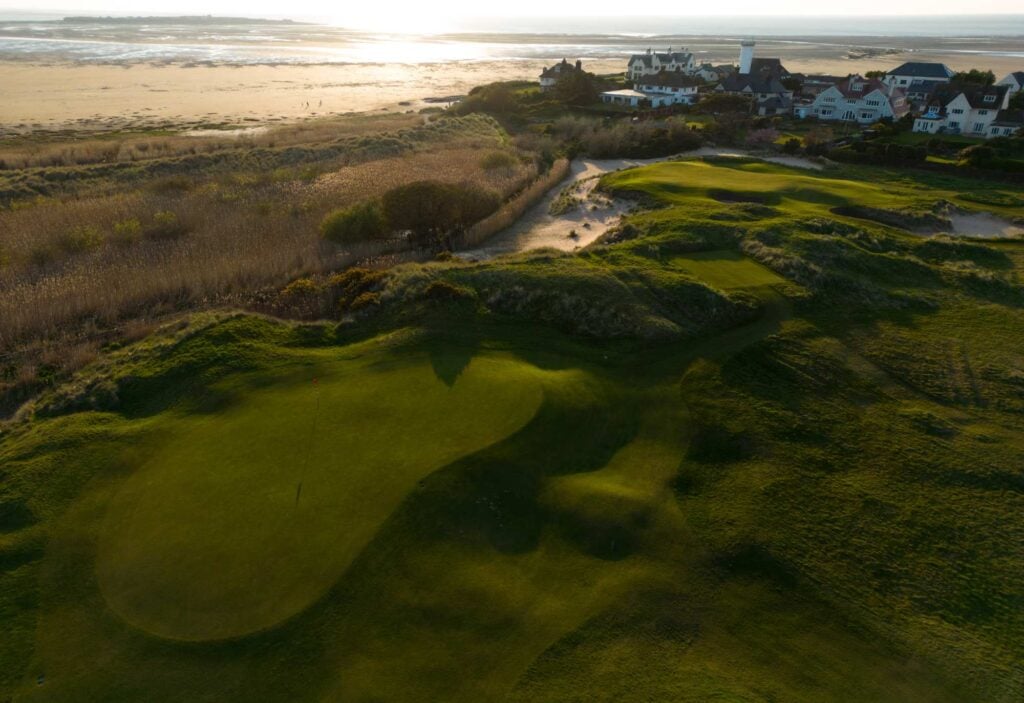
Most players try and get as close as possible to the two left side fairway bunkers. If far enough up, the line into the green from here should be clear. If too far back, the shot will be obscured by either the large sentinel dune on the inside of the dogleg or the one just short of the putting surface.
In years gone by, no one has tried to take the drive over the corner of the dogleg. Normally, this is into the prevailing wind and the carry from the long back tee has proved prohibitively long.
Off the regular tees, however, it is how my friends and I would play the hole. If the wind flips, a more aggressive strategy might be adopted by the longer players.
It is another green defended asymmetrically. To miss left risks disaster. If not a lost ball, then it’s a pitch beyond the wit of most. From the right, it is tricky but manageable. This, especially coupled with the wind and left to right camber of the fairway, means more shots than might be expected end up missing short right.
What do you think of the Open Championship course layout? What you make of these quintet of Hoylake delights? Let us know with a tweet.
Advertisement