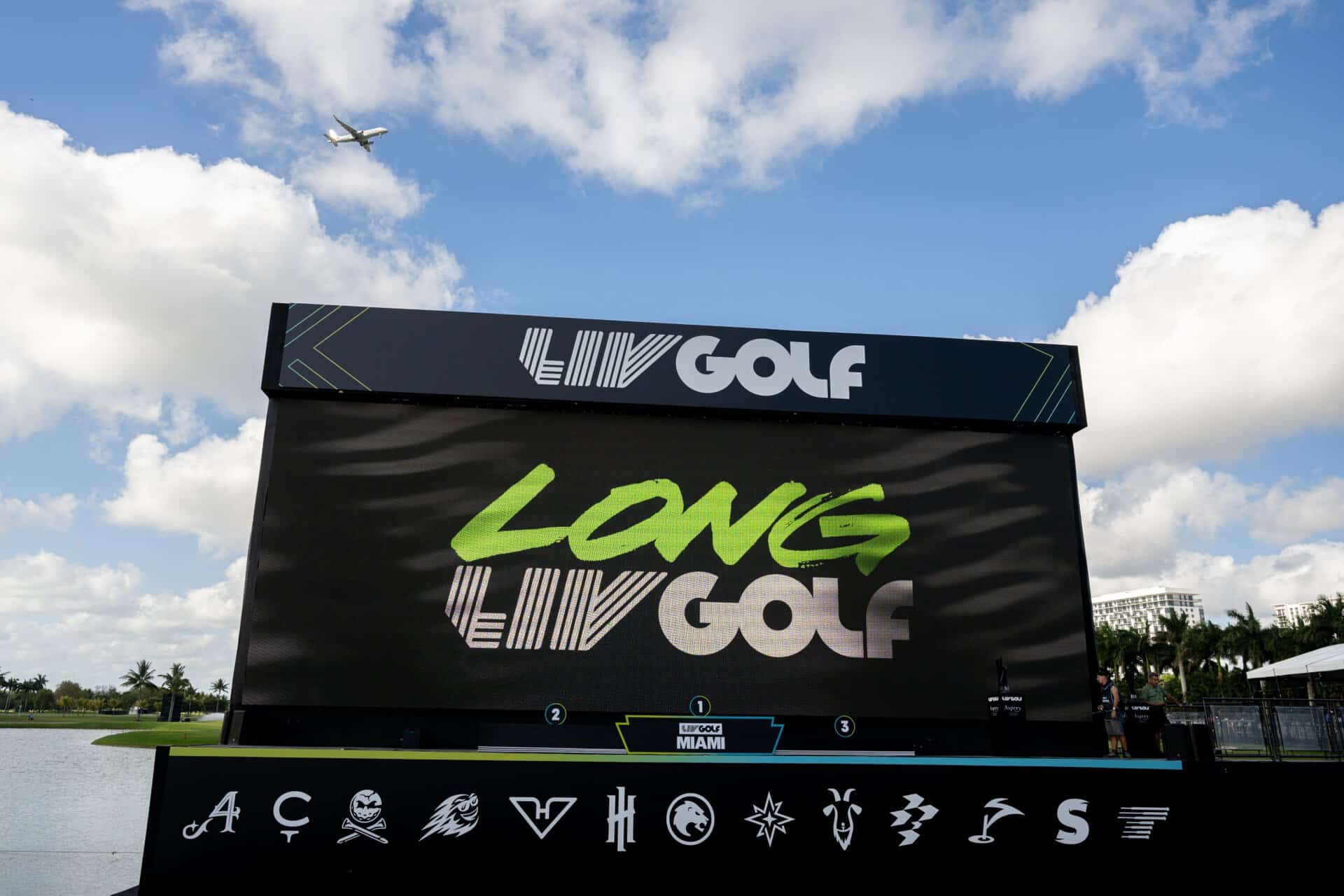


LIV Golf made a surprising step closer to the look of other professional tours in November 2025.
The breakaway circuit altered its format from 54 to 72 holes for the 2026 season.
Throughout its short existence, LIV has been completed over three rounds. However, going forward, a fourth round will be added in an attempt to mirror and align with the likes of the PGA and DP World Tour.
Somewhat ironically, the name LIV is derived from the Roman numerical value, which is 54. Will their name now change to LXXII?
Joking aside, LIV CEO Scott O’Neil has spearheaded this decision in an attempt to qualify LIV for Official World Golf Ranking (OWGR) eligibility. A 72-hole format would seem a key principle in gaining world ranking status.
The tour will still maintain its commitment to shotgun starts during its events, meaning everyone tees off on a different hole at the same time, as opposed to the traditional tee time format implemented elsewhere. This is not an indictment on the OWGR eligibility but raises other question marks from an entertainment and watchability perspective.
LIV has always pushed a contrasting persona to golf’s established circuits, and wants to be different, faster and more exciting. But in the same breath, it also wants to be treated equally in the eyes of the OWGR, and is now seemingly stuck in a perilous middle ground that may jeopardise the sustainability of the tour altogether.
Alternatively, this could be a significant checkpoint that enables LIV to become the successful global tour it set out to be. With the 72-hole strokeplay corresponding with the accepted professional tours, a possible granting of OWGR status would integrate and cement LIV as a visible and regarded entity within the golfing ecosystem.

How does LIV Golf work?
From what we know so far, the team element and season-long competition format are not going to change drastically, apart from adding another round of play into the mix.
Advertisement
In 2025, there were 13 teams, each with four players, as well as two wildcards, who made up the last of the field, so there were 54 players. In 2026, there will be 57 players, still 13 teams, but five wildcard players.
At the team championship in Michigan at the end of August, Jon Rahm’s Legion XIII and Bryson DeChambeau’s Crushers were tied at 20-under at the end of regulation. But the Spaniard, alongside Tyrell Hatton, won in a playoff to take the crown. Here is a breakdown of how the season-long format works, both in the teams and individually.
The lowest score wins. That part is simple.
In the team discipline, the rules used to say that each of the team’s top three scores counted in rounds one and two, and all four scores would be counted in the final round of each event. Starting in 2025, every score counted from every player in every round. Again, the lowest cumulative score wins.
In the individual discipline, the season-long individual standings feature the Lock Zone for positions 1 to 24.
There are two other cut-offs: the Open Zone, places 25 to 48, and the Drop Zone, 49 and below.
Players finishing in the top 24 at the end of the regular season earn a spot for the following year. Players finishing between 25th and 48th who are out of contract will need to be re-signed by their team or picked by another team.
Players finishing 49th or below are relegated from the league and must pursue a new route, unless they win the LIV Promotions event after the season has finished, which is LIV’s version of Q-school.
Former Open champion Henrik Stenson of the Majesticks team finished in the relegation zone in 2025.
You earn individual points at an event by finishing in the top 24 on the individual leaderboard. The winner at each event pockets $4,000,000, and the bottom player in 54th place banks about $50,000.
To learn more about the LIV Team Championship, click here.
NOW READ: Who is Caleb Surratt?
NOW READ: Jon Rahm recalls ‘difficult’ days leading up to LIV Golf switch
Do you watch LIV Golf? Tell us on X/Twitter!
Advertisement