


While golf’s authorities grimly resist ever-increasing distance and speed to protect the game’s future, there might be another battle they can’t win.
Balls are crunched and drivers are swiped by toned and trained athletes in this era but excluding the obsession and clear upside of muscling the ball further, are players just better now?
Fans from previous generations could reel off Faldo, Woosnam, and Ballesteros, not to mention Nicklaus, Watson and Player, and counter this notion. You can’t discover talent in the gym.
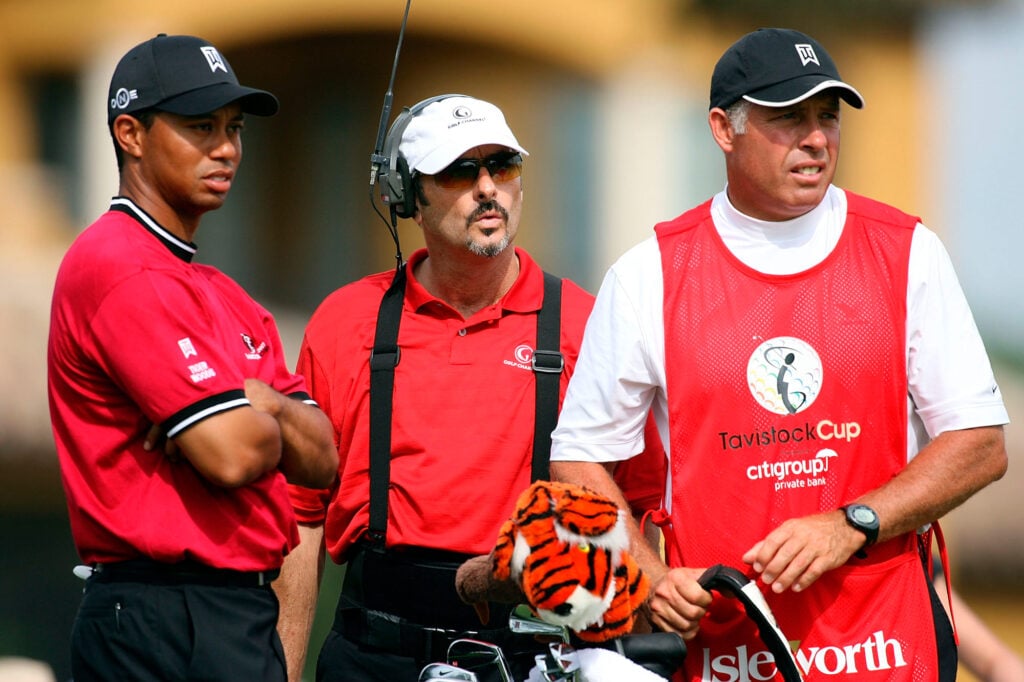
But David Feherty, a competitor in this same era and now established broadcaster, sees both sides of the coin and uses an intriguing analogy from football to explain how the R&A and USGA, who are trying to enforce golf ball roll back, might be fighting a natural evolution in quality as well as the nurtured boom in distance.
“There’s an argument to be made from both sides I think,” Feherty said to NCG. “The evolution of the sport and the players who play it, they’re just better than they used to be, never mind the equipment.
“That’s just a natural evolution of the species. If you look at football teams like George Best’s Manchester United, they would be destroyed by today’s Manchester United. They’re bigger, they’re stronger, faster. They’re just better than they used to be at the game, and it’s the same in every sport.”
ALSO: Lee Westwood rallies for roll back: ‘Great drivers have lost their edge’
ALSO: Which balls will be legal when roll back arrives?
David Feherty on golf for amateurs: ‘It’s an impossible f*****g game’
From January 2028, the testing conditions used for golf ball conformance under what is called the Overall Distance Standard will be updated to cut down how far the ball travels for tour professionals and club golfers.
Advertisement
The R&A and USGA want to protect golf’s long-term sustainability and scaling back the golf ball is the strategy they’ve chosen. At the heart of the debate are traditional courses like the Old Course at St Andrews and timeless ones like Augusta National which could be subjected to more change to cope with big hitters. Often is the debate that the most revered venues are now redundant because of advances in technology.
Feherty, now a lead analyst in the LIV Golf League, has the unique perspective of a player and broadcaster. He played with the persimmon woods and Balata balls on his way to winning five times on the European Tour between 1986 and 1992 and making three top-10 major finishes but has also walked inside the ropes in roles with CBS, NBC and LIV alongside the post-millennium bombers.
In true Feherty style, the 66-year-old from County Down, Northern Ireland made no bones about how tough golf is for grassroots competitors and discouraged making the game harder for those who find it the hardest. He also outlined the importance of protecting golf courses such as the Old Course, the home of golf, to keep their authenticity.
“I don’t think it can do the game any harm to limit the speed of the golf ball. The only people that I think it’s a disadvantage to is the golfers who really matter,” he added.
“Guys like you and the average club golfer and good players, bad players, the game is extremely difficult, it really is. It’s an impossible f*****g game, and anything that makes it easier for the amateurs is a great thing.
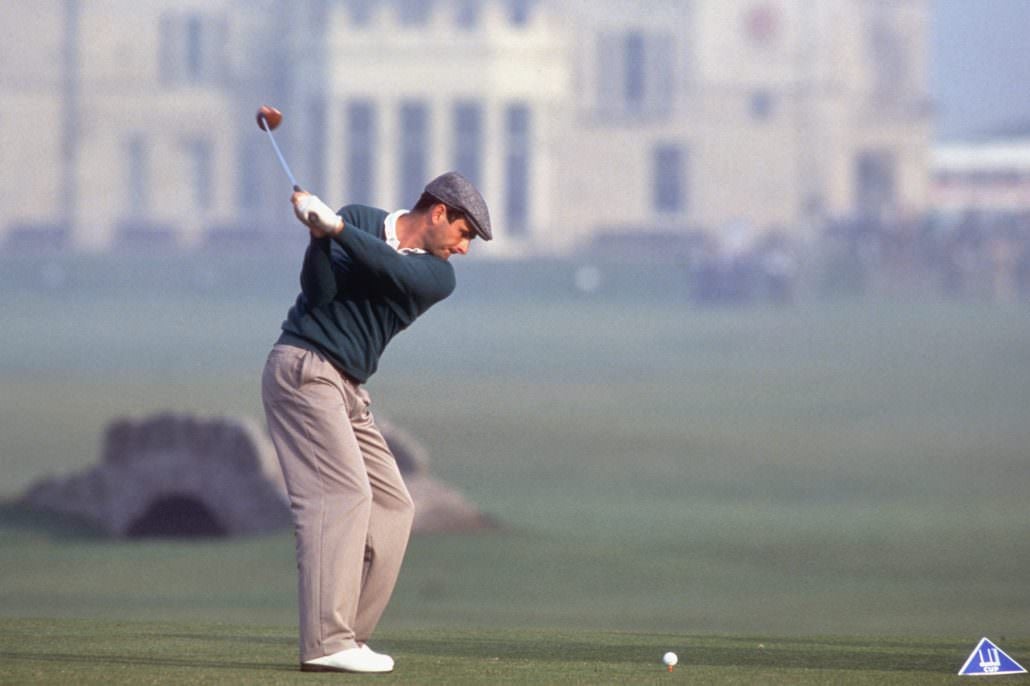
“Take the Old Course as an example, making it longer and longer is like taking a Chippendale chair and adding height to the cushion or the seat. It’s a priceless antique and I don’t think you want to go in there and change it too much.
“But on the other side of the coin, when you look at Augusta when I first went there in 1991 or something (his sole Masters start was 1992), and I did 19 years there as a broadcaster, that golf course expanded itself by 600 or 700 yards, but you still walk off one green and on to the next tee. It’s a genius design, there’s only one long walk and that’s from the 10th green to the 11th tee and that was always there.”
ALSO: Will my golf ball travel as far? Here’s what roll back means to you
While Feherty sees both sides to this debate, it is far more than binary. One school of thought metaphorically places the rocket-fulled balls and clubs of today’s game into the hands of Jack Nicklaus and Nick Faldo and questions how many majors they could’ve won.
With each towering pitching wedge that Rory McIlroy and Scottie Scheffler send into the lush, soft greens of America, spare a thought for those before them and consider how they’d fare given the same advances.
When I suggested that his generation looked more fun, having seen many clips of him and his contemporaries bending balls into par-4s with 3-irons, Feherty was reminded of a conversation he had with the Golden Bear about this very topic.
“I was talking with Jack Nicklaus not so long ago, just sitting and chatting about the game,” he added. “He played the MacGregor ball, it was like a boiled egg, whether it was a good one or a bad one. He said if he’d played with a Titleist, he probably would’ve won five more majors. It’s amazing the strides that the equipment manufacturers have made – but I agree with you, there was something fun and that’s why The Open Championship is so much fun to watch.
Advertisement
“You see players struggle when the weather gets bad. Here in America, the game is played from one perfect surface to another, and it was never really meant to be that way. You’re meant to have sh***y lies, and you’re supposed to have difficult shots. At The Open, sometimes you can be around the green and get it within 30 feet and it’s a pretty good shot.”
NOW READ: Masters say they will support golf ball roll back plans
NOW READ: We wouldn’t need golf ball roll back if every event was on a links course
NOW READ: Ian Woosnam: The golf ball roll back won’t make any difference
What do you make of this David Feherty golf roll back perspective? Do you agree with this David Feherty roll back stance? Tell us on X!
Advertisement