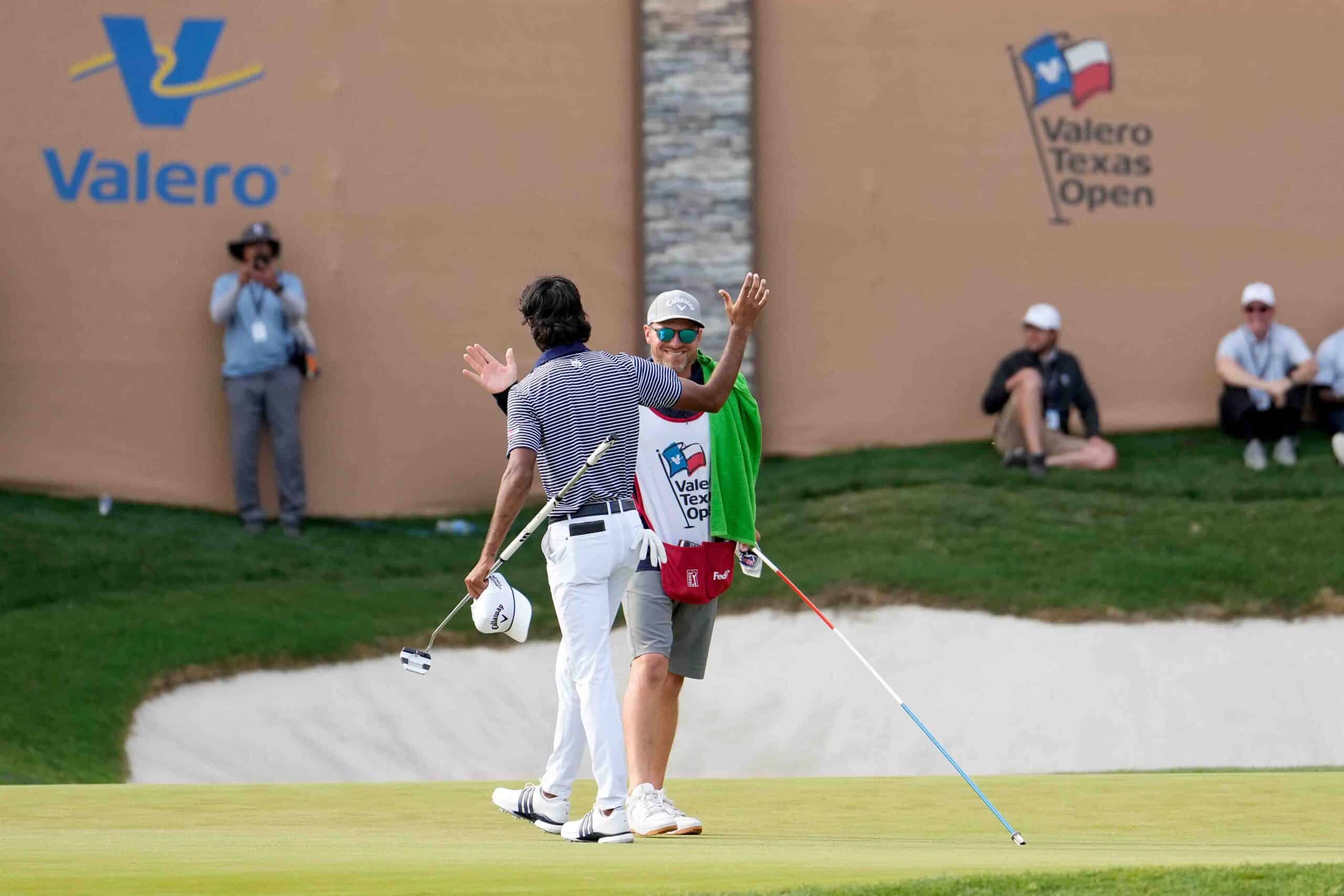



By now, you are all putting with the flagstick in and making those greens look spick and span by repairing your spike marks. The new Rules of Golf are up and running. What a time it is to be alive.
What I bet a lot of you aren’t doing, though, is dropping your ball on the edge of the fairway, taking a two stroke penalty, and not having to worry about walking back to hit again.
I’m interested to know how many clubs have implemented the alternative to stroke and distance local rule that was offered to committees as part of the 2019 Rules of Golf.
I get the feeling that when CONGU intervened it rather sounded the death knell for a proposal designed to speed up play.
The guardians of our handicaps swept in, somewhat unnoticed in all the fuss about some of the other rules changes, and slapped a rather important caveat on this local rule.
They said that it wouldn’t be allowed for scores that would count for handicaps.
So if you were playing a medal, a Stableford, or putting in a supplementary score, this local rule could not be used.
Following their intervention, I know of a number of clubs – including my own at Sandburn Hall – that abandoned any plans to introduce it, even though it was still perfectly permissible for casual play and some other formats.
The logic was that a rule you could use in some events, but not others, would only confuse golfers.
It was better to err on the side of caution than have to disqualify a player from a board competition because they’d forgotten you couldn’t do it in a qualifier. That, in itself, is a very wise reason for binning the regulation but my opposition to it was actually much more fundamental.
Advertisement
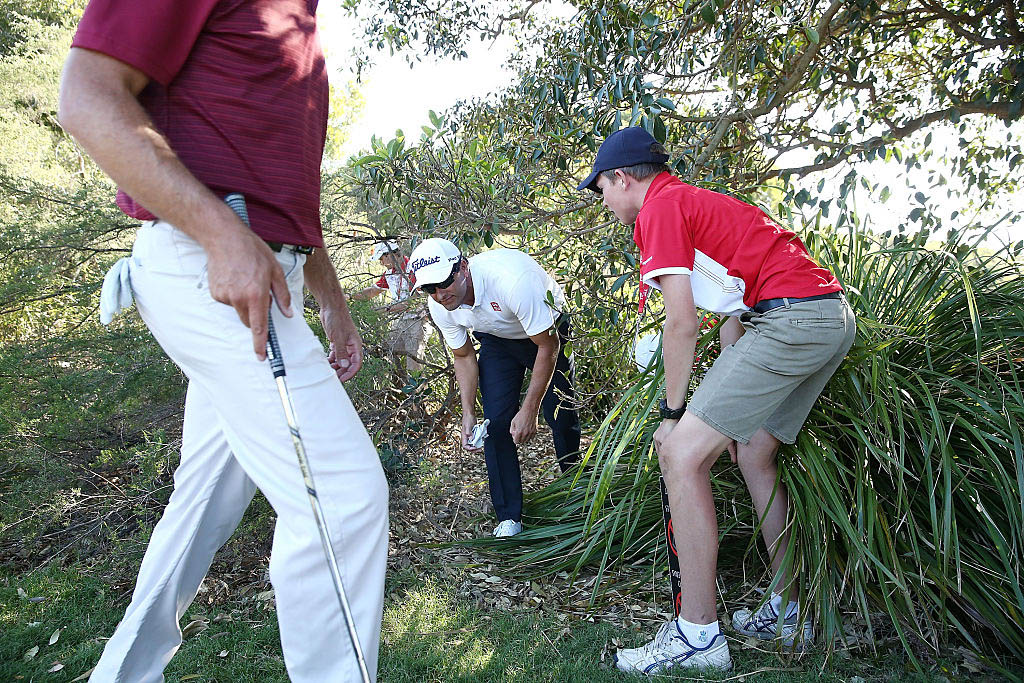
Stroke and distance local rule: Keeping the ball in play is one of the game’s principle tests
Surely it’s a basic tenet of the game that you keep the ball in sight or within the boundaries of the course? Why should the failure to do this end up with a favourable lie on the edge of a fairway – even if it came with a two shot sanction?
The esteemed Peter McEvoy, the celebrated Walker Cup captain, was apoplectic when confronted with the proposal last March, arguing that “it’s taking away the essence of the game”.
“It will speed up play but is that everything? I would far rather people were tested on their ability to hit a fairway,” he added.
The first hole at my club, Sandburn, is a long par 5 with out-of-bounds tight off the tee down the right hand side.
In the 2017 October Sunday Medal, I tapped in for 13, assisted by four shots sailing straight over the white lines. I’d hit poor shots and I accepted the consequences.
If this local rule had been in place, though, I could have reduced that to 7. How could that have been fair on the other competitors?
Keeping the ball in play has to be one of the game’s principle tests.
And why is hitting a provisional such a problem for everyone? The “long walk back to the tee”, which is one of the oft-repeated reasons why his new local rule is proving so popular in some quarters, is largely eradicated if you just tee it up again after a dodgy shot.
And if you can’t keep that one in play, why should you get the benefit of being able to find a fairway edge?
That’s why CONGU were right to step in and lay down the law. Pace of play is important, but not at the cost of losing golf’s soul.
Got a question for our expert?
Despite the changes to the Rules of Golf in 2019 and 2023, there are still some that leave us scratching our heads. I’ll try to help by featuring the best of your queries in this column.
What do you think about the stroke and distance local rule? Let me know by leaving a comment on X.
Advertisement