

For its apostles, it has an almost magical quality – like someone has given you a map to golfing treasure and drawn a big X to an accuracy of 0.5mm.
It’s critics regard it as a nothing less than heresy – a false idol that takes away one of the essential skills of the game and slows it to a crawl.
Green Books, though, aren’t going away.
Related: Can a Green Book help your game? We tested it
The R&A and USGA agonised over what to do with them, releasing the Interpretation on Putting Green Information in the summer and then changing pretty much everything that was substantive in that document when the finalised rules were released in October.
The way they will be produced, and the level of detail they will be able to show, has changed, but they are likely to remain as much of a fixture on Tour as they have been over the last couple of years.
So what does Paul Homersham, founder of the Green Book, think of the controversy and how does he plan to adapt to the new rules? We caught up with him to find out…
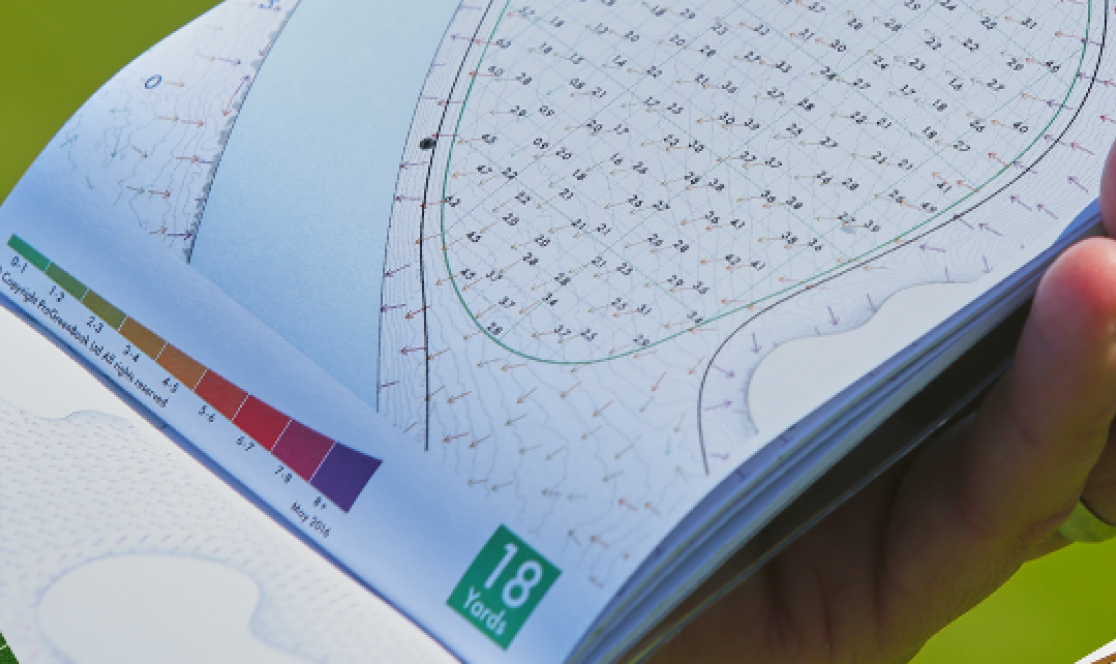
Do you think the average golfer misunderstands the Green Book?
Without a doubt, it is misunderstood – but it is misunderstood by people who haven’t tried to use it.
Like many tools, some people aren’t suited to using it. For many golfers, it just doesn’t work for them.
I showed Rory McIlroy how to use the product and he used it with some success for a while. But for a player to take himself out of his zone – where he is trying to read and get a feel for what he is about to do – and to go into a technical publication and start to analyse data can take their attention away.
Advertisement
There are a significant number of players who don’t engage with it and don’t want to use it. The number one putter on the PGA Tour, Jason Day, doesn’t use the Green Book.
I do believe it can help but it isn’t for everybody. So the statement that it makes reading greens too easy, and deskills it, just isn’t true.
In fact, if you use it badly it will prevent you from sinking putts. It’s like learning how to use AimPoint. This information can be used but you need to know how and how not to use it.
You produce two versions – one for tour professionals and a version that appears in clubs and is a little less detailed. Is it about fitting the information to the audience?
Very much so and different players prefer different types of information. Some of them mostly use it for approach shots, so they can leave themselves below the pin and others so they know how the ball is going to release.
We’ve adapted the graphics to try and help as many as possible.
The good news for us, mostly, is that it’s business as usual. The scale and size limits imposed don’t affect very much of what we do, 90% of the books we publish will still work.
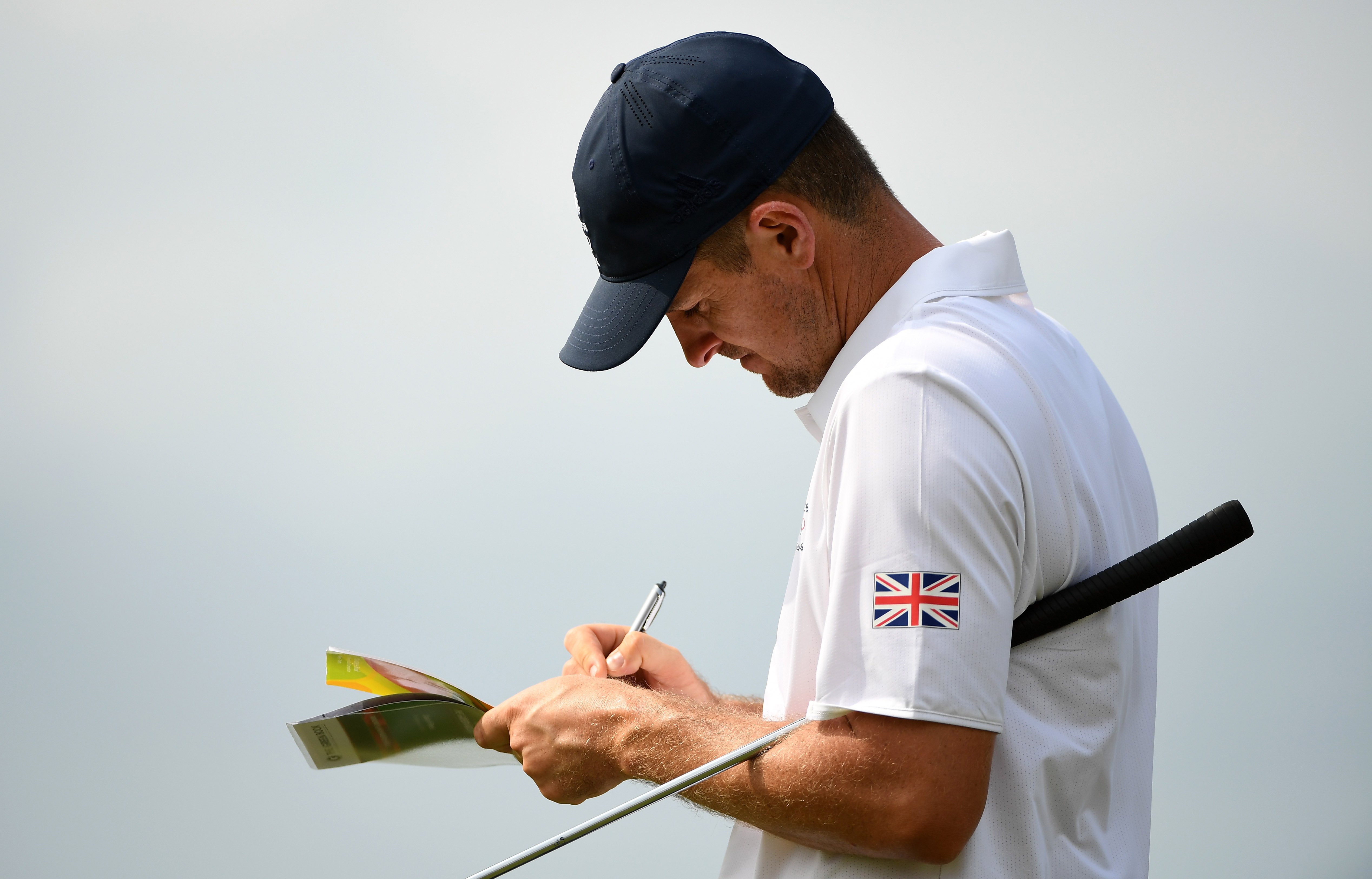
Under the new limits, the dimensions you will be able to show are 3/8 inch to 5 yards. How will that affect the books we see on the course right now?
None of the books we have published would be legal for use but we’re experimenting with what kind of information we can get into a much smaller area that’s still usable.
It’s going to take away some level of detail but caddies and players, if they are keen enough, are going to be able to make notes.
The book size is limited but if they wanted to, say, take the detail out of what is on a [current] bottom page and produce a version of those – making a copy using a pencil or pen – they can still use more information if they want.
Which they will – with millions of dollars at stake…
There are other factors that limit the use of really good detailed information and one of those is the position and accuracy of the pin positions the players are given.
There’s no point in having very accurate information if you don’t know where the pin is within a couple of yards.
But, yes, certain types of players who like working this way will go to the effort of still getting the detailed information and making their own notes.
So how much smaller will the Green Book be and how does Homersham think the professionals will adapt to the new regulations? Find out on the next page…
How much smaller will the maps be?
Roughly about a quarter of the size. The rule of thumb I have extrapolated from the 1:480 is a five-yard square grid – each one of those is 9.5mm. It’s just short of a centimetre.
It’s significantly smaller but the biggest effect the rules are going to have is that because we’re going to make the information a little bit smaller you are going to need better eyesight. Reading glasses are going to be in demand.
So it’s the green size that we would currently see in a standard course yardage book?
Exactly that. There’s a certain amount of design to be done to get the right solution. We will release our designs and try and get approval for them from the R&A and USGA.
Advertisement
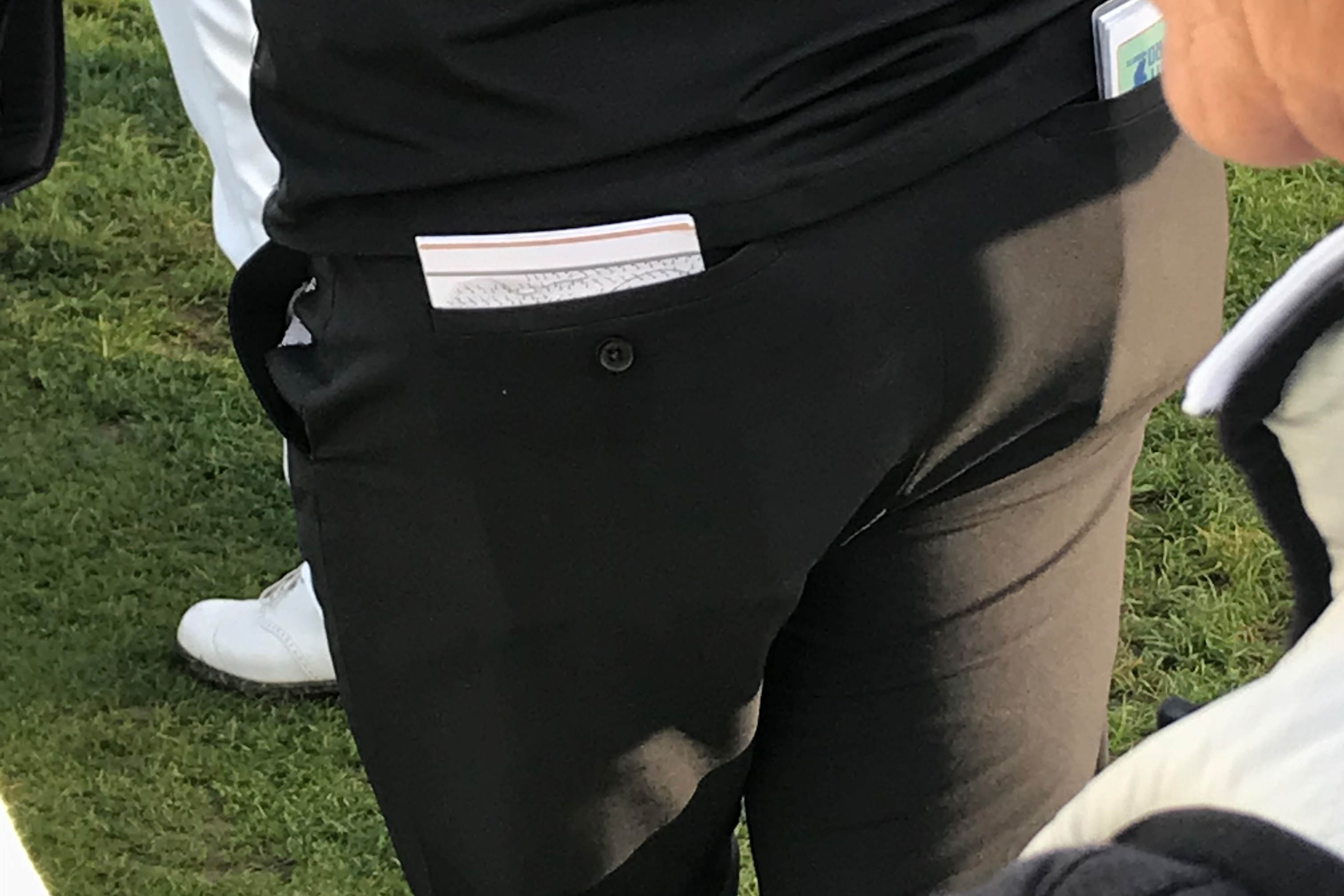
The day of the A4 green maps on the course are over…
It’s over in that they can’t take them out on the golf course. I think you’ll still find them studying them beforehand.
The most detailed information we produce is only of real use if you are really accurate about where the pin is.
In some cases, to make the material really useful, individual caddies put a huge amount of effort into walking the course before they go out and play to check pin positions.
And they can do so within the rules and without stepping on greens.
Are you relieved you can push on now?
In lots of ways this whole episode has, ironically, raised people’s awareness.
Now the Green Book has been given the green light, within certain limitations, it is fantastically positive for us and our business.
We’re really looking forward to innovating within the rules and making people’s golfing experiences more fun.
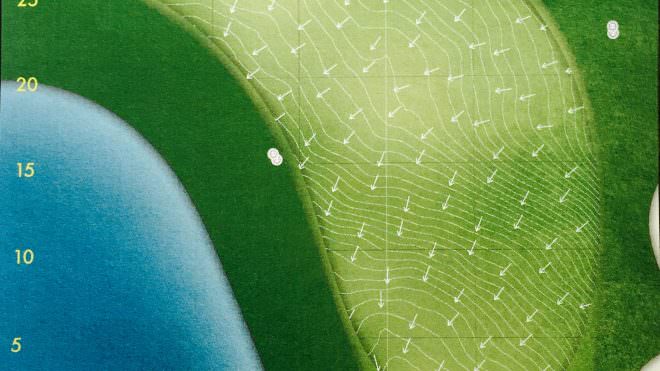
What are the new rules on Green Books?
Any image of a green is limited to a scale of 3/8 inch to 5 yards.
Any book or paper that contains such an image can be no larger than 4¼ inches by 7 inches – that’s the current size of most yardage books.
The image cannot be magnified, other than through your usual prescription glasses or lenses.
Written green dimensions can only be used if the book or paper employed meets the size limit and it’s either the player or caddie making the notes.
What the professionals say…
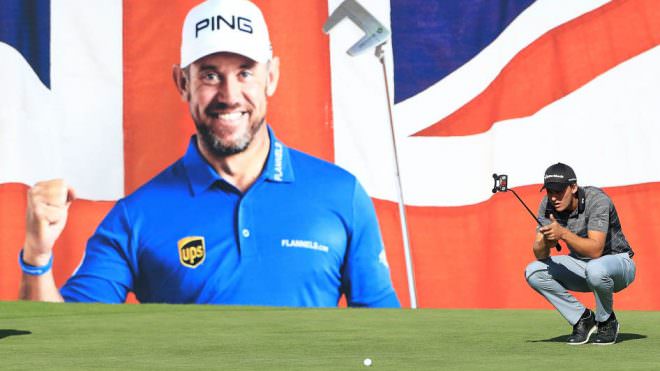
Chris Hanson, European Tour professional
I use the Green Book as much for approach shots – if the slopes are behind or in front of the pins.
I don’t take it as gospel whereas the guys who think it’s crap and don’t like it think the pin has got to be in exactly the right place and the ball has got to be in the right place.
Advertisement
For me, it’s impossible to do that. Everyone’s yardage is different and the angles are all different. I use it as a reference to give me an idea and to back up my decision.
In theory, I don’t think you should be able to have something that tells you how to read a green but I’m going to use it if I can.
I will walk up to the green from 50 yards away and I’ll already have a 90% idea of where my ball is.
I get to my ball straight away, have a quick look at it, measure it off – look at a sprinkler and get my reference – and put the book away basically.
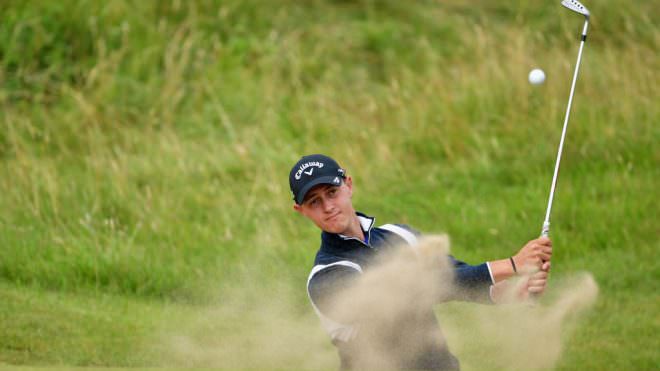
Joe Dean, who won Q School second stage and will play on the Challenge Tour in 2019
I used one at second stage and it definitely saved me probably five to seven shots for the tournament. I would never have won without a Green Book.
At final qualifying it was a bit tricky. The Hills course wasn’t quite as grainy so the Green Book worked great. The Lakes greens were a little bit grainier.
The book will say it’s a slope of two per cent but, if you’ve got a grain going up the slope, then it might only be 1%.
I used one at the Open in 2017 and that was fantastic. Inside of 10 feet it was amazing and I couldn’t fault it.
I know the general gist is that people think it takes way too long but that’s not the Green Book itself it is the people that are using them.
Advertisement
I looked at it when my partners were playing so I already knew what I was looking at when I got over my putt. I’d love for them to stay for 2019 and for the Challenge Tour especially. I think they would do me the world of good.