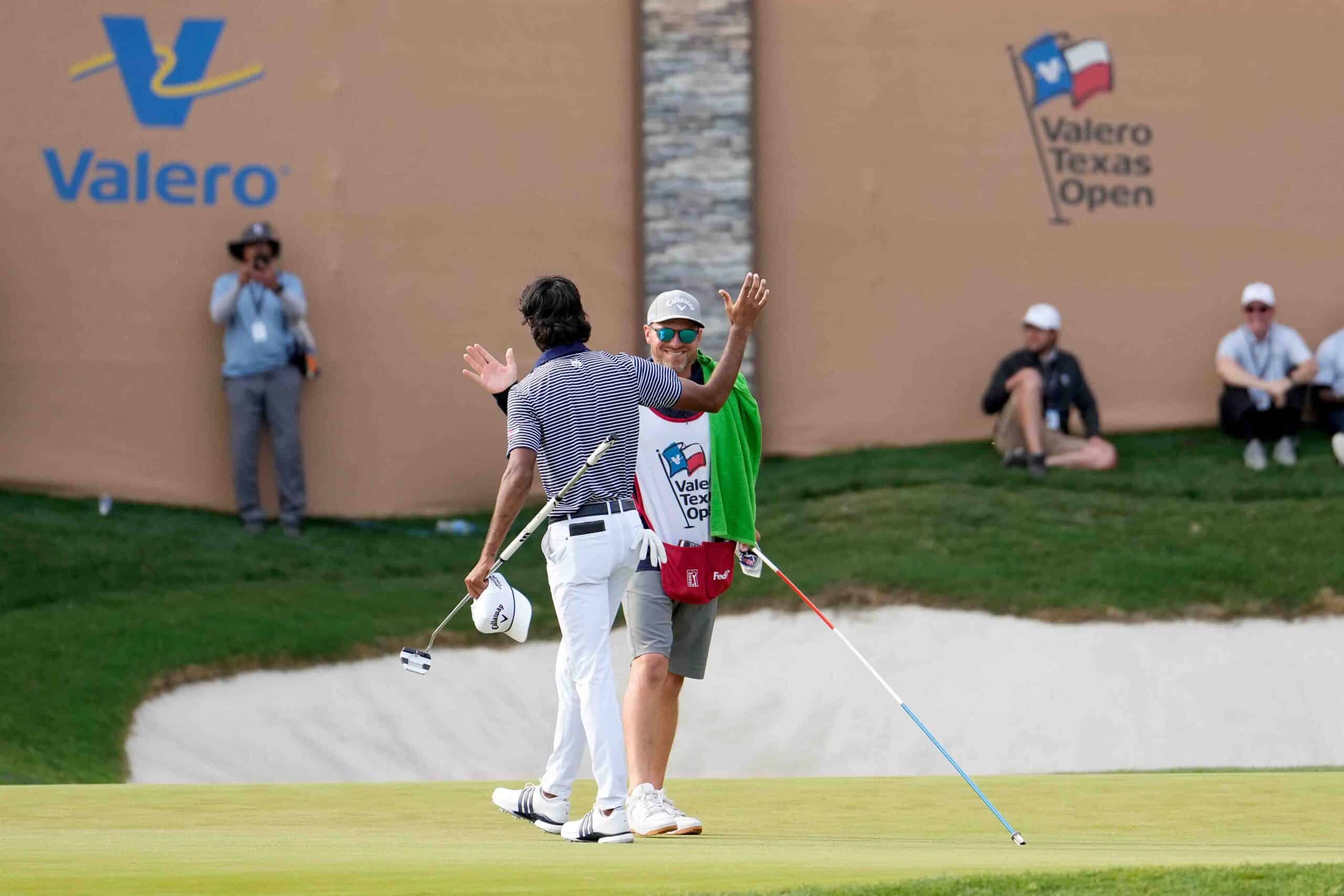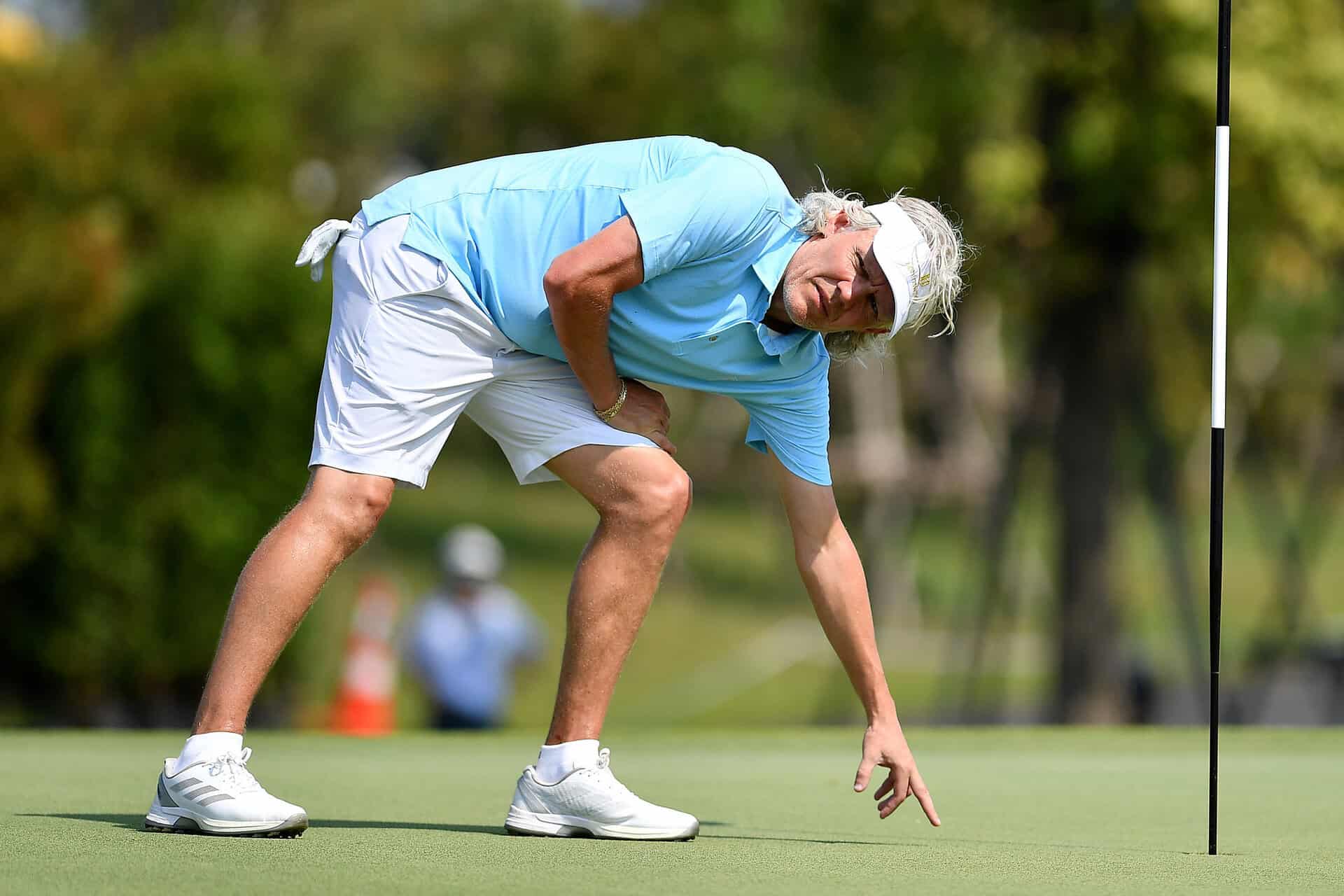




It might still be hitting a ball around a course but match play and stroke play can feel like completely different games.
Did you know, for example, that players can agree how to decide a rules issue in match play – even if it turns out to be wrong? And if a referee isn’t assigned to a specific match, they’ve got no authority to get involved barring a couple of exceptions?
If a referee is assigned to a game, though, that official has to step in on any issue that comes to their attention in time.
Some of those different match play golf rules – when you concede a hole being the one that springs most prominently to mind – are obvious. But there are other subtle changes it may pay to be aware of the next time you go into head-to-head match combat in your club knockout.
Key golf match play rules
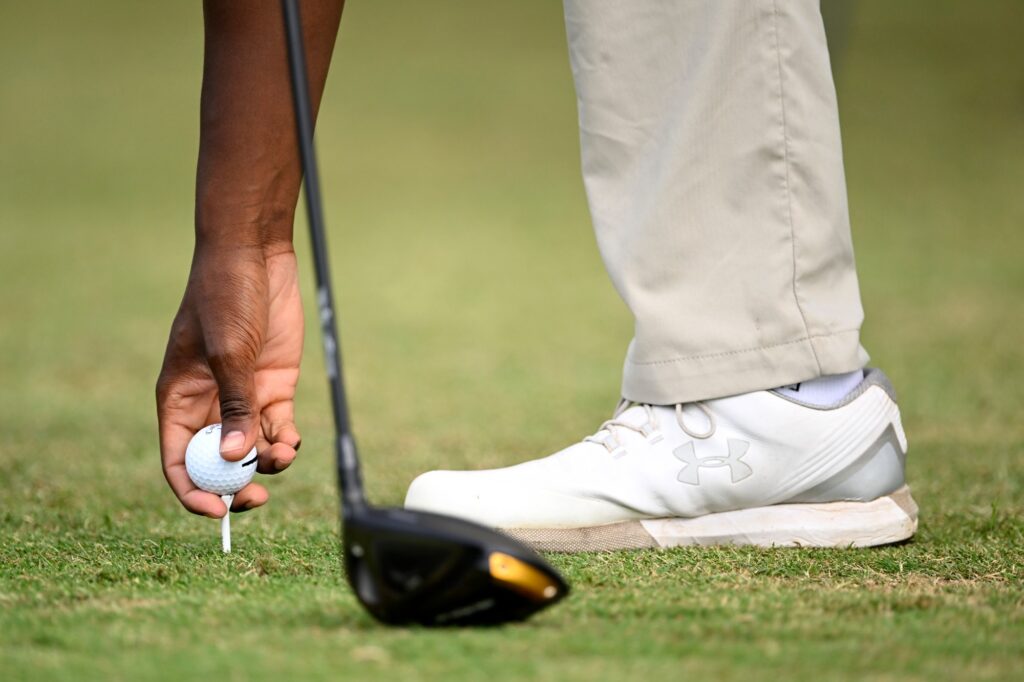
There is no penalty in match play for playing from outside the teeing area
This is a costly error in stroke play – it’s the general penalty (two strokes) and you’ve got to correct the mistake. You’ll even get disqualified if you’ve not done that before “making a stroke to begin another hole”.
That’s not the case in match play. It is still a breach of Rule 6.1b (1) and your opponent can cancel the stroke and make you play again.
But if they don’t do that promptly – so “before either player makes another stroke” – then the stroke counts, the ball is in play, and you move on.
The honour is absolutely a thing in match play
All we hear about these days is ‘ready golf’ and speeding up the game. But in match play you and your opponent must play in a particular order. You can toss a coin to see who goes first and then whoever’s won the hole, or had the honour at the previous teeing area if it was tied, keeps it and goes first.
Advertisement
After a hole is started, the ball that is farthest from the hole is played first. Just as with the teeing area, a shot that is played out of turn can be cancelled by your opponent.
You can play out of turn by agreement to save time, but you’ve given up the right to cancel the subsequent stroke.
Make sure you both know what the match score is – and where you get your handicap strokes
You are both expected to know what the score in the match is. If you get this wrong, and you’ve both mistakenly agreed to it, you need to fix it quickly.
Rule 3.2d (3) says you can correct a match score before either of you takes a shot at the start of another hole or, if you’re on the last, before the result of the match is final.
If you don’t do this, did you know that “wrong match score becomes the actual match score”?
Let’s spell out what this means in the rules. If you’ve messed up the score on the 6th, and only realise on the 10th, it’s now irrelevant. You’re stuck with the current score you’ve agreed.
There is an exception to this and it’s when a player requests a “ruling in time” and it’s discovered the opponent “gave the wrong number of strokes taken or failed to tell the player about a penalty”. Only then is the match score corrected.
It’s a similar situation when applying handicap strokes during a match. Rule 3.2c (2) says players are responsible for knowing the holes where they “give or get handicap strokes”.
“If the players fail to apply or mistakenly apply handicap strokes on a hole, the agreed result of the hole stands, unless the players correct that mistake in time”.

Don’t touch your opponent’s ball
When a ball is lifted or moved by another player in stroke play, they are defined as an outside influence. There is no penalty.
It’s very different in match play and it’s outlined in Rule 9.5. If it’s known or virtually certain that an opponent has lifted a player’s ball at rest, deliberately touched the ball, “or their actions caused it to move”, they get a one-shot penalty.
There are a couple of exceptions to this: It’s fine if your opponent is lifting the ball when conceding a stroke, hole, or match.
It’s also OK if you ask them to lift it. They won’t get a penalty, either, if the movement is caused accidentally.
You can choose to ignore a penalty
Do this in stroke play and you’ll probably get kicked out of the club. But in match play, where you don’t have to protect the rest of the field, if you know or believe that your opponent has breached a Rule that comes with a penalty, Rule 3.2d (4) reveals “the player may choose whether or not to act on the breach”.
It’s very unlikely you are going to let your opponent off scot-free if you see them breaching a rule in the cauldron of battle, isn’t it? But the rules do allow you to do it.
What you can’t do, though, is both agree not to apply the Rules or a penalty you know applies. If that sounds a bit contradictory, there is a clarification in the Official Guide to the Rules of Golf that gives out some crucial information.
An example of when there is not an agreement is outlined in the following: A player sees their opponent lift a ball without marking it first. The clarification says that they tell the opponent it’s a breach but they are not going to act on it.
Advertisement
“It was the player’s sole decision not to act on the breach and, consequently, there has not been an agreement.”
Where it changes, in the same example, is where the breach is revealed and then the player and opponent conclude they “don’t want to apply penalties in situations where is no clear advantage from the breach of the rule”.
Now, because there has been an agreement where both players have agreed not to apply the rules, both are in trouble. They would be disqualified.
Got a question for our expert?
Despite the changes to the Rules of Golf in 2019 and 2023, there are still some that leave us scratching our heads. I’ll try to help by featuring the best of your queries in this column.
What do you think of these golf match play rules? Let me know if you’ve come across any of them by giving me a shout on X, formerly known as twitter.
Advertisement