



As a senior golfer, you may notice changes in speed and distance with your irons and woods. While the distance you hit the ball isn’t everything, it can make getting to the green that bit harder. Longer approach shots reduce the chance of hitting approach shots close and so putting becomes even more crucial to make up for it.
And, in a round, roughly half to a third of the shots you play are going to be with your putter, so it makes sense to work on it to make putting a strength.
Over time golfers can slip into bad habits and so in this article we aim to focus on some of the basics to help you sink more putts.
Simple Tips To Improve Your Putting
1. Posture
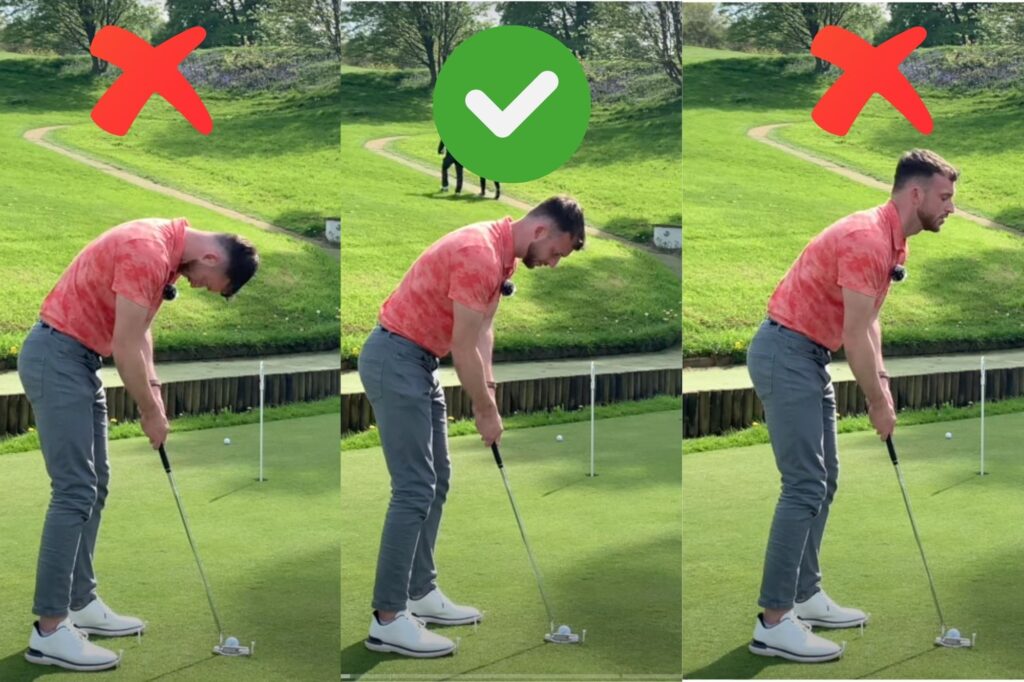
Being too hunched over when putting is not only bad for your neck but it also makes it difficult to perform a solid putting stroke. Your eyes should be able to make direct contact with the golf ball. This means that you also don’t want to be too upright as this promotes the same issue.
Being able to look at the golf ball through the middle of your eyes, makes it much easier to align the putter to the hole and start the golf ball on line.
2. Strike
Strike influences both start line and speed control of the putter face. A toe/heel strike will often lead to putts going too far left or right. Any off centre hits will lead to poor distance control, which can cause three putts.
A great way to work on strike is through that classic Tiger Woods pre round drill where he creates a tee gate to swing his putter through. Doing this guarantees a centred contact with the golf ball, and subsequently allows him to develop his touch and feel on the greens very quickly. Alternatively, sticking blu tack on the toe and heel of the putter during practice (this can be done at home) will help you find the sweet spot.
Advertisement
3. Green Reading
As a senior golfer getting down and reading the green from all angles might be a little tougher if you struggle with mobility. This isn’t to say that you can’t read putts.
You can still walk around all angles of the putts, identifying the low point and break of the putt. Standing at the low point of the putt with the ball and hole in your peripheral vision gives a great understanding of balls path to the hole.
Equally, techniques such as plumb bobbing and Aimpoint are green reading processes that don’t require bending down.
4. Pace
Hitting a first putt with a good pace can make your life much easier. A lot of golfers can pick a strong start line for a putt but it often goes wrong when it comes to speed.
Statistically, players don’t hole many putts outside of 8ft. Therefore, if we know that it would be wise to think about where do you need to leave the ball to give ourselves the easiest next putt. The easiest putt is always straight uphill, so it’s a good idea to try to leave the ball there.
Easier said than done but something to think about next time you’ve got a long downhill putt. If it’s unlikely it will go in, have a think about where you’d rather be putting from next. An uphill shorter putt means you’ll be much less likely to three putt.
The best way to work on your pace control is through random practice, never hitting the same putt twice when on the practice green. Hit some long and short putts as you will get both of these on the course.
5. Your Putter
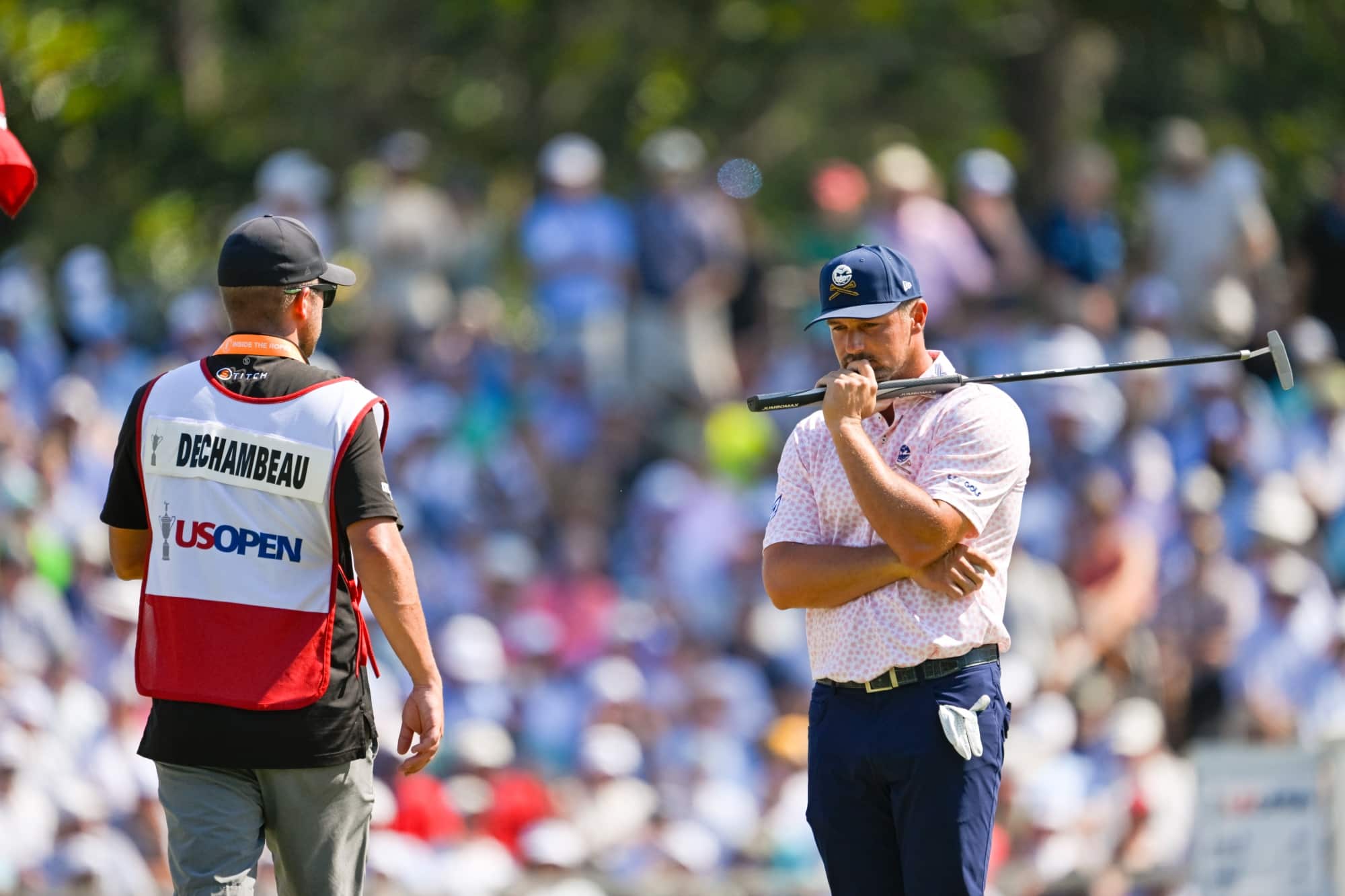
A putter is personal to a golfer. There is no right or wrong, size, shape or length but there are some designed to be slightly more forgiving than others.
Typically it is recommended that senior golfers use mallet putters. Why? Well, they have a larger head and with that comes a larger sweet spot. This means it helps golfers with consistency of strike. A larger, heavier head also creates stability in the stroke. Visually mallets are usually better at offering alignment aid as there is more surface area to add bigger, bolder lines.
- RELATED: Best Mallet Putters 2024
In addition to this, grip is also something to consider. A thicker grip helps to reduce the amount of wrist action a player has in their stroke. It will also be much more comfortable for a player with arthritis.
6. Be Confident
Putting is a lot to do with self confidence. You’re telling yourself you’re no good at this distance or that you can’t hole anything today, you’re setting yourself up for failure.
When you get on the green ask yourself “can the ball go in the hole?” it’s a trick question because of course it can. From here assess the slope and length of the putt. Stand over the ball with confidence. They might not all go in, but you never know.
- RELATED: Putting, It’s All In Your Head
Advertisement