


Green reading can be a tough skill to learn no matter where you start. It is one of the least intuitive skills to pick up when learning the game, but knowing where to hit the putt when out on the golf course is a huge part of shooting a good score.
It is a concept a lot of amateur golfers can’t get their head around and it often never taught to them so I suppose why would they.
Reading a green is a process and therefore has different stages. Andy Sullivan talks us through how he goes around reading a putt in the video below…
European Tour winner Andy Sullivan gave us a putting clinic Richings Park Golf Club near Heathrow, and gave us some stellar tips for boosting your green reading skills on breaking putts.
Green Reading: Step by Step Guide
1) Before you reach the green
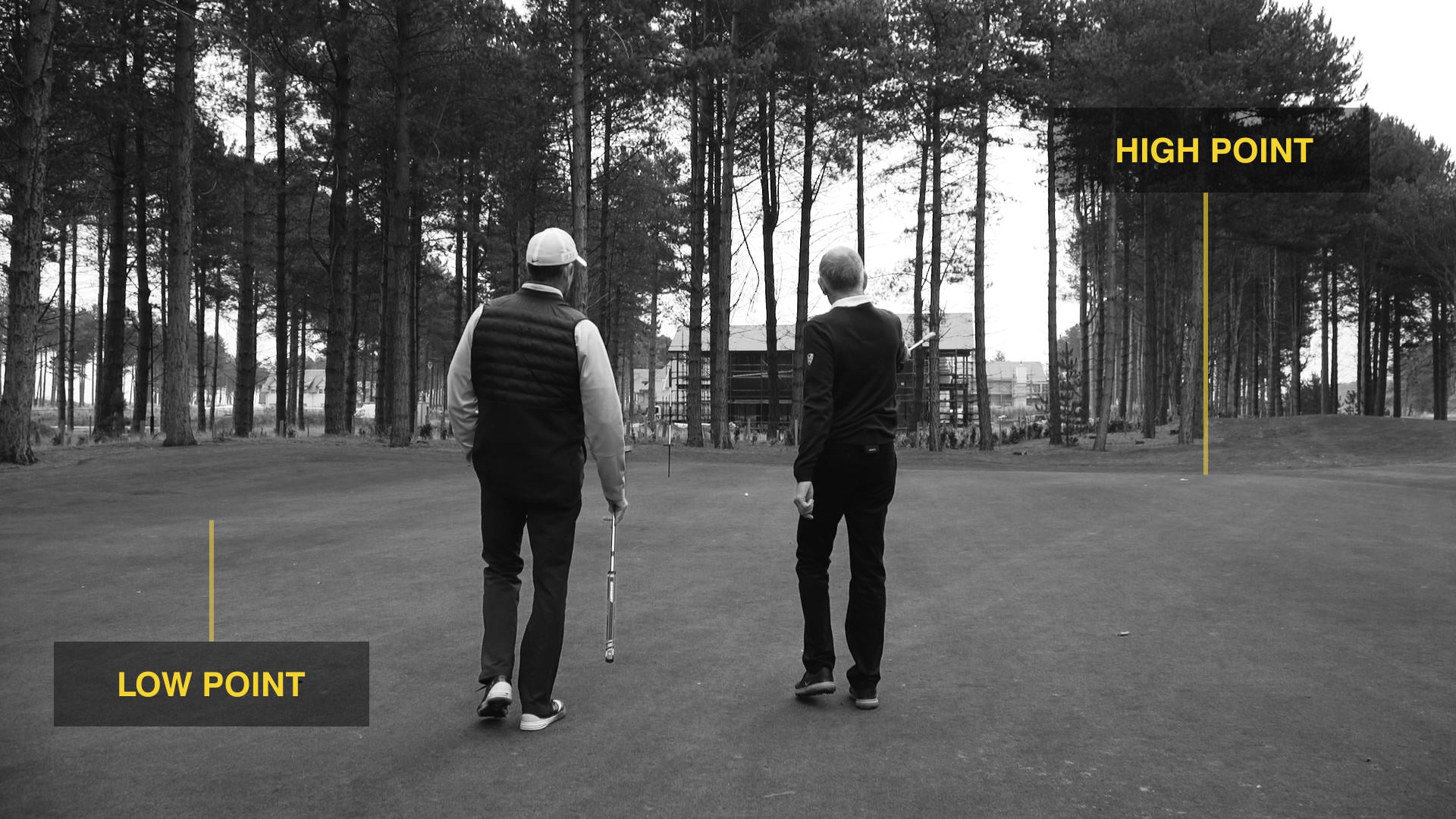
Take note of the high and low points of the green. They will typically be on diagonal sides of each other. This will help when determining if a putt is up hill or downhill. It will also come in handy when you later go to look from the low point of the putt to see how much the putt might break.
2) Once You’ve Marked your Ball
Have a quick look at the line to get a basic idea of which way the ball will break. Start to think about which direction you think the ball will turn.
Then head to the low side, you can really begin to see the changes in elevation. Looking at the low side opens up a completely different perspective, the key thing is to make sure your eyes are able to scan the whole length of the putt.
The key point is to make sure the ball and the hole is in your peripheral vision. If you keep having to move your head back and forward you won’t get a full sense of how long the putt actually is.
Advertisement

3) Looking Down the Line
Once you checked the low side, walk beyond the flag and look back at the ball. Looking from the other side of the ball gives another perspective on how the green looks. As you walk back towards the ball keep your eye out for any bumps or changes in the surface. Then it’s time to look from behind the ball. What do you see? Does it match what the other angles have shown you?
Survey the putt from a good distance. As a rule-of-thumb if you’ve got a 20 foot putt, move 20′ back.
Reading greens is all about looking for clues. If you look down the line you’ll only get one clue, when we look at it from the low side we get two, three, four clues, and if you’re trying to solve a puzzle, the more clues you have the better. It works the exact same way for reading greens, the more clues you have, the more likely it is you’ll be able to make the putt.
4) Line and Pace
Now you’ve seen how to surface of the green slopes, you need to work out what pace you need for the putt. Are you going to go firmer and straighter or hit the ball softer allowing for more break?
The formula between line and pace is ultimately what gets the ball in the hole and so the two must be calculated together.
A lot of pros use visualtion to draw an imaginary line as to how the ball gets to and falls into the hole. This is a break way of understanding the break point of the putt, which is point where the ball starts to fall towards the hole.
If you line the ball up this is your chance.
5) Execute the Putt
Trust your process and the decision that you’ve made. There is no point standing over a putt if you don’t think that you have the correct line. Step back and reset.
Ways to Practice Green Reading
Much like anything in life green reading is a skill and so needs to be practiced before it’s fully useful. Setting up a range of different length/sloped putts on the practice green will help you do so.
1) Go through the step by step process above
2) Putt a marker or coin where you plan on aiming at
3) Give the putt a go and self assess how it went
4) Repeat! Figure out a way to make green reading work for you. Whether that be change a step or try a different style.
Conclusion
Mastering green reading can be a real game-changer for any golfer looking to improve their putting and lower their scores. This isn’t something that is just easily applied and will take time and practice to get the hang of.
Give it a go and see how many more putts you can hole!
This isn’t the only way to read putts so if this isn’t working for you, check out our other green reading articles…
- RELATED: What is AimPoint?
Advertisement