



I believe putting truly is golf’s darkest art. After all, drive for show, putt for dough is golf’s oldest saying. However, some would argue it’s more science than art. We lean into the science behind putting as we examine the techniques the best players in the world employ to hole more putts. I stalked the putting greens at Royal Troon to find out.
Putting Techniques: Holing out
Most of us dread those short, 6-foot putts. When you try to lag your putt down to the hole, but it’s not quite long enough. It creeps into that no-go zone, where it’s too far to be considered a gimme but close enough to still be a tad embarrassing if it slides past. A golfer’s worst nightmare.
Even the best players in the world get nervous over short putts. Golf psychology is a funny, old conundrum. Holing-out drills are designed to help build confidence and consistency from short to mid-ranges.
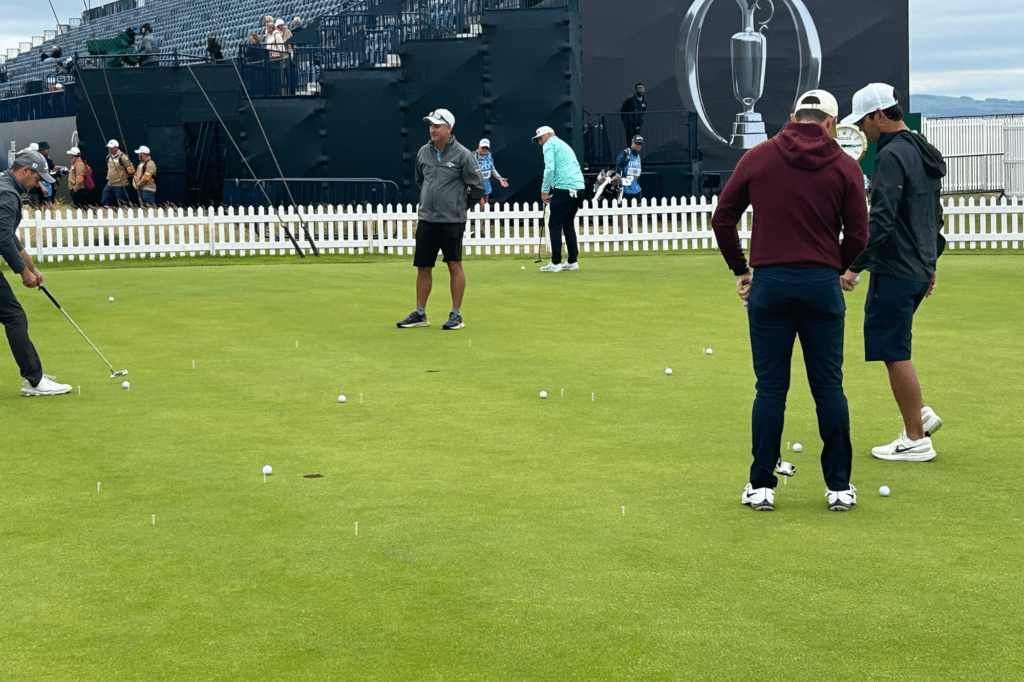
Over the first few practices days, I have often seen tour players adopting various drills to practice their short range putting.
McIlroy’s spiral drill was challenging him to make putts from different ranges and break directions. Often, players will have to make a putt from each tee peg in order, and if they miss, they restart. This is to help replicate the type of pressure they begin to feel out on the course.
Start Line
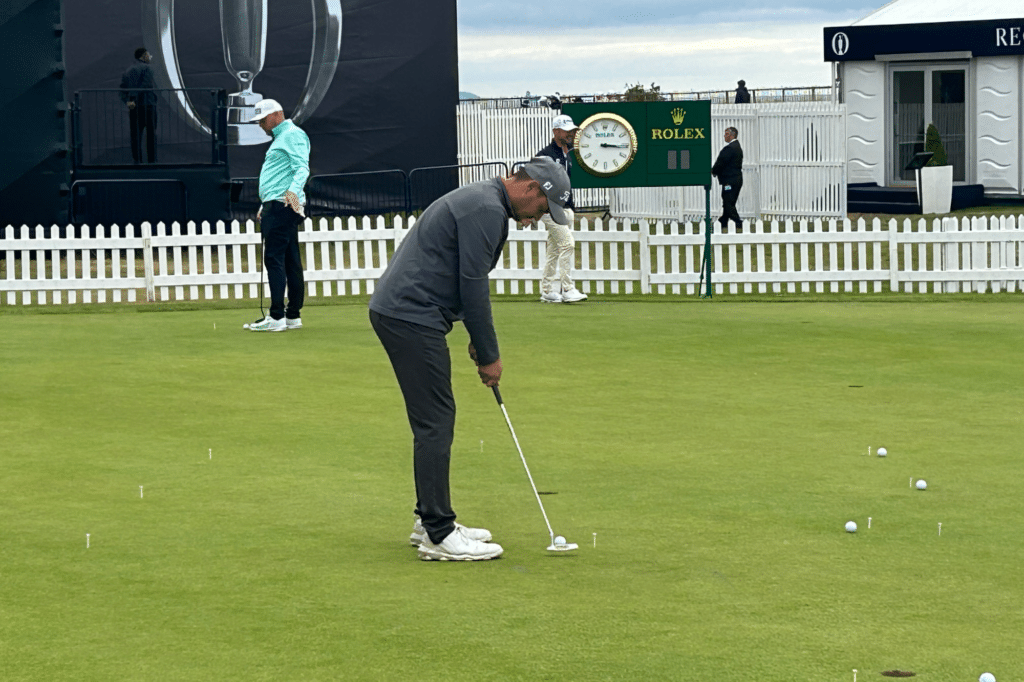
To hole a putt, you need to start it on the right line. Hitting the ball on its intended line really is the only way to know if you had a good stroke and hit it well.
Across the first few days of Open week, a number of players have used a gate to help with their starting line. The gate shows you whether you have started the ball on your intended line. Other players have replicated this with the use of a chalk line.
Advertisement
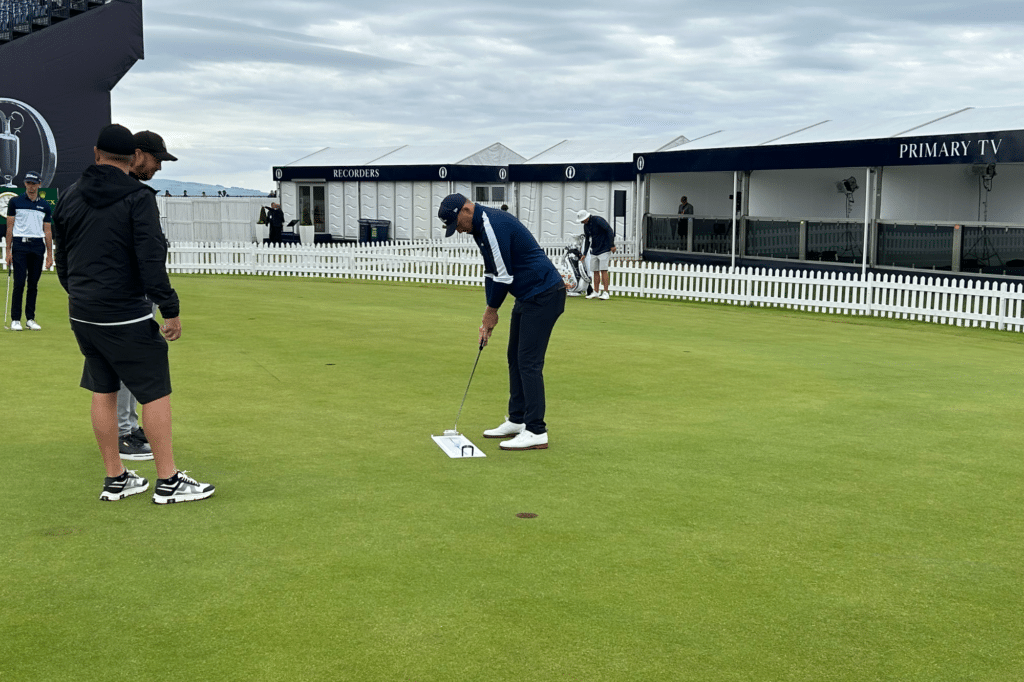
If you want to replicate this drill, it is a simple one to copy, and tee pegs can easily be used to form a gate around your target line.
Pace putting
Getting the pace of your putting to a more consistent level saves countless shots off your round. Lag-putting, especially for higher handicappers who don’t necessarily hit the ball tight to the pin regularly, is a massively important skill to have.
It’s so easy to get lost in the alignment of a putt that ball speed becomes a secondary thought. How many times have you aggressively said under your breath, “Ah, don’t forget to hit it!” as your putt painfully comes up short?
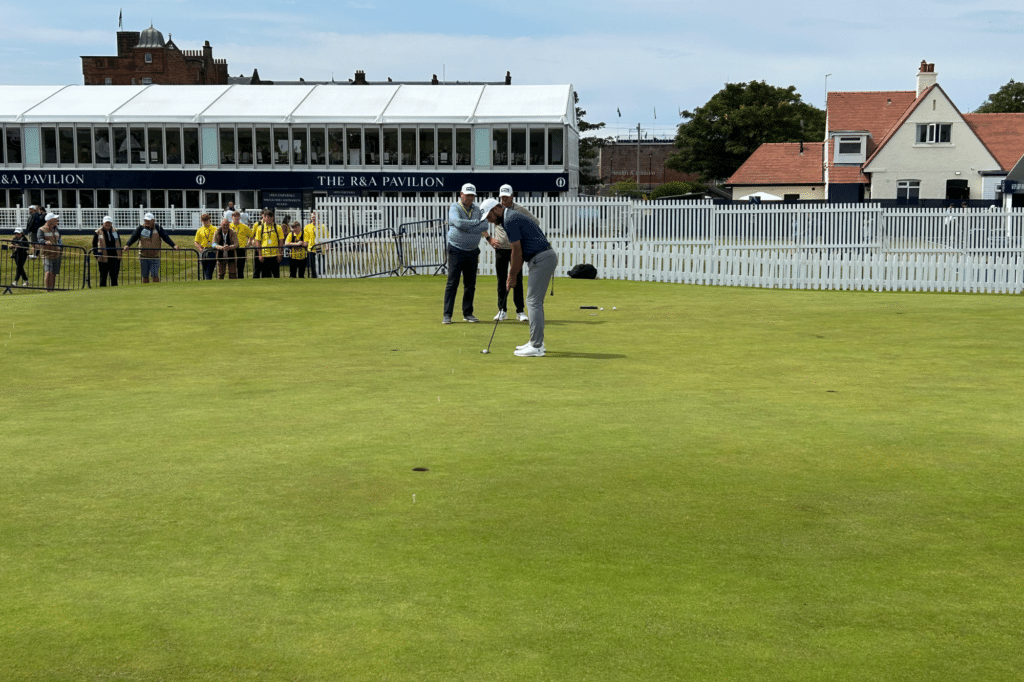
There are various drills you can use to focus on speed control, leapfrog being one. Another, as shown above, is a simple drill to set up and use. Players place tee pegs on the same line, generally around 3 feet apart. You hit a putt from each tee peg and you have to get the ball past the hole but make sure it finishes short of the tee set up as a backstop.
This is to get comfortable putting from various ranges and dialling in more accurate distance control.
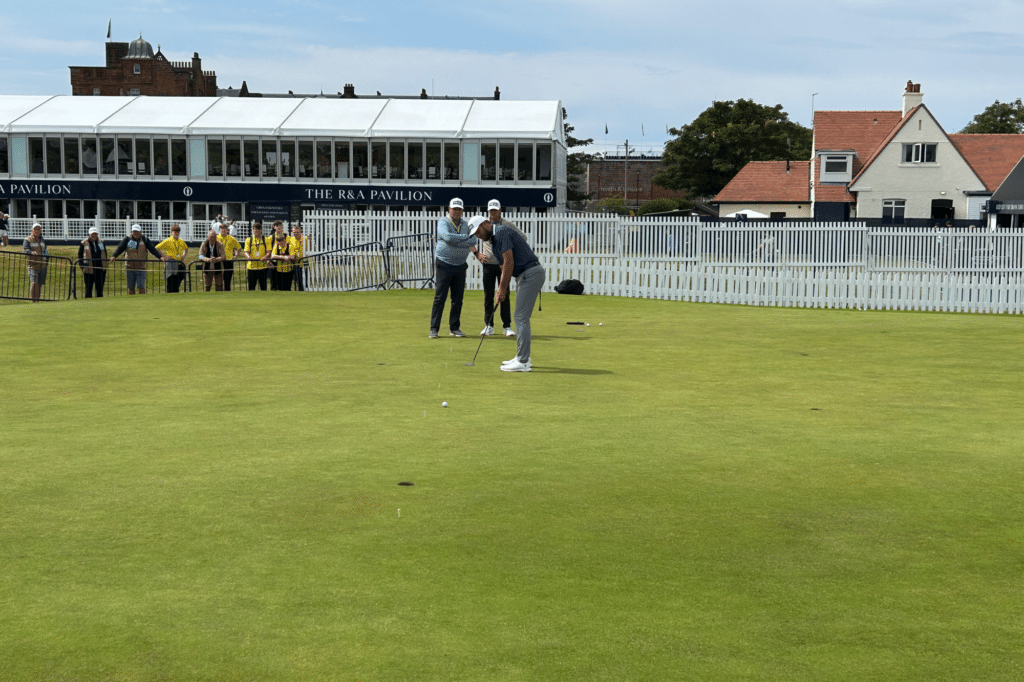
Gaining a consistent ball speed will undoubtedly improve your putting performance. Getting the right speed can make that second putt a lot easier, psychologically and practically. Not to mention, you’ll give yourself a chance to hole it.
Putting Stroke
Putting mats are a common site on putting greens at tour events. The Open was no different. These are used to reaffirm they are swinging the putter on the correct path. Lots also have face lines to match up your face to path.
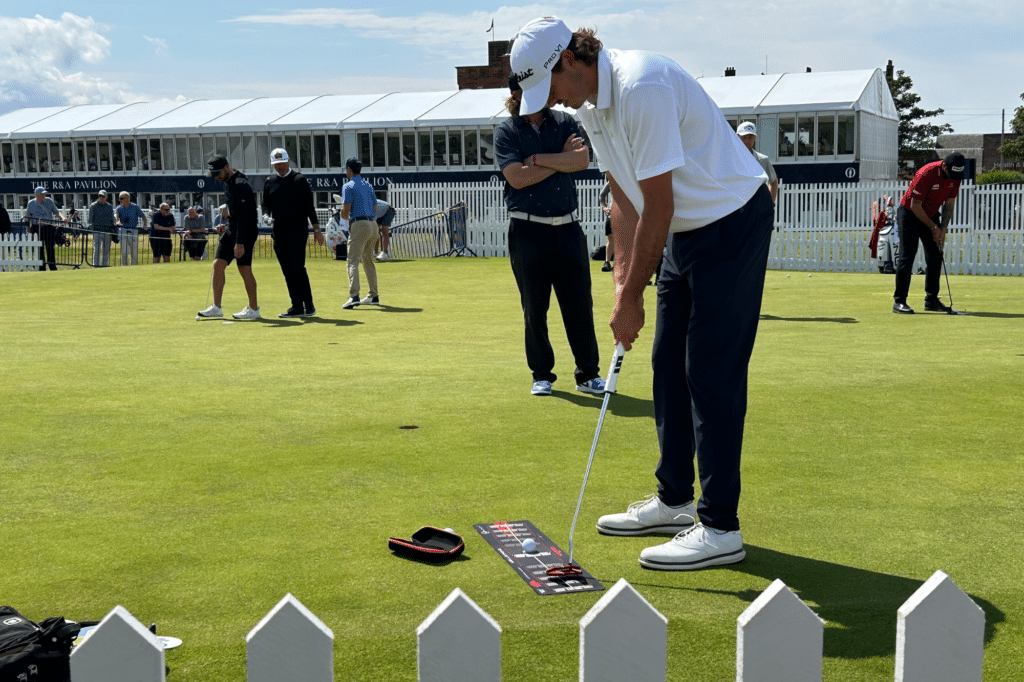
The mats are also designed to give you feedback as to whether your putter is re-routing off your intended path. Additionally, the line on the mats aid in helping to align club face so it is square relative to the path of the putter.
Putting Techniques: Green reading
It feels strange to suggest that the outcome of your putting performance can rely n something non-physical. But, that is what I’m suggesting.
Reading a green is a challenging task, even for tour-level players. I notice a few players using some training aids this week to help adjust to links greens.
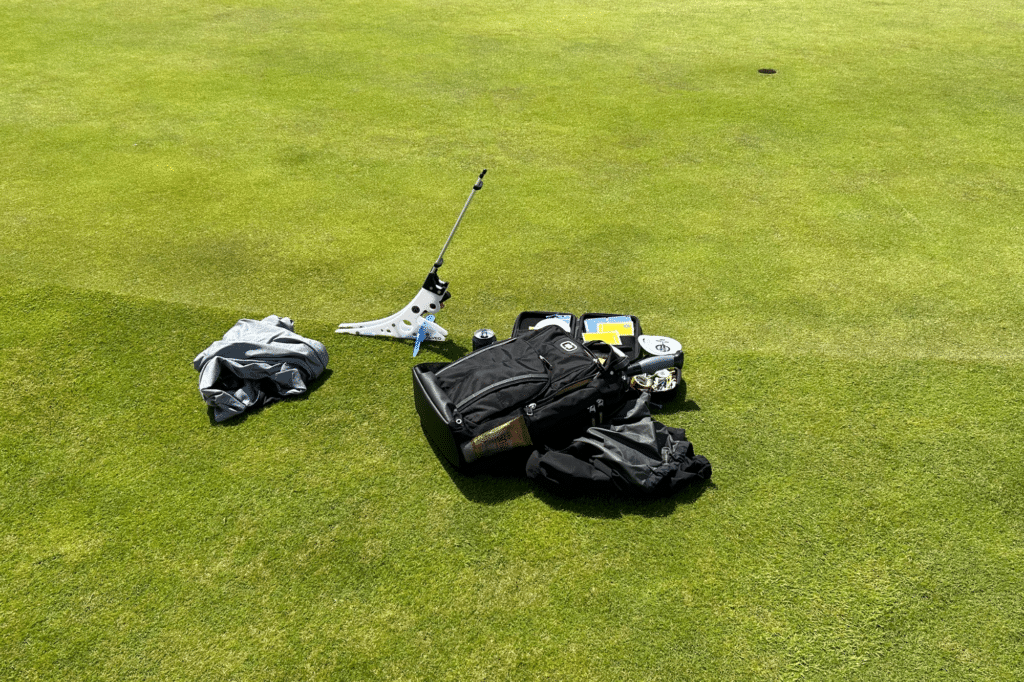
Alveo’s Léon putting aid made noticeable appearances at the Royal Troon’s practice greens. Léon, is a putting plate which players use to read the slopes on the green. They do this by rolling a ball down the face of the apparatus. I also saw numerous players including Matt Fitzpatrick out with a spirit level to dial in his green reading and get his training aids set-up perfectly.
Advertisement