


I have a theory that the worst possible start to any round is a birdie. This is broadly based on doing it once, in the Spring Meeting at Wimbledon Park in the late 80s, and then feeling very uncomfortable until I was back over par (three holes later) and back in my familiar comfort zone.
I have been under par since, not for very long as the mere chance of going more under par or staying at the hugely daunting figure of one under, has never even dawned on me and I’m always waiting for IT to happen. IT being a self-enforced mini disaster where I can drop a couple of shots and begin to breathe again. Or, simply, by allowing my lack of skills to show themselves and do it naturally.
I say all this like I’m an aspiring tour pro, I play off eight and the prospect of playing to seven generally has the same reaction.
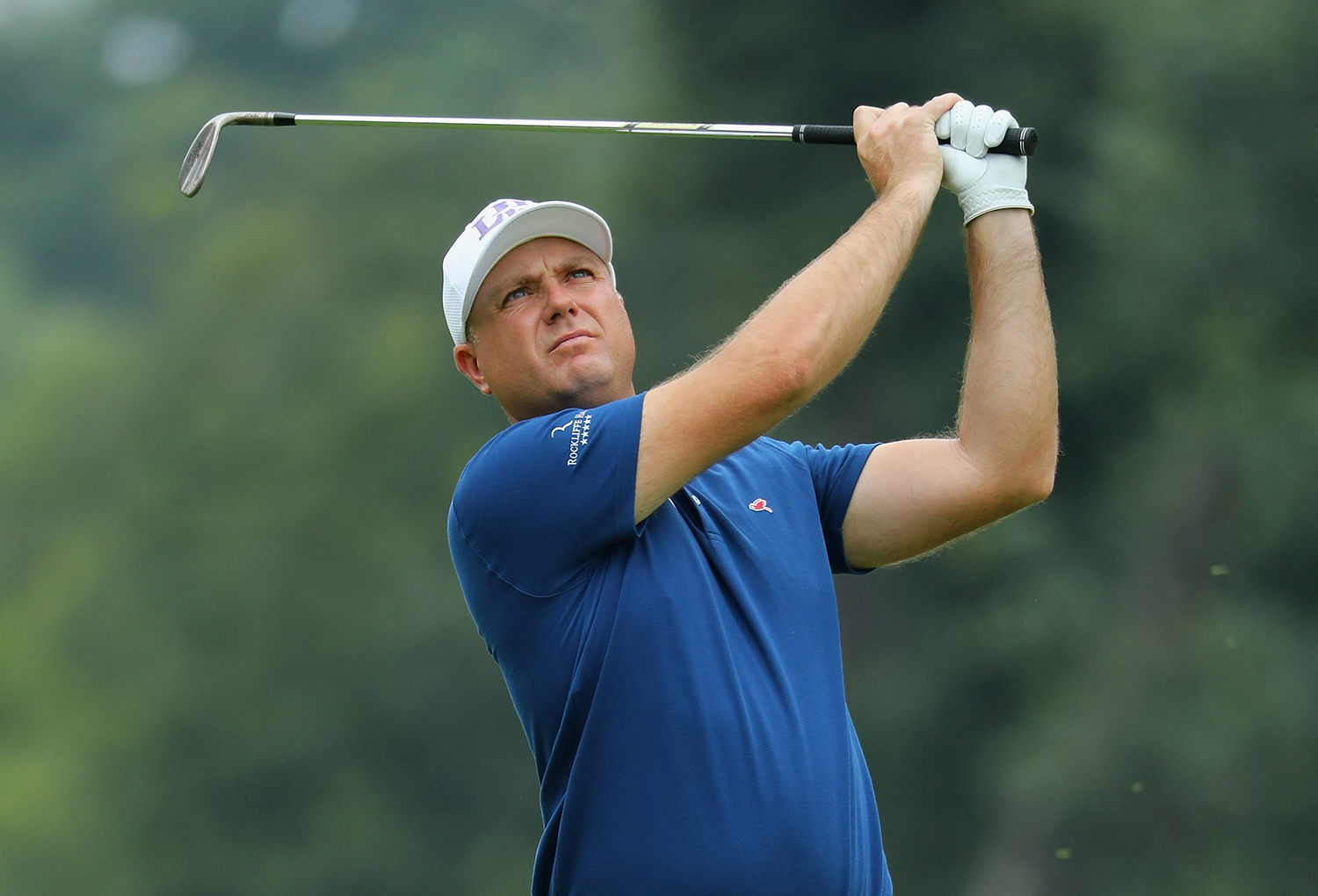
Last weekend in South Africa level par missed the cut and 59 players finished under par. On top of the pile at 18 under was Graeme Storm, just 84 days after he lost his card. Two weeks later Storm got a reprieve when Patrick Reed didn’t play in enough tournaments and now, nearly 10 years after his first win, he has another.
Lee Crombleholme is the man who helps to make Storm think the right way on the course. He also helps the likes of Andy Sullivan, James Morrison, Ross Fisher, Richard Bland, Alejandro Canizares and Lee Slattery.
And the good news is that we are all built the same, to a greater or lesser extent.

“The tour players think very similarly to the club players in a lot of respects. A lot of them do watch what other players are doing and what they’re scoring, it’s just a normal thing to do. They’re just better at hitting the ball and they have that ability to quiet their mind off more than club players when things are going badly and when things are going well. But they still have these things going on.”
Advertisement
So why do I, and you, find it so impossible to not get in our own way when things are actually going well on the course? Why do we feel so different over the last six holes to the serene, peaceful individuals of the first six holes?
“There are a few different scenarios going on here. Some people will say that they are struggling to finish off a round but we won’t directly attack the finishing off a round scenario. What we do is that we will try and find out the things that are going on in their head and try a few different scenarios to get around it.
“Because of your belief system, whether you are scoring well or scoring badly, your brain will go into fight, flight or freeze. You might get agitated and get aggressive with their course management. Flight mode is when you feel a need to get off the course or self-sabotage your own score to get back into a non-pressure situation or into a comfort zone.”
Sound familiar? Two from two?
“Or you can go into freeze mode where a player gets stuck over the ball or can’t make a decision or starts to second guess which something we see quite regularly.”
To try and help us improve mentally this season, or at least understand a little better what is going on when we unravel Crombleholme breaks us down into five types of golfer.
1) The physically nervous golfer
The player who gets too physically nervous starts to shake because of the perceived threat that they are going to fight, flight or freeze. What happens there is that your blood flow wants to go to the vital organs, like your lungs and your heart, but the blood must come from somewhere because you’re getting ready to fight. This happens on the course, the blood comes from the hands and arms, when your hands squeeze together they spread blood around the body. What this means is that the grip of your hands on the club becomes distorted because you have less blood flow in your hands – if you were to grip the club what you would perceive as 5/10, you would actually be gripping it 8/10.
Something a player can do is to practise gripping it lightly on the range. So hitting shots on the range gripping it really lightly makes you realise that you can grip it very lightly when hitting a shot without the club flying out of your hands.
2) The mentally anxious golfer
Someone like this might start to say ‘what if?’ or ‘I can’t do this’ or ‘what will others think?’ and begin to mess up. Number one is that you must realise that you cannot control your thinking and you can’t stop those thoughts coming in. I often say to the guys imagine your thoughts are like a river and allow your thoughts to just flow through.
However people try to create a dam, which eventually will be destroyed by the pressure, and that is when all hell breaks loose. So what we try and do is nudge our thinking in the right direction.
We cannot control it but we can guide in the correct direction, a simpler thing is to have a go-to statement for when you get anxious. For example, ‘these are only thoughts and thoughts are natural and thoughts are neutral’. Thoughts don’t have any powers when you start loading emotion on to them.
Advertisement
3) The defensive golfer
This player quickly starts going into the avoidance mindset, like playing away from out of bounds, playing away from hazards and trying not to three putt. Ninety per cent of the time the defensive player will putt short in an attempt not to three putt. Questions might begin to come to mind like, ‘what does a good shot look like?’ or ‘how do I hole this putt?’, these put your thoughts into a more productive mindset.
4) The score-focused golfer
This is what we would call an ego-orientated motivation. With a club player, it might be trying to get your handicap down or break 80 or 90 for the first time. The golfer begins to play the situation rather than each shot and get too focused on the numbers. A colleague Tom King did a good one towards the back end of last season; he got the player to put the scorecard down into three-hole chunks. The pro was saying they just wanted to shoot under par every time – there are five hours’ worth of goals there so he asked him what would be more manageable?
So the lad said about the three-hole chunks and one birdie every three holes. So, it doesn’t matter about making a bogey as long as you have the intention of making a birdie every three holes. It’s a great thought process as a club player can relate with attempting to par every three holes.
5) The winning-focused golfer
This scenario is a player trying too hard to score or win. So we are looking at their underlying reason for motivation. If their goal is to score well or win then we need to shift that to the appreciation of hitting a good shot, no matter what the situation, which is similar to the previous one.
Advertisement
What I’ve done with the tour players is to get three mastery goals, for example; focus on hitting a good shot, accept the outcome and play with a smile on your face.
You should look to tick these off on every hole and hopefully end the round with 18 ticks, further nudging the focus away from the score more into something that is controllable to reduce the perceived threat.”
Storm said after his play-off win against Rory McIlroy that the nerves were obviously there – “The pressure of trying to keep my card probably helped get me through and made it a little bit easier. But obviously the nerves were still jangling! I managed to control some clutch putts towards the end of the round, which was massive” – but he was still able to hit the shots when it mattered.
As his sports psychologist explains: “Thoughts don’t necessarily have power, they do only when you choose to put emotion onto it. Nerves don’t have to mean bad shots if you have the correct understanding of them.”
Twitter @WinningGolfMind
To get in touch email Tom King at Tom@winninggolfmind.com – Tom is a sport psychology consultant who coaches the WinningGolfMind framework to pros and club players at the American Golf Academy at High Legh Park in Cheshire
Advertisement