


You don’t hit your ball with your takeaway, but the knock-on effects from having a poor takeaway can often cause issues later in the swing that lead to bad shots and repeated faults. In this video, PGA Professional Jack Backhouse discusses the two takeaway mistakes that are ruining your swing and the drills you can do to fix them.
- RELATED: How to hit a golf ball high
- RELATED: 3 easy steps to perfect golf posture
Why Is The Takeaway Important?
The takeaway happens a long time before impact, so if impact is all that matters, why do you need a good takeaway? Well, it is true that there have been a wide variety of takeaways that have appeared on the PGA Tour; these players have spent countless hours practising and figuring it out and making it consistent, which allows them to get away with it. The average club golfer who practices for no longer than 30 minutes per week doesn’t get the same pass.
One of the core principles of golf swinging is sequencing and having all the components of the swing happening at the right time. A poor takeaway not only means the club is out of position, requiring some rerouting manipulation, but it also means the golfer is going to struggle to generate any power.
What Is a Bad Takeaway?
There are two really common mistakes we see club golfers make when they start their swing:
- The straight back straight though player.
This person believes that in order to hit the ball straight, they need to swing the club as straight as they can through the hitting area. This causes the player to lift the club up very early, into a very outside and steep position. This player will often then swing back down on this line and hit weak slices. - The low and slow inside takeaway player.
This is someone who doesn’t realise that the club head needs to travel quicker than the hands do, so the club stays too low to the ground for too long in the swing, taking the club into an exaggerated ‘inside’ position. This then leads to a backswing where the club is too far behind them and loops over the top, again causing fades and slices.

What Makes a Good Takeaway?
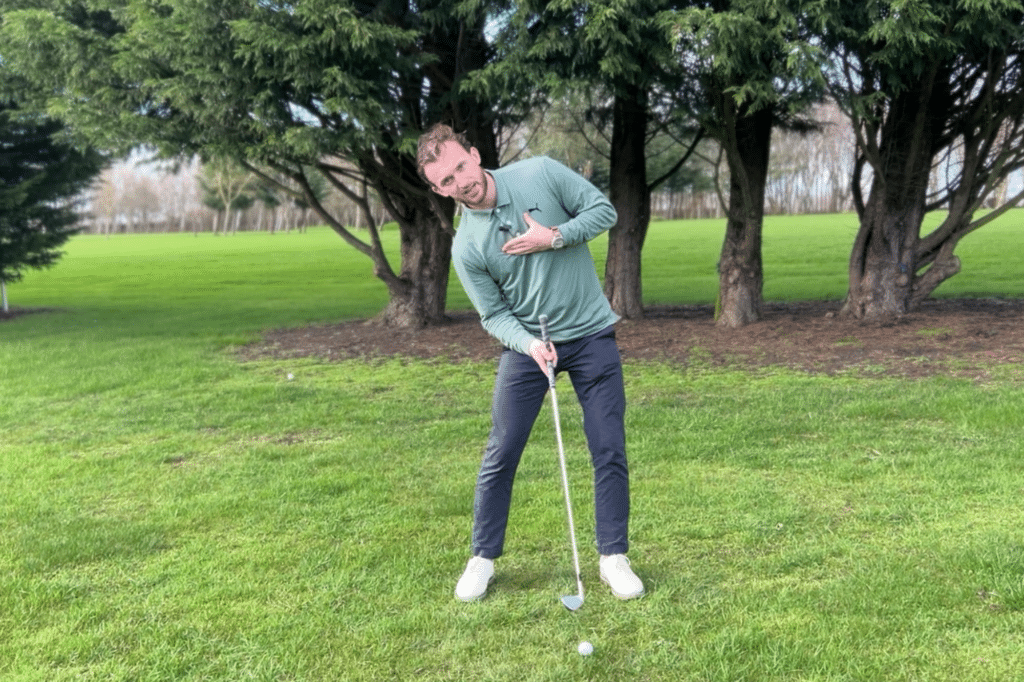
Let’s start with what the body should do. To initiate the swing, the lead shoulder should move down, the trail hip should move back, and the left arm should remain connected to the body as the shoulders begin to turn. This should mean the hands start to work inwards from their starting position.
The club will begin to move back away from the ball and should be moving inwards inside the ball. It should also be moving up away from the ground; this is what most players get wrong. What gives the club its lift is the wrist hinge. The wrists can either hinge up (thumbs up) or back (knuckles back); both lift the club up. Getting the correct mix of back, in and up is what gets the club in the correct position in the correct sequence.
Advertisement
It really is just that simple: move the shoulder down and the hip back, and get the club head to move back away from the ball, in away from the target line, and up away from the ground
Drills to Improve Your Takeaway
Drills are a great way of learning to make changes whilst hitting balls. There are 2 great drills I like to fix the 2 different main takeaway issues: the samurai drill for the low and slow player and the glove under arm front foot drill for the straight back straight through player.
Samurai drill – Stand to the ball in normal golf posture. Hinge the club up vertically in front of you so that it points up to the sky. initiate your backswing from this position and hit the ball. This drill helps the player learn what it feels like to swing with a much earlier wrist hinge, getting the club higher off the ground earlier.
Glove under arm front foot drill – address the ball with a glove under the front arm to keep the connection between the lead arm and body. Pull the trail foot back so the stance is really closed, and put your weight on the front foot. Without moving the weight back from the front foot or dropping the glove from under the arm, hit some half shots to feel the hands work inwards in the first half of the swing.
Hopefully, after reading this and watching the video, you understand a bit more about some of the faults you may have in your takeaway and what you can do to address them. If you want a further understanding, let me know on social media! Instagram, X (twitter), Facebook .
If you want to watch more of our instruction videos, you can get to Hannah Holden’s YouTube Instruction series by clicking here.
- RELATED – How to hit any shape golf shot
- RELATED – Best Golf Drivers 2024
- RELATED – 5 rules of golf changes you need to know about
Advertisement