



There is a poor strike epidemic in golf, and that’s because golfers understand weight transfer in the golf swing. In this video, PGA professional Jack Backhouse dives deep into what mid-handicap amateur golfers keep getting wrong and exactly how to transfer your weight properly to stop fatting and stop thinning your shots.
- RELATED: What Makes It Work? Bryson DeChambeau Swing Analysis
- RELATED: Master The Most Important Part Of Your Swing
Why is weight transfer so important?
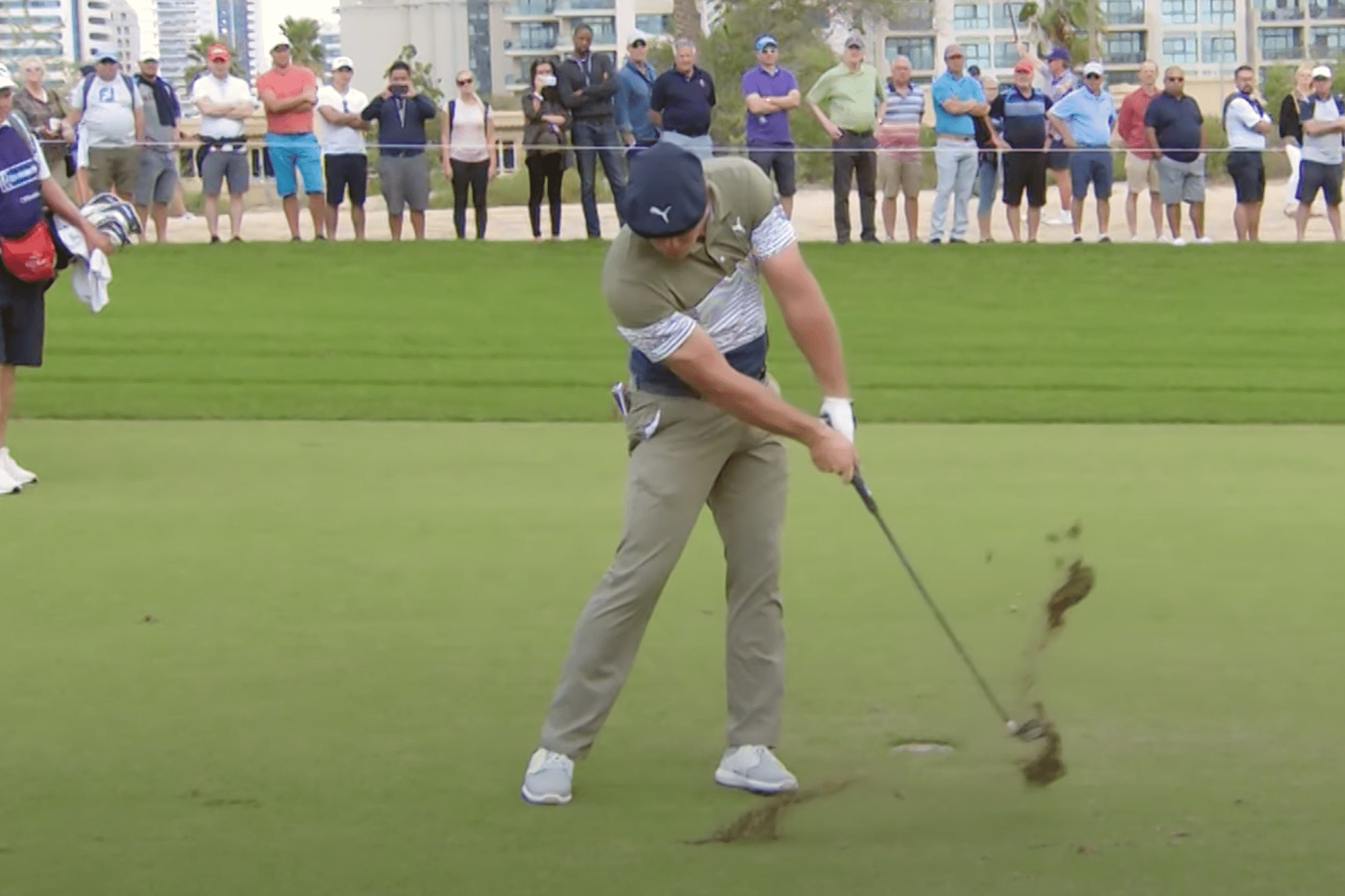
Before we go any further, we must first clarify the anatomy of a good strike. When a tour player hits an iron shot, the club swings down through the ball, reaching its lowest point two to three inches ahead of where the ball is sat on the ground. Knowing that we must hit forwards of the ball, we have to get our body into a position where this is possible.
The average tour player has 80-90% of their weight on the front foot when they strike the ball; this positions their lead shoulder and lead hip ahead of the ball, making it easy to get a forward low point. The average mid handicapper has a weight of around 50-50 in front to back foot, which makes it very hard to hit ahead of the ball.
If you want to strike the ball well every time, you must get your weight forward at impact.
Common faults
There are two main faults I see in amateur golfer’s weight transfers.
- Hanging back, trying to help it up in the air
- The dreaded reverse pivot
Both of these faults result in a low point that is behind the ball, which results in the player having to make compensations such as a chicken wing, or swiping across the ball and hitting weak slices.

What does good weight transfer look like?
The best players in the world all generally do the same things in order to shift their weight from their trail side to the lead side.
- They transfer their weight to the trail foot in the first half of their backswing
- As they finish the backswing, the weight is shifting back to the centre and towards their lead foot
- When the downswing starts, there is roughly a 4-inch hip shift toward the target before pushing off the lead leg and turning through.
Drills
Working on your weight transfer can be tricky as it often affects your timing and can uncover the compensations you have developed in the downswing, which may produce some erratic shots. The best way to work on this is through drills, here are two I really like.
Advertisement
- Start with all your weight on the trail side at the address, then swing back, shift forwards and hit the ball
- Gary Player drill: swing back as normal, and as you swing down, lift your trail foot up in the air and step through the shot as you make contact with the ball. this really forces your weight forward.
Working on your weight transfer will help you hit a draw, help you strike your irons pure, and lower your scores; there is no reason not to add these drills and work on them in your practice throughout the season.

If you want to watch some more of Jack’s swing tips instruction videos, you can get to his YouTube Technique Tips playlist by clicking here. Please check out our other instruction articles if you liked this golf swing transition article!
- RELATED – Master The Lofted Chip Shot
- RELATED – Best Drivers For Slicers 2024
- RELATED – 5 rules of golf changes you need to know about