



We all know what a good backswing looks like and the key positions in the downswing, but not enough is said about how the body and club move during the transition from backswing to downswing. In this video, PGA professional Jack Backhouse explains exactly what needs to happen in the golf swing transition for you to hit well-struck high draws and eliminate that slice.
Why is the transition so important?
If the entire golf swing lasts approximately one second, the downswing only lasts 0.25 seconds, which clearly is not a lot of time. In that time, the golfers need to move their weight forward, turn the club face 90 degrees, and swing down at an angle within 5 degrees of the ball to the target line; this is a lot to do. The transition is vital as this sets the tone for the whole downswing; the moves you make with the club as you start the downswing impacts everything else that happens before and after impact.
It is safe to say this is pretty much the most important phase of the swing.
Common faults
Amateur golfers have a wide range of different swing characteristics but will often do the same 3 things wrong in transition that then affect impact and the ball flight. These are
- Opening the upper body too early, resulting in poor weight transfer and out-to-in swing path.
- Overbending the trail arm, narrowing the swing too much.
- Lead wrist angle cupping or the face being too open .

What should happen in the transition?
As we finish the backswing and start the downswing, it is possible to really set ourselves up for good contact with the golf ball and good direction. For this to happen, there are 3 key things that golfers should do in transition:
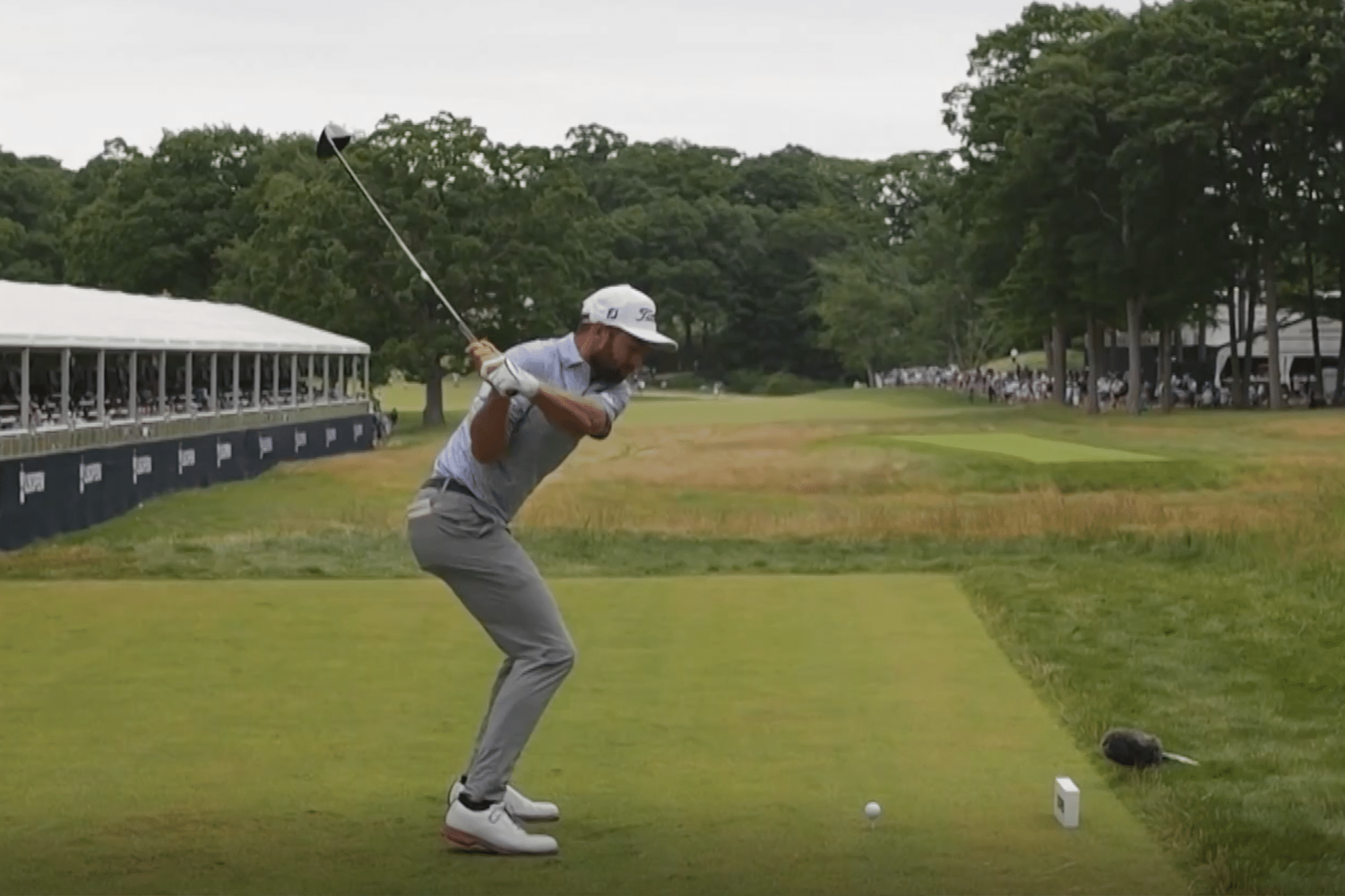
- Before the backswing finishes, the golfer’s weight should start moving towards the lead foot. This is a very early shift for most players, but it gets our body in a position to create a downward hit on the ball and an inside swing path. Jack Nicklaus did this wonderfully.
- As the downswing starts, the golfer should start widening and shallowing the club heads arc by extending their trail arm away behind them, sending the clubhead back away from the ball. This shallowing move creates more clubhead speed and an inside path.
- As the club starts down, the clubface should begin closing by bowing or flattening the lead wrist. This is very early for most players but doing this shuts the face to the swing path and will create the right-to-left draw shape all golfers strive for.
Drills
Working on your transition can be quite difficult as this part of the swing can happen quite quickly, so doing drills in which you strike the golf ball can help massively to help you achieve some swing feels to then carry into your golf shots. The 2 different drills will help you address the 3 different things that need to happen.
Advertisement
- Closed alignment drill; swing back as normal and swing down and hit the ball without turning your body towards the target.
- Motorcycle drill: Swing to the top, stop, extend the trail arm and bow the lead wrist, then swing down and hit the ball
Working on these 3 things using the two drills prescribed will pretty much guarantee better contact with the golf ball, with a more downward angle of attack, and also help you get the club on the inside with a closed face to hit that draw shot. Fixing your transition will correct your slice, that, I am absolutely certain of.
If you want to watch some more of Jack’s swing tips instruction videos, you can get to his YouTube Technique Tips playlist by clicking here. Please check out our other instruction articles if you liked this golf swing transition article!
- RELATED – How to draw the golf ball
- RELATED – Best Drivers For Slicers 2024
- RELATED – 5 rules of golf changes you need to know about
Advertisement