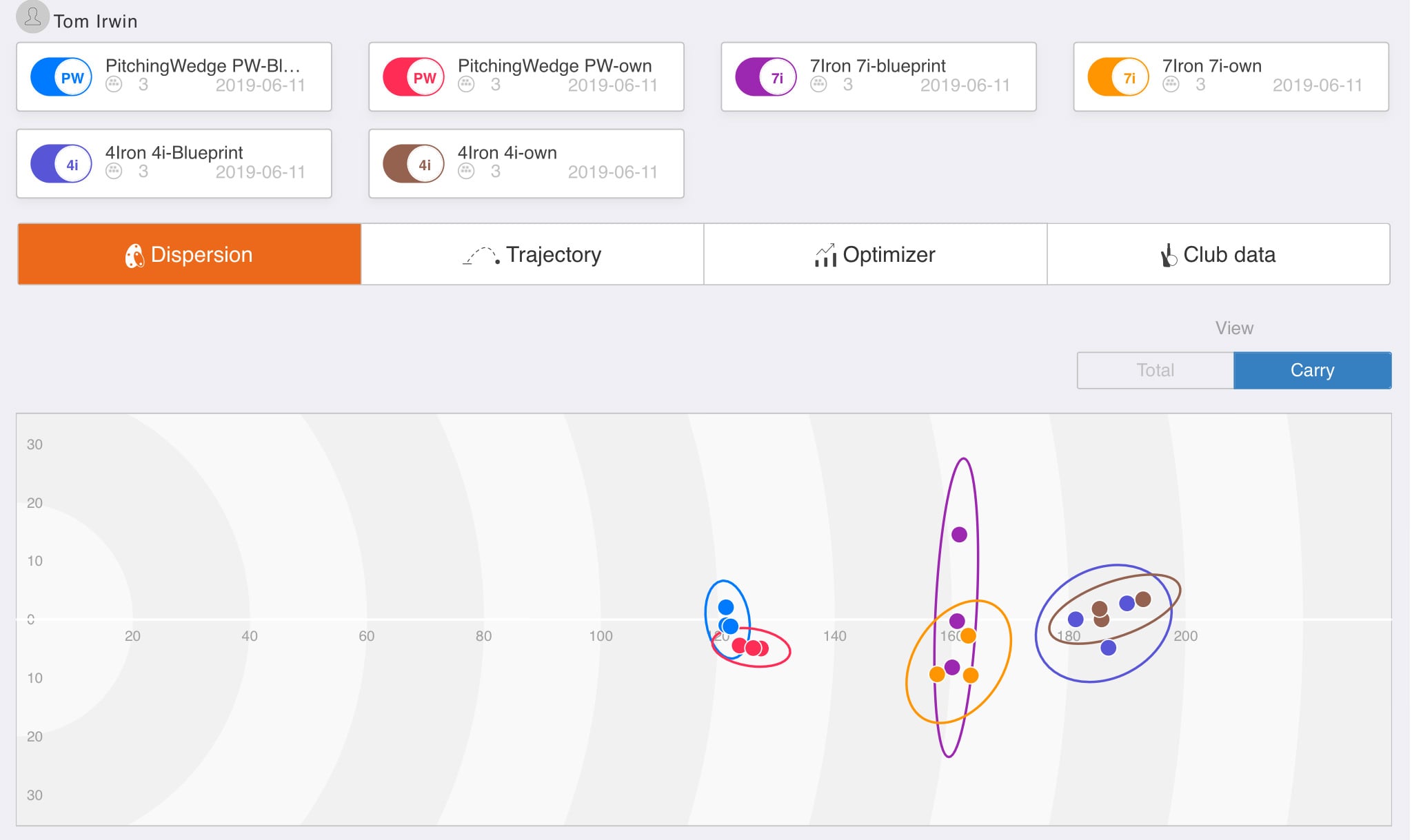


I was joined at Alwoodley by my colleague and fellow scratch golfer Tom Irwin for this Ping Blueprint irons review. Find out what he thinks and how he got on…
Ping Blueprint irons review: Tom’s first impressions
I have always been a bit strange, and I have always been really strange about my choice of irons. I really, really, want to play blades. Consequently, I have got a garage full of Mizuno classics, TP-9s, TP-19s (even writing this is giving me goose bumps), MP-5s, and lots of others. Then, normally after a run of poor results, I move to something at totally the other end of the spectrum.
I played with some Nike Coverts for a couple of years, tempered that slightly with some Ping i200s and am now settled on some Ping iBlades, which have the word ‘blade’ in their name but are actually a cast, slightly helpful cavity-back.
In other words, when it comes to irons, I would love to be able to take the head girl to the prom, and so I shoot for the stars, but end up missing the moon, and taking the comfier, Harry Potter fan from Set 3 English.
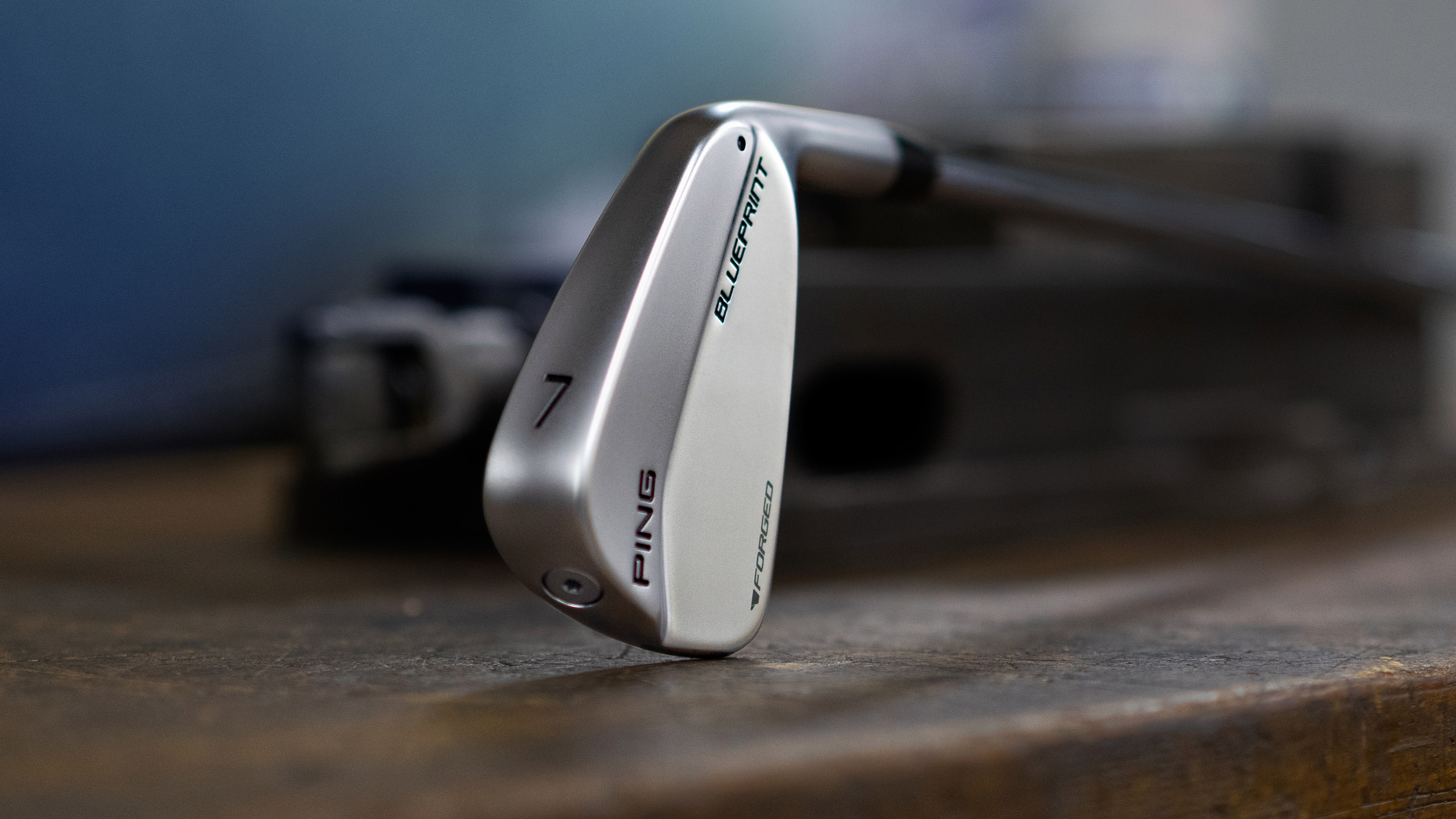
So, when Ping announced they were bringing out a genuine forged blade. I could not get into my tux quick enough. Blade, you say? Forged? With Ping’s famous playability? Yes please. I’m your man for a Ping Blueprint irons review.
Ping Blueprint irons review: The technology
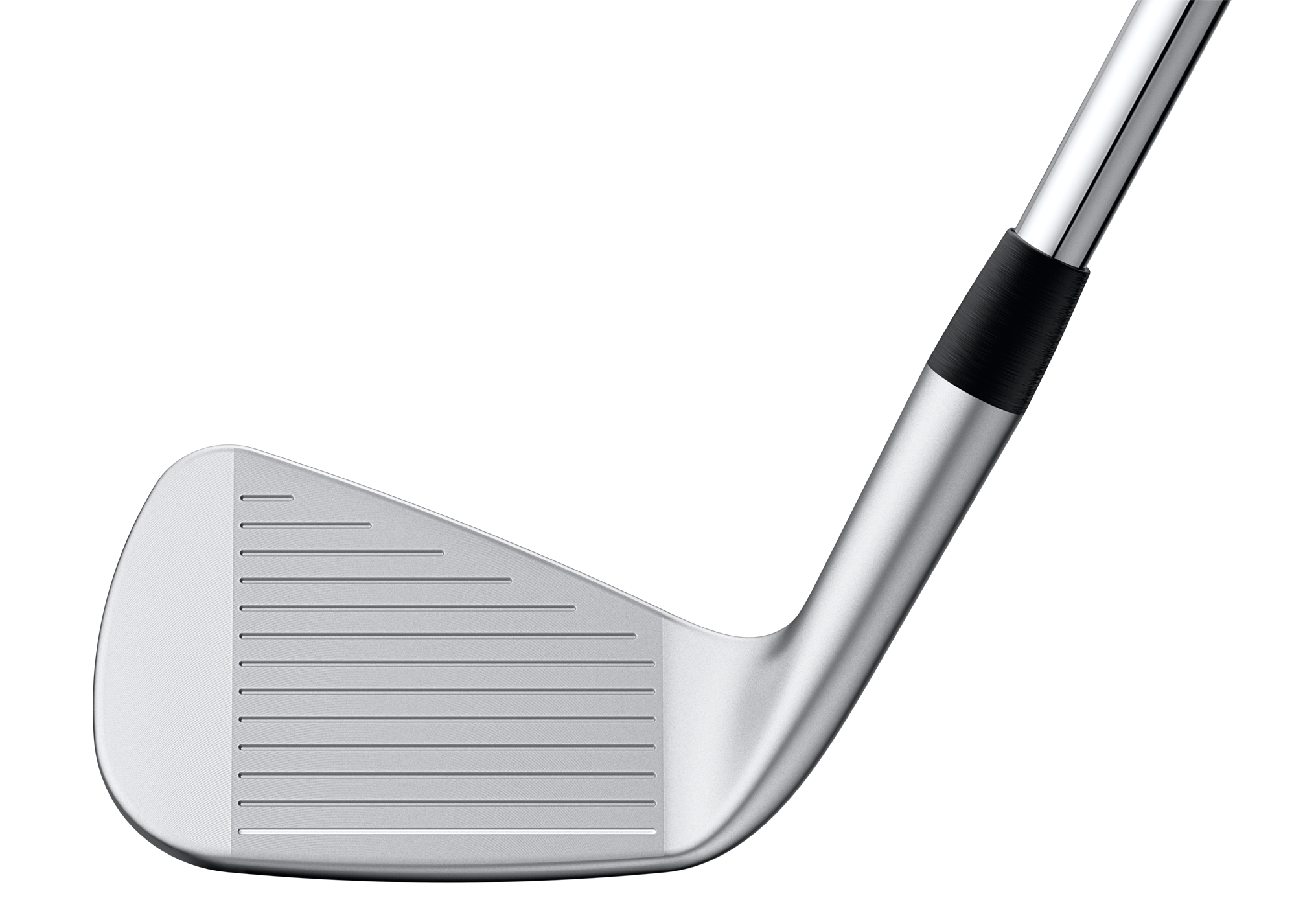
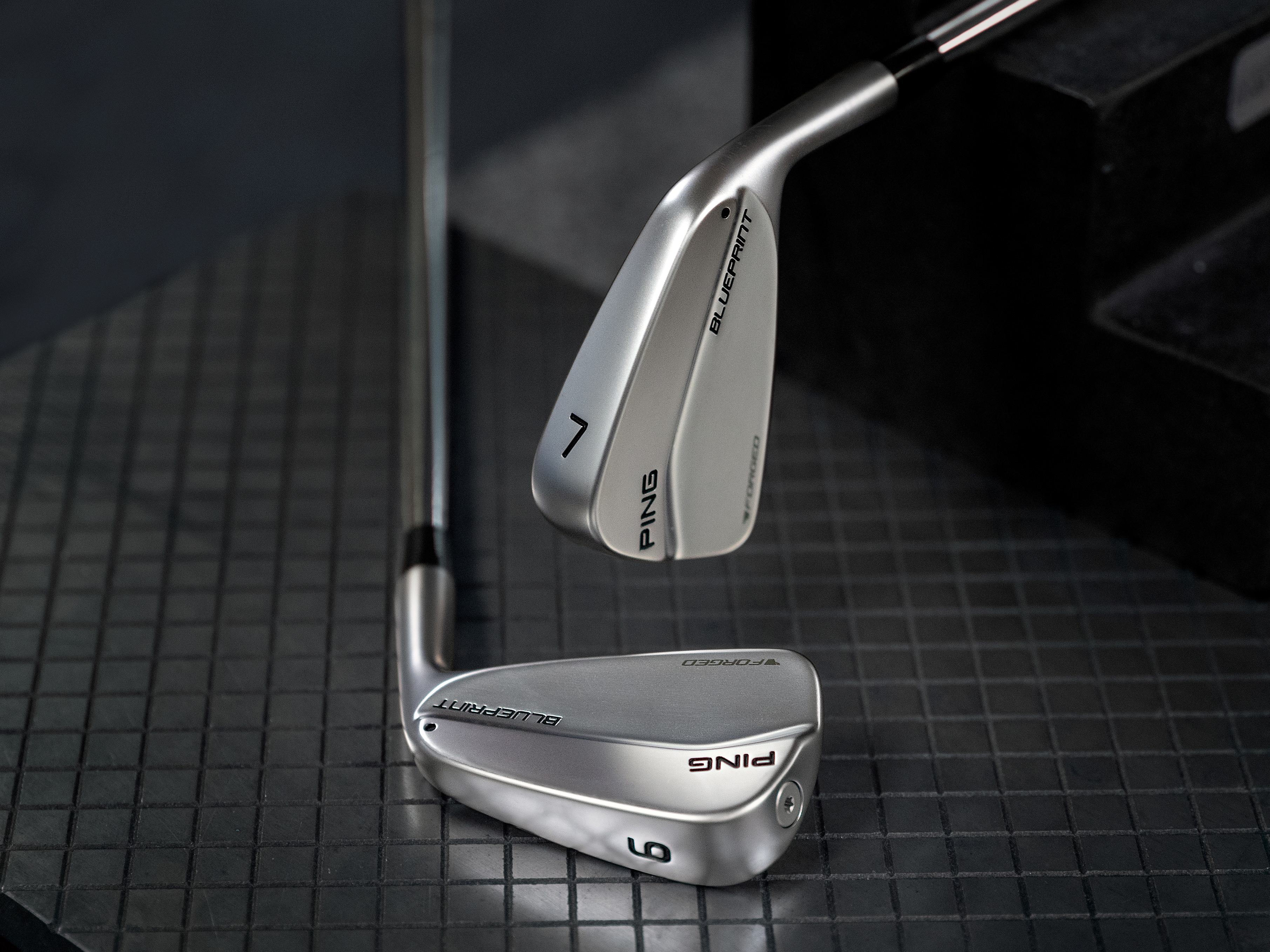
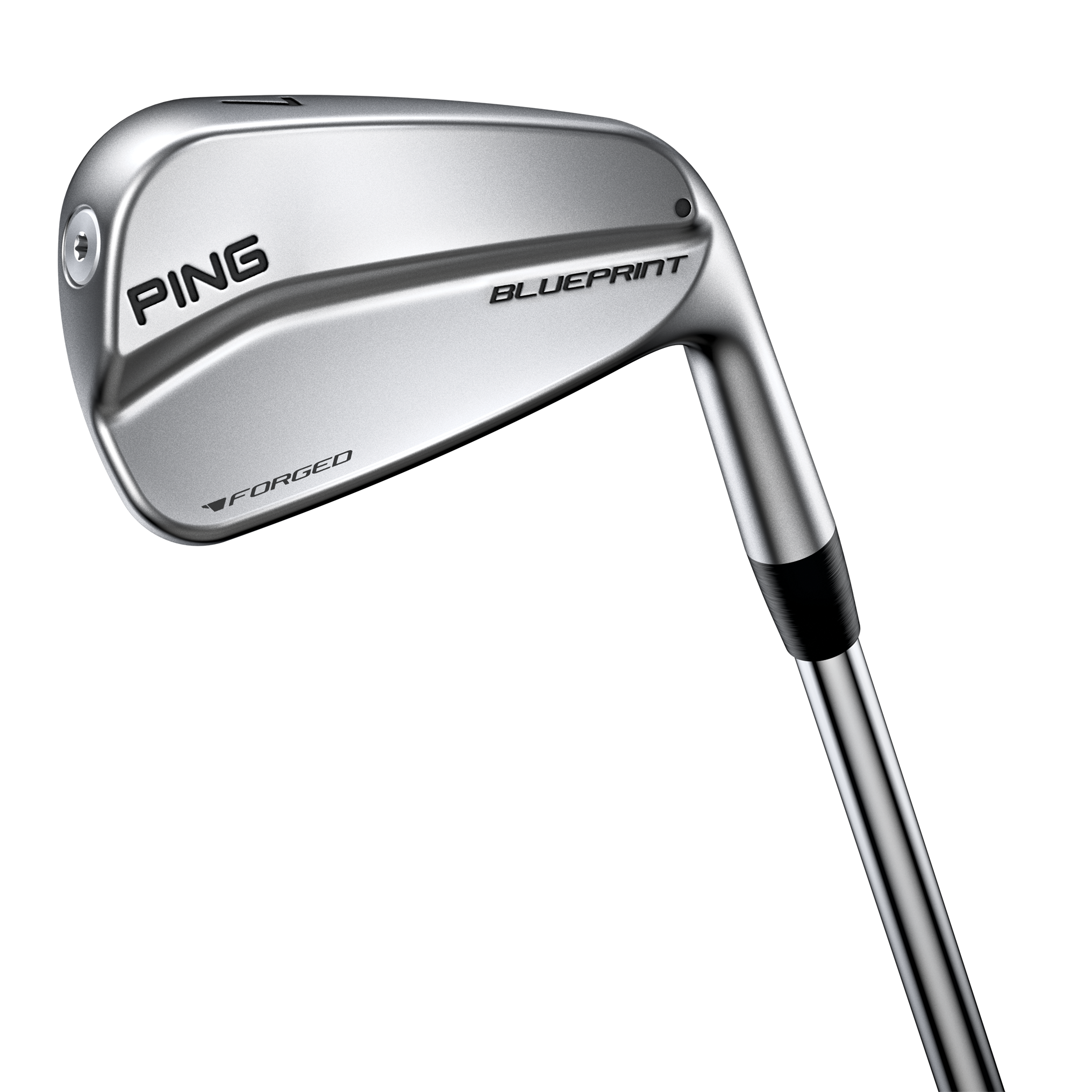
The Blueprint irons were influenced by several Ping tour professionals who wanted a blade-style iron which delivered control and workability. This small blade design appeals to the player who puts a premium on workability and trajectory control.
The irons feature shorter blade lengths, less offset and narrow sole widths. A machined tungsten toe screw increases the MOI for additional forgiveness and is combined with an internal heel weight to provide precise swing-weight tuning.