We asked shaft experts KBS to tell us everything you need to know when it comes to understanding the difference between graphite and steel shafts.
In In association with KBS
Golf club shafts are often neglected by most golfers. They can also seem fairly complicated to understand, with the different names and types to get your head around. Hence why the majority of club golfers put very little thought into which shaft to select, with the big confusion often being whether to go with a graphite or steel shaft.
There was once a time when graphite shafts were purely only considered for slower swinging golfers, mainly juniors and seniors. Now they have a firm presence in the setups of Tour pros bags every week. Meanwhile, steel offerings have historically been considered to be the ideal option for golfers looking for enhanced accuracy and control.
But the truth is, it is far less black and white than that. There’s a lot that goes into selecting the right shaft for your game, including feel and feedback. Finding the right setup can help every player unlock their best golf.
To help you achieve this, we have teamed up with KBS, and their Marketing Director, Rhett Taylor, to deliver exclusive expert insights on which golf club shaft will benefit your game most.
What are the main performance differences between graphite and steel shafts?
The main performance differences between graphite and steel shafts come down to weight, feel, vibration, and how they influence distance and control. Each material has distinct pros and cons that affect different types of players in different ways. KBS is known primarily as a steel golf shaft company, but we have taken a considerable market share away with our Graphite Shaft line(s) over the past 6 years, developing graphite to compete on the highest levels on Tour, with enormous success.
How does weight vary between graphite and steel, and what are the on-course implications?
A steel shaft made from carbon steel or stainless steel is typically heavier ranging from around 90–130 grams and would suit a stronger or faster-swinging players who prioritise accuracy over distance and those who value shot-shaping and control. See Justin Rose for an example.
Advertisement
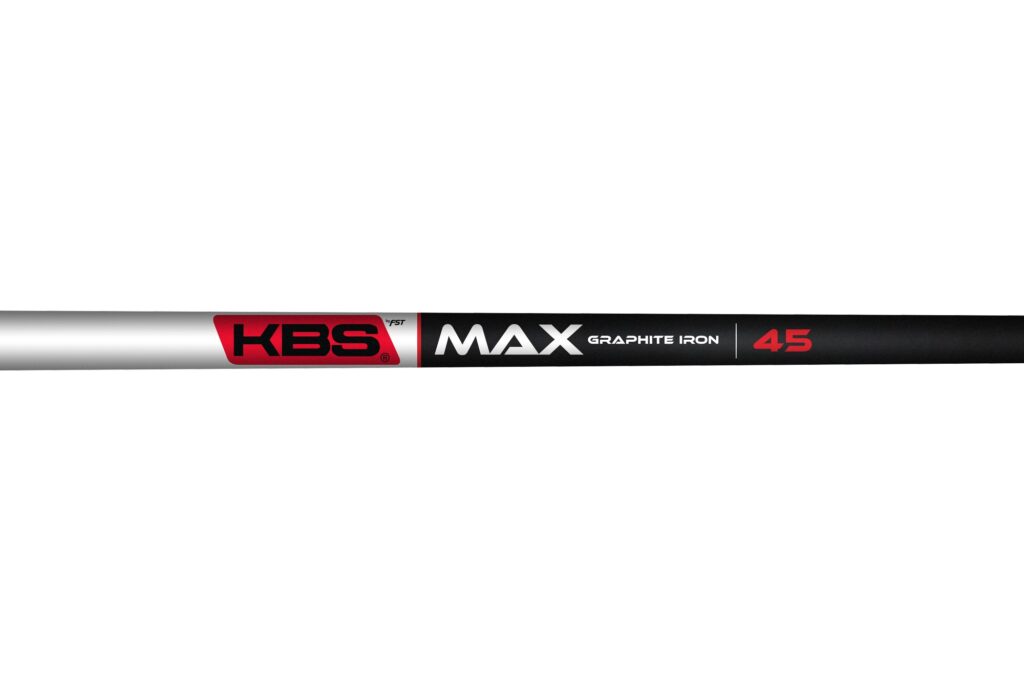
Graphite shafts are made from carbon fibre composites and tend to be lighter at around 40–90 grams. The shaft absorbs more vibration making it easier to swing. This lends itself to the myth that Graphite shafts are only for seniors, juniors, or players with slower swing speeds. Now, KBS has Graphite shafts that play like steel through the TGI, PGI and MAX Graphite lines. This offers golfers maximum steel like play-ability, shot control and performance along with providing the same optimal tight tolerances, dispersion and control as any KBS inline steel shaft.
“KBS has changed the game recently and dispelled the myth that Graphite is only for slower swing players.” – Rhett Taylor, KBS
Which types of players typically benefit more from graphite shafts?
As above, KBS has changed the game recently and dispelled the myth that Graphite is only for slower swing players. Graphite shafts can now be for anyone. We do have great success with any age and any type of player using Graphite. There is no stigma anymore when it comes to graphite or steel. Whatever makes you play better golf always wins, hence our fitting story!
Are steel shafts more durable than graphite, and does that matter for club longevity?
Typically, yes. Steel shafts are generally more durable than graphite shafts, purely based on the material they’re made from and this can matter for club longevity. But the degree to which it matters depends on how often they’re used, how well they are cared for, and what performance characteristics are most important to the golfer. All KBS products are premium products and are durable and perform above industry standards across our entire catalogue.
How does feel and vibration differ between the two golf club shaft types?
Graphite shafts absorb more vibration, whereas steel shafts typically have less flex and more feel. All KBS golf shafts are based off of feel, adding to the performance.
In what situations might a player use graphite shafts in some clubs and steel in others?
Ascending weights or more distance are a huge factor in a lot of Tour Professional bags, as well as many amateurs. Somone on Tour would use a graphite shaft for a driving iron or 3/4 iron and steel in the rest. The reason being lighter, consistent distance, as opposed to more controlled weight on shorter shots. There is a reason KBS plays a role in a lot of our Tour Professional use in Graphite to steel ratio.
Advertisement
• Created by renowned shaft designer Kim Braly and built from player feedback, KBS Golf Shafts offer the most advanced shaft technology in the industry. To learn more, click here.
• This piece is part of a special series on golf shaft technology. Read more here.