


You’ll hear everyone talk about wedge bounce and how important it is – but what is it?
- Related: What is wedge grind?
What is bounce on a wedge?
The bounce is the angle between the leading edge of the club and the lowest point of the sole. In layman’s terms, the bottom of the wedge that hits the ground at impact. If you look at a wedge you can see the back of the sole is lower than the leading edge, this is the bounce angle.
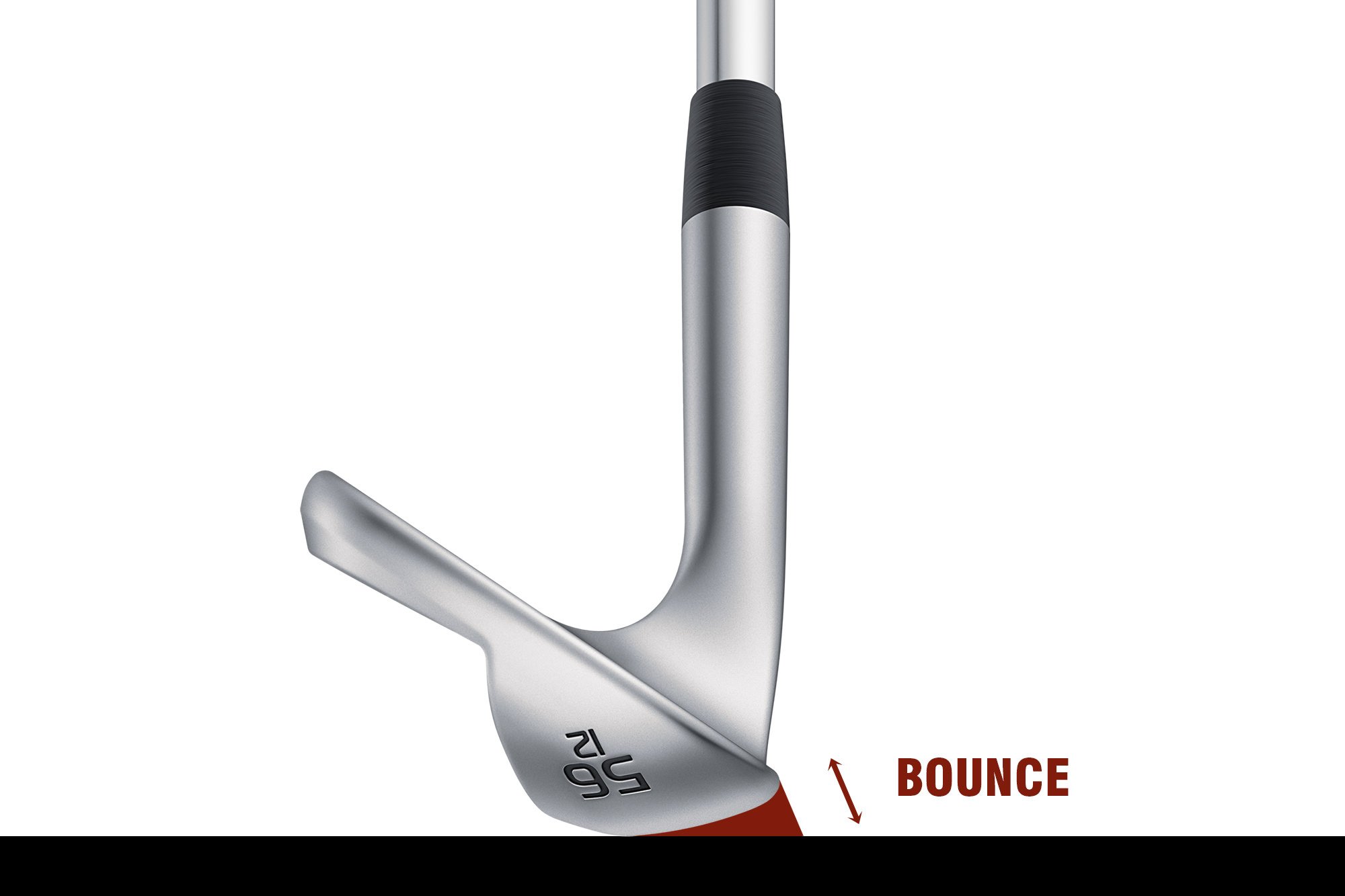
If a wedge has a high bounce degree the leading edge will sit higher off the ground at address, a wedge with less bounce will have the leading edge sitting tighter to the ground.
Why is it so important?
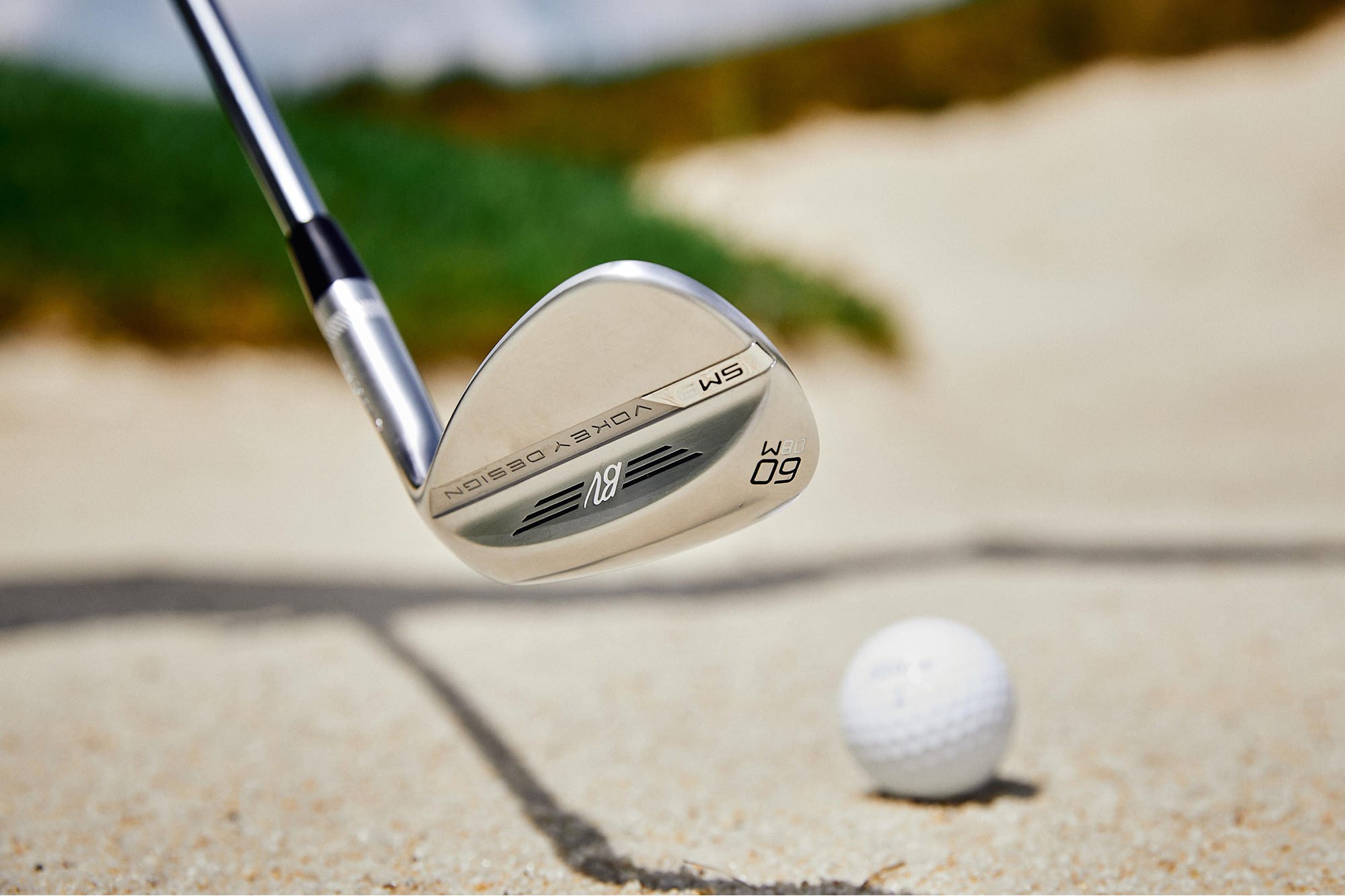
Having the proper wedge bounce and grind option promotes optimal contact, control, and ball spin. In fact, Bob Vokey says that “bounce is your friend” because it provides forgiveness on all wedge shots, allowing you to still strike the ball properly even if you make mistakes.

Low bounce wedges are designed for clean ball contact and would typically have between four and six degrees of bounce. Mid bounce wedges range between about seven and 10 degrees and are a more versatile for distance and flight control.
A wedge with 10 or more degrees of bounce is said to have high bounce. They stop the leading edge of the club from dragging too much in the sand or ground.
Do turf conditions dictate how much bounce you should have?
Yes, turf conditions are huge in deciding how much bounce you need to have on your wedges. Low bounce wedges are ideal for firm turf conditions and bunkers with harder or coarse sand.
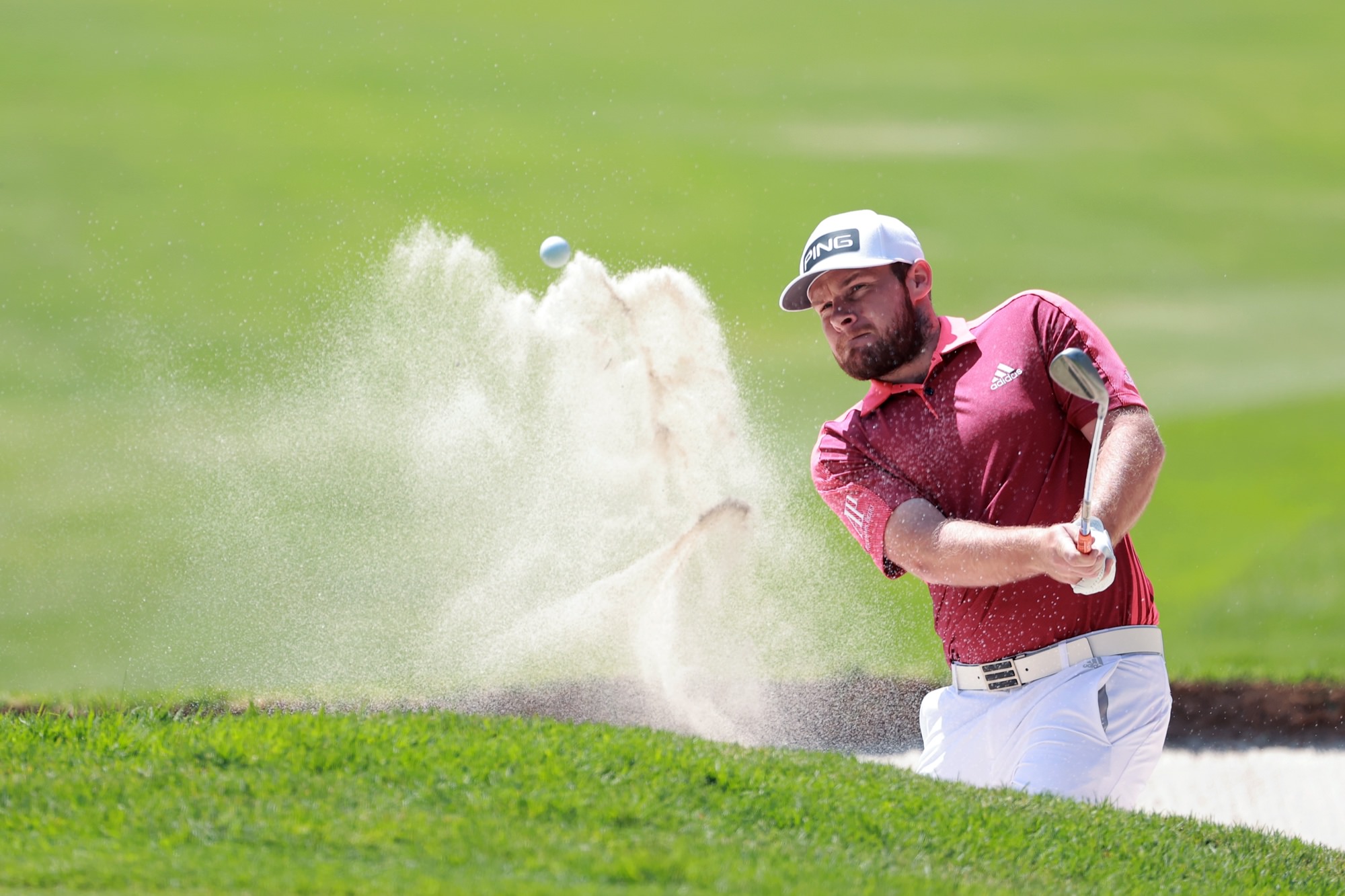
Softer turf conditions can require more bounce in the same way that bunker shots are likely to be played with wedges that have more bounce. Fluffier lies warrant the higher forgiveness of the extra bounce angle.
Mid bounce wedges are the most versatile and can be used for a variety of conditions but are best on normal to slightly firm turf.