Custom fittings are vital for golfers optimising their performance. Tom Irwin has eight top tips you should use the next time you undertake one.
Walk into any pro shop or golf retailer and you’re met with a wall of drivers, irons, and putters promising lower scores and longer drives. But before you reach for the latest release, there’s a critical step many golfers still overlook. That is custom fitting.
Custom fitting isn’t just for tour pros. It’s one of the most impactful things any golfer, regardless of handicap, can do to improve performance. Yet too often, players invest in new clubs without ever knowing if they truly suit their game.
Whether you’re a mid-handicapper chasing consistency or a newcomer looking to make a confident start, understanding the value of a proper fitting session is essential. From launch monitors to lie angles, there is plenty of technology and innovation for golfers to use to improve.
On an episode on The NCG Podcast, Tom Irwin discussed his recent fitting experience at The Belfry and outlined eight things every golfer needs to do at a custom fitting.
LISTEN TO THE NCG GOLF PODCAST
Go and Get Fitted!
Before you go and spend all that money on golf clubs off the rack get a custom fitting. This is something I have suffered as I have been using a driver which was in a specification I think I had been fitted for before, but many years ago.
I had been using it knowing the set-up wasn’t right for me; the shaft is too heavy, it doesn’t kick low enough for me, there is no help and the shaft is too stiff. When I have been swinging it at my absolute best and fastest I have achieve this delicious flight out of the face of the club that is nice and flat with no spin and going straight. But, really it has been making me absolutely throw myself at it and release the driver head really high and has bodged my whole swing for a couple of months.
Advertisement
So, I think if you are using unfitted equipment you are running the risk of manipulating your movement to suite the equipment, which really isn’t what you’re after. I think custom fitting is going to help you if you go to the right place, which brings me onto my second tip.
Where you go for your custom fitting matters
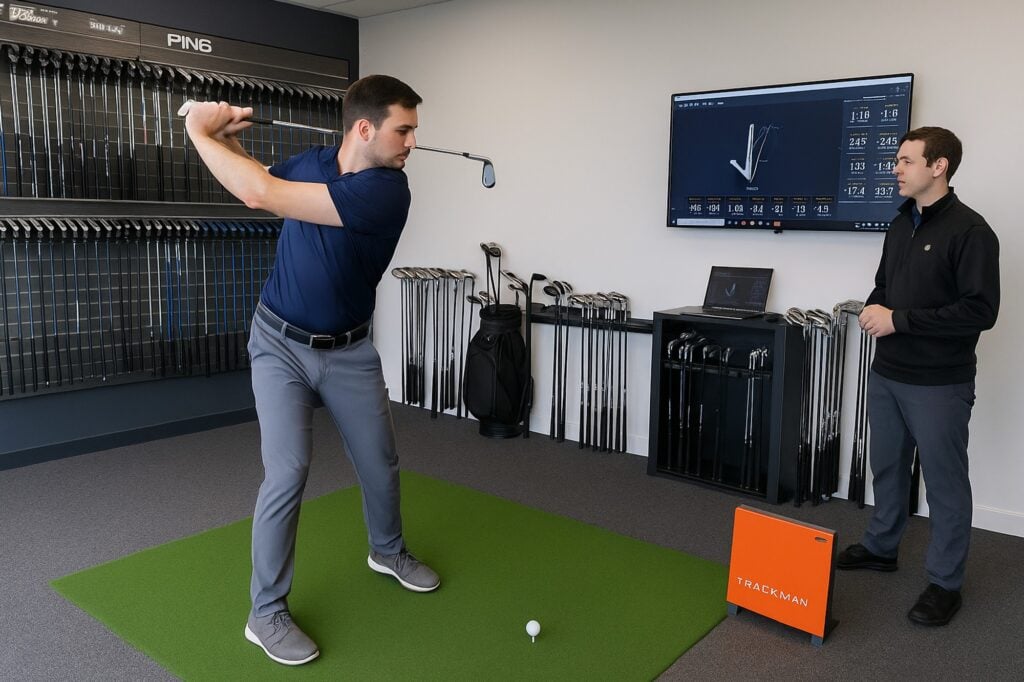
I think people are right to say they have had variable experiences of custom fitting and I don’t mean that in any sort of malicious way of anyone I have been fitted by. I have had both good and bad experiences from lots of different places. There are people with in-depth knowledge of Trackman or launch monitor data who go about accessing those numbers.
In addition, there are fitting areas that have compromised facilities, compromised data or they’ve got compromised options they can give you. Then there are fitting centres that genuinely have all the options and you’re going to get given what works for you, not the best that works for you which they happen to have in stock.
A good fitter will also get the best out of you and will ask quite a lot of diagnostic questions about where you play and what your bad shots are. There is definitely a crossover between a lesson and a fitting because your problem shot, which you may be blaming on your equipment, might have more to it in terms of what you’re doing.
I saw a great guy called Daniel Morris, who fits loads of amateur golfers. He gave me two or three pointers in terms of my general golf within the fitting I went for that I think I will use for a long time, in terms of the intention of the shot I’m trying to hit and I am making sure I’m taking that onto the golf course.
Advertisement
Use ‘Proper’ Golf Balls
That sounds a bit obvious, but we all spend a lot of time at driving ranges, we all spend a lot of time hitting practice balls and they are not the same premium golf ball you play with on the course.
So, I think it’s really important you get fitted using the golf ball, or as close to it, that you actually go and play with.
There are these nuances in these premium golf balls, how they feel off the face and all the rest of it. Really it’s the myth of normalised data, I use a Trackman all the time and I just don’t trust the normalisation because there are so many variables in terms of temperature and then the golf ball you are using. As soon as you’re using that button it is guessing to a degree.
You can take this risk away if you use the same premium golf ball to get a much more accurate reflection of how far it is going and more importantly how much it is spinning. So, I think, 100% use ‘proper’ golf balls.
Invest in a Custom Shaft
This is a really big thing in custom fitting. Loads of manufacturers, TaylorMade are certainly one, have really good shafts that come as part of the stock price of the driver and often those are the right combinations for most golfers. That’s why they do it.
If you want the absolute optimal performance, you’re sometimes going to be fitted into something more expensive and premium. If you are the type of golfer willing to invest in a new set of golf clubs you should spend that extra bit of money on a shaft that is going to be working for you.
Advertisement
Do your homework
Linked to that is to do some triaging before you go. I guess by going to a specific brand’s fitting, you are at least reducing your options down. But if you are going to an agnostic fitting centre, you have got the whole world of heads and shaft combinations, which is going to take an awful long time.
In order to get the most out of your fitting time, you need to have some idea about what it is you are looking for. Whether that be the difference between a cavity and a blade, if you just go with an entirely blank page then it becomes a big job to try and whittle it down.
Having an idea of what you like and don’t like before you get to your fitting is a big thing.
Consider where you play your golf
You’re often getting fitted for optimal conditions. Trackman, for example, has something called optimiser where it will say at this swing speed this is the optimal launch angle. You’re always trying to middle the blue line and be fitted into saying like that. I think there is loads of sense and logic in that.
It is very obvious when you go from playing a soft parkland golf course, where what you are looking is very different for compared to what I’m looking for at my home golf course. I want something that is going to launch a lot flatter off the tee and spin a bit less on my home links golf course.
Have that in your mind when you are choosing between two shafts and two clubhead combinations. If one of them is giving you a slightly higher launch and a more spin and one is slightly lower, you might want say, ‘well actually I play most of my golf at heathland courses or most of my golf at links courses so that lower trajectory is going to suit me’, even though you might be being pushed towards the slightly higher spin because that’s what the fitting says is optimal.
Advertisement
You have to consider what is optimal for you and where you play your golf. A lot of that launch stuff is how you consider your total distances, if they are the same you need to think about what golf shot you want to see.
Don’t be Afraid of the Funky Option
You may go to a fitting think you’re going to get a 4-9 iron, a pitching wedge, 56°, 60° or something in your wedge set-up. But there is quite a lot you can do in terms of shaft and clubhead combinations that can give you something very specific to your requirements.
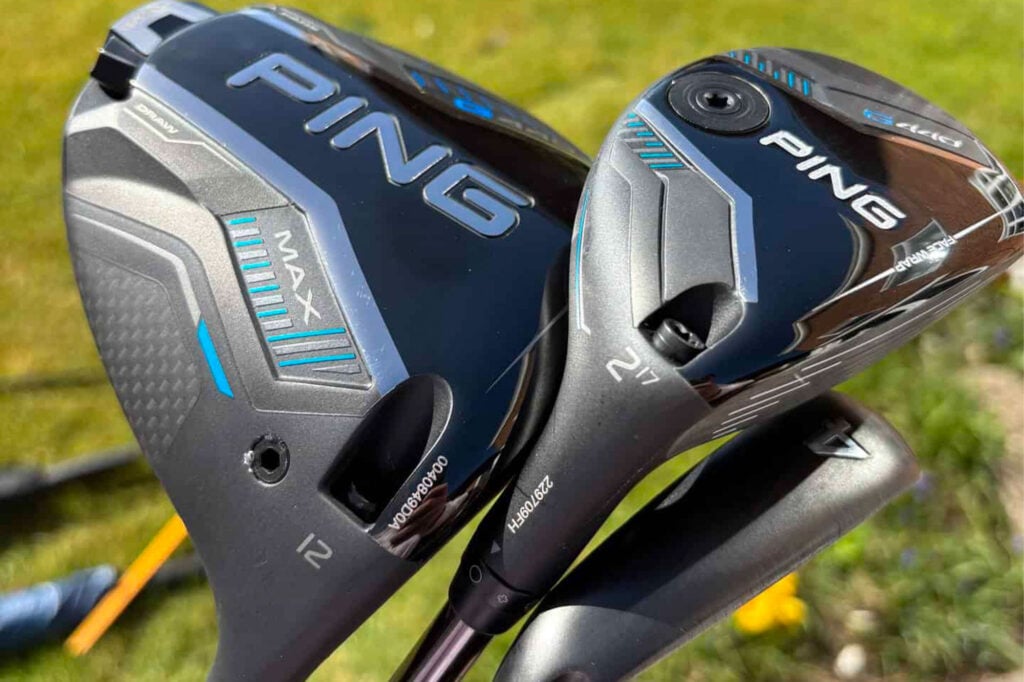
My colleague Dan went for a fitting to Ping recently and came back with what they are describing as a thriver – a 3-wood shaft on a driver head. it’s funny watching him wield it as he’s hitting these shots, which to the naked eye just looks like a driver but are coming down 30 yards short of where his normal driver would get to.
But it produces a higher degree of consistency which I think has really helped him.
Similarly, as someone who launches the ball really low and wanted to hit a higher flighted fairway wood shot into par fives I have quite often had a 3-wood shaft with a 5-wood head on.
If you are open to it you can come away with some fairly funky options. I don’t think you should go with fixed views about bag set-up and that you will have to get a military array of clubs. I think we have all moved on from that, we’ve seen tour players using 9-woods and 7-woods. You need to be open minded about the options for you.
Advertisement
Be wary of a fitting swing
I think if you get in the groove of fitting, you get more and more confident and hit it harder and harder while having someone telling you how well you’re hitting it. All of a sudden you’re swinging it five miles an hour faster than you’re ever going to do on a golf course. You can’t wait to get your new clubs and then the day you turn up cold with a bit of a hangover, and the first swing of the day, there’s far too much shaft for you and you can’t use it.
That has definitely happened to me. You’ve got to find a shaft that is going to work with your slowest swing speed and your fastest possible swing speed.
Now have your say
Have you had a custom fitting before? If so, what did you make of it? Did you see an improvement in your game? Let us know on X!