


Players competing in England Golf championships this year will need to abide by new Pace of Play checkpoints under a radical change to the governing’s body’s slow play policies.
Starting with the English Senior Women’s Amateur Championship at York, groups will be timed after completing the 4th, 9th, and 14th holes of their rounds as the organisation looks to shift the responsibility for keeping the game moving from rules officials back towards players.
Enforced through a Local Rule, the first group – and any group after a starter’s gap – will be “considered to have missed a checkpoint, if upon arriving at a Pace of Play Checkpoint, the group’s cumulative time exceeds the time allowed for the number of holes completed.
Sign up here for our daily newsletter
Sign up (1)
“Any following group will be considered to have missed a checkpoint if it is more than 12 minutes (10 minutes in 2 balls) behind the group in front and exceeds the time allowed for the number of holes completed”.
Missing the first checkpoint will see all players in a group given a warning and told to get back into position. A second missed checkpoint will bring a one stroke penalty, while a third missed checkpoint will see every player handed an additional two stroke sanction.
The penalty for a missed checkpoint will be applied to the previous hole and missed checkpoint penalties given out during a round do not carry forward into subsequent rounds.
Players can still be individually timed, with penalties ranging from an initial warning to disqualification for the 4th bad time.
England Golf say the policy, which is being trialled this year, will be “strictly enforced” and will further encourage golfers to play at an appropriate speed.
Previously, rules officials monitored groups through hole-by-hole pace of play charts and would approach, cajole, encourage and, ultimately, time and sanction players and groups that fell behind and did not make up ground.
Advertisement
“What I looked at is what we can do as an organisation to try and make the game a little bit quicker,” said James Crampton, the governing body’s director of championships.
“What I wanted to do was put the onus much more back onto the players – rather than the players thinking it’s the referee’s responsibility to get people round in a suitable time.
“Previously, if there were instances of players playing slowly, the policy was difficult to implement in terms of applying penalties.

England Golf new pace of play policy: ‘There are no reasons why players’ shouldn’t meet those checkpoints’
“You had to go through a pretty elongated procedure, before you actually got to applying penalties to players, and it was a heavy resource in terms of refereeing.”
Reflecting on that previous policy, which could eventually see golfers put on the clock and given a bad time if they did not hit a shot within 40 to 50 seconds, Crampton added: “There doesn’t seem to be a lot of logic in applying a pace of play policy based around how long it takes somebody to physically hit the ball.
“The policy should be around how long it takes people to actually play a hole, or 18 holes, not that small percentage of time where they’re physically standing over the ball and hitting it.
“This new policy is really around a player’s ability to play the golf course, or a hole, in a suitable amount of time – not that they’ve got to play a shot within 40 or 50 seconds.”
Crampton added referees would be able to hand out exemptions and waive checkpoint penalties in particular circumstances.
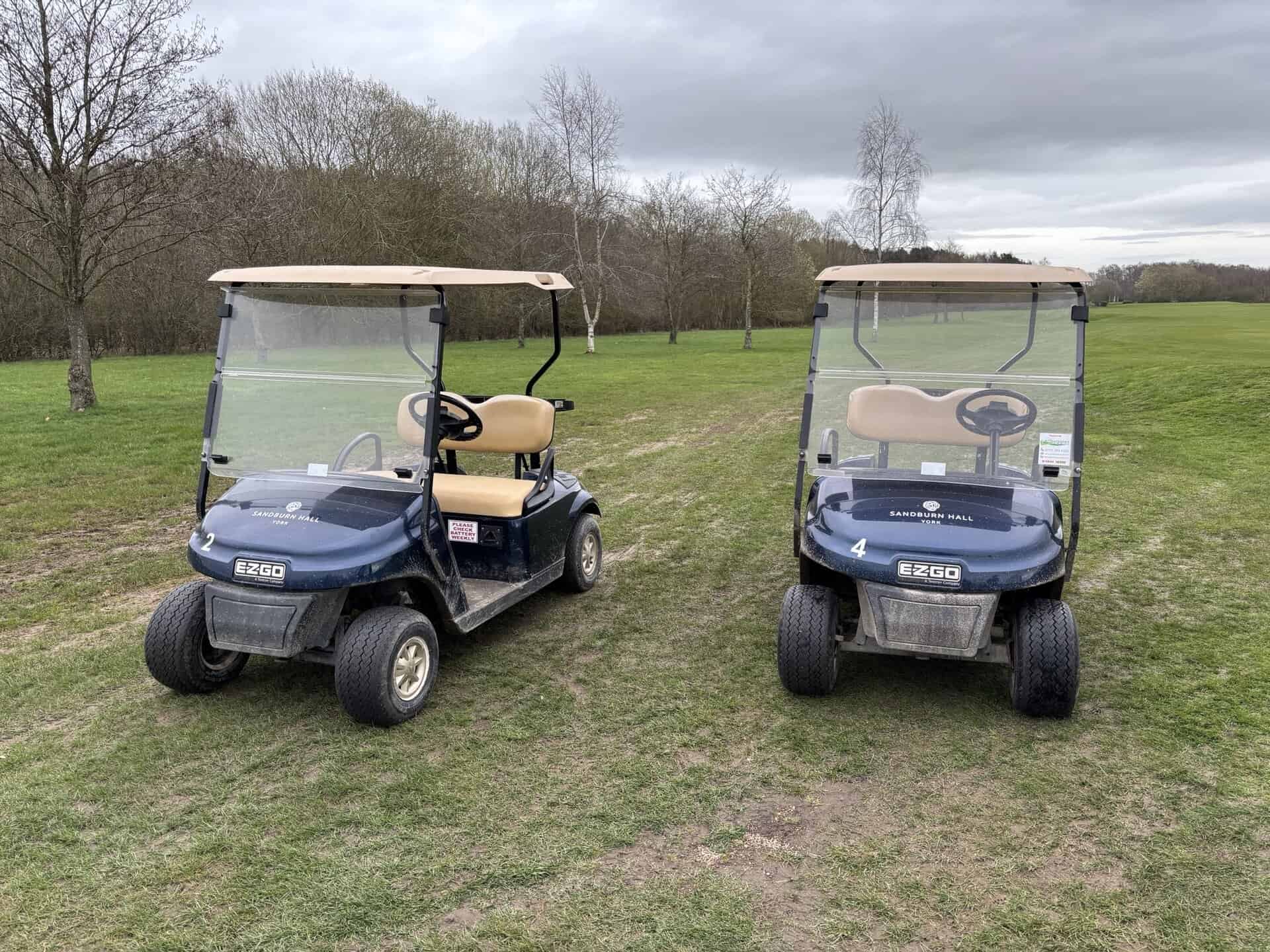
And while groups that have missed a checkpoint would be encouraged and assisted to make up time, this would be done from a distance – ending the practice of groups being closely followed by an official on a buggy.
“There are no reasons why players shouldn’t meet those checkpoints,” Crampton said. “If you miss your checkpoint station on the 4th, you will be spoken to by a referee to just say, ‘you’ve missed your checkpoint station, be aware that you need to get back into position’.
“They will leave you alone and it will be your responsibility as a group to play. The referee will keep an eye from long distance and if you get yourself back into position, they’ll come and thank you at the end and leave you alone.
“If it’s looking like you’re potentially missing a checkpoint, or the next one, they will monitor you for that last two holes to see whether there’s any exceptional circumstances that warrant waiving the penalty.
“So, for example, you may have got yourself back into position. And then on the 9th tee, you go and hit three balls out of bounds and you end up missing your checkpoint, or you’ve had a long extended ruling.
“That’s an example where you’ve made every effort to get back into position but, because of one incident at one period of time, it’s resulted in you missing your time.
“That will be an example of that checkpoint being waived, but you would need to make your next one before the penalty was applied.”
The new policy will not be used in match play events but, if a referee feels a group has lost their position on the course, each player can be individually timed.
- This piece also appears in the GCMA’s monthly Insights newsletter that is packed with expert opinion on matters relating to golf club management. Sign up to Insights for FREE here.

Now have your say
What do you think of England Golf’s new Pace of Play policy for their championships? Would you like to see this in some of your own club events? Let me know by leaving a comment on X.
Advertisement
Advertisement