



Greenkeepers are used to having their role diminished by those who regard them as little more than grass-cutters.
Well-informed golfers know better, but even they might wonder if the advent of autonomous mowers is easing the workload on greenkeeping teams.
While it’s true that the sight of robots dutifully tending to the playing surfaces is becoming an increasingly common one, does that really mean the human hands that once took care of them are now resting idle?
For Your Course, produced by the British and International Golf Greenkeepers Association, we spoke to three course managers from across the UK to understand how robotic mowers and other areas of automation are impacting their courses and the wider golf industry.
What advantages can be gained from delegating cutting duties to a robot? Do they need to improve playing conditions? And what can course teams achieve if they’re not having to cut grass?
Tackling those questions on robotic mowers are Steve Lloyd, Course Manager at The Worcestershire, and BIGGA board member; Deeside Course Manager Neil McLoughlin and Master Greenkeeper Sam Evans, who is Course Manager at North Hants.
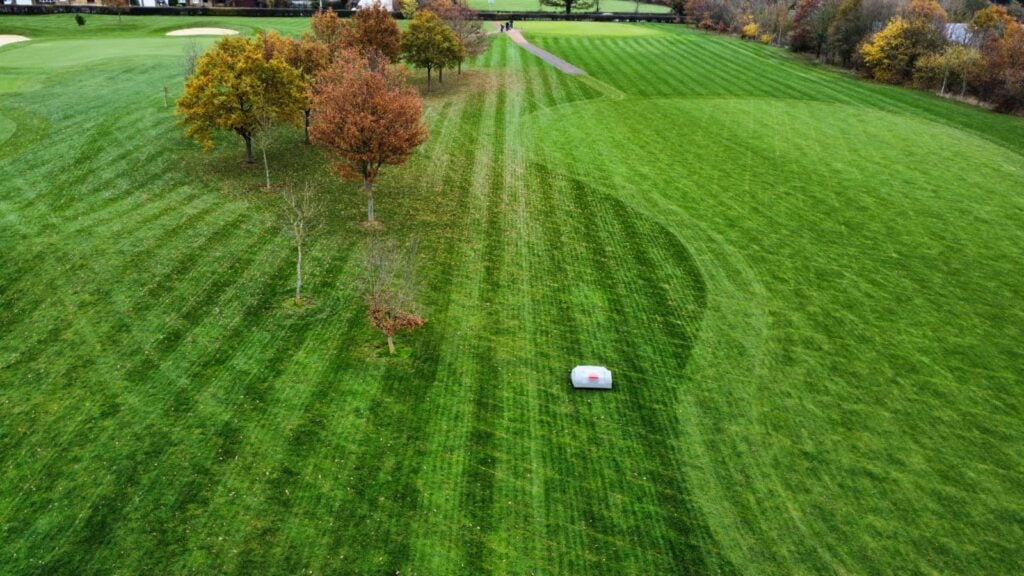
What advantages do greenkeepers gain from delegating a chunk of their grass-cutting duties to a robot?
Steve: There are definitely advantages in terms of timesaving and the ability to reallocate resources to other tasks. We have two guys cutting fairways, it’s a four-hour job, and we do that three times a week through the season on average.
If that task were to be undertaken by autonomous mowers, that’s 24 hours per week that those two guys could be focusing on other tasks.
Neil: It’s the same for us. Using robotic mowers means we can spend more time edging and raking bunkers, we can spend more time weeding, we can spend more time hand-cutting greens rather than using triples – it just gives us more time to work on the details so we can improve the condition and look of the golf course.
Advertisement
Does using robotic mowers lead to improved playing conditions?
Neil: In our case they’ve definitely improved the quality of the golf course. For example, we’re using them on the rough and semi-rough, which would usually just get cut once or twice a week depending on how strong the growth rate is, but these machines are consistently cutting it three times a week, so it’s just better maintained. There are no grass clippings lying around either, so that’s another job it’s saving us.
Another example is the surround of the 1st green on our nine-hole course – it’s quite undulating, with some steep humps and hollows, but the automated machine we use has a cutting blade of around 12 inches and it can navigate the terrain. It has maintained that area to a higher standard than I’d seen before.
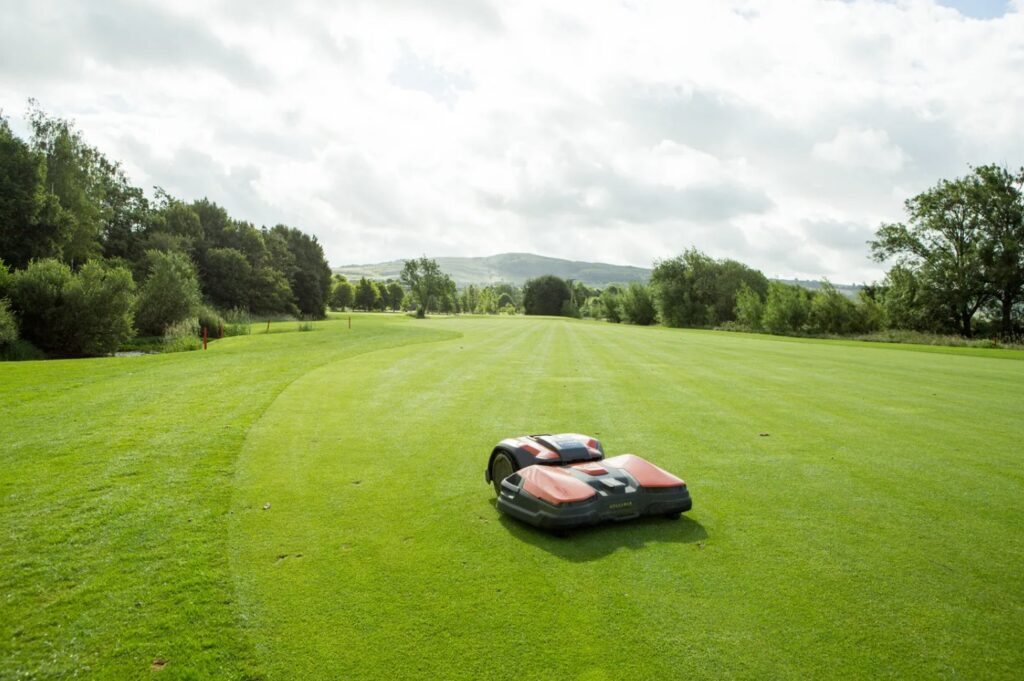
Steve: We trialled the CEORA (made by Husqvarna) on our 1st and 18th fairways for two months and it was bullet-straight and the quality of cut was fantastic.
However, we’re a 1920s golf course and not much time was spent shaping our fairways, so there are a few imperfections. Over time we found because of our contouring and the width of the cutting tool, it scalped the surface a bit.
Also, it doesn’t present it the way a cylinder mower would – the stripe pattern is thinner, say three foot compared to the really well-defined 11-foot stripes you’d get with a cylinder mower with heavy rollers.
If greenkeepers aren’t cutting the grass any more, what are they doing?
Steve: This is a common misunderstanding about the role of a greenkeeper and all the tasks the role involves.
I have a WhatsApp group with 200 or so of the members where I post what we’re doing as a greenkeeping team and why we’re doing it.
Advertisement
The members can’t comment, but they see it on a daily basis, and it’s amazing the number of people who came back after the first six months and said, ‘I had no idea that you guys have to do all these jobs’. It shows there can be quite a limited understanding of what we actually do.
Sam: Course set-up is of vital importance daily, and to have more staff and more time to fulfil this job is a luxury.
Many tasks are on the to-do list for a course manager, but resource and staff restrictions often mean these jobs do not get done.
Removing some of the routine jobs, or making them more efficient through automation, means these other jobs on the list, which are often the noticeable ones to golfers, can get done and to a higher standard.
This could be things such as edging sprinkler heads, working on weaker turf areas, cleaning golf course furniture and tidying areas on the course to create a more aesthetic appeal.
- This article appears in Your Course, the twice-yearly publication from the British and International Golf Greenkeepers Association. Your Course invites golfers to gain a deeper appreciation of what preparing and maintaining a golf course really involves. Head to www.bigga.org.uk to find out more.
Now have your say on robotic mowers
What do you think about the rise of autonomous mowing and robotic mowers? Is it making your club better? Let us know by leaving a comment on X.
Advertisement