



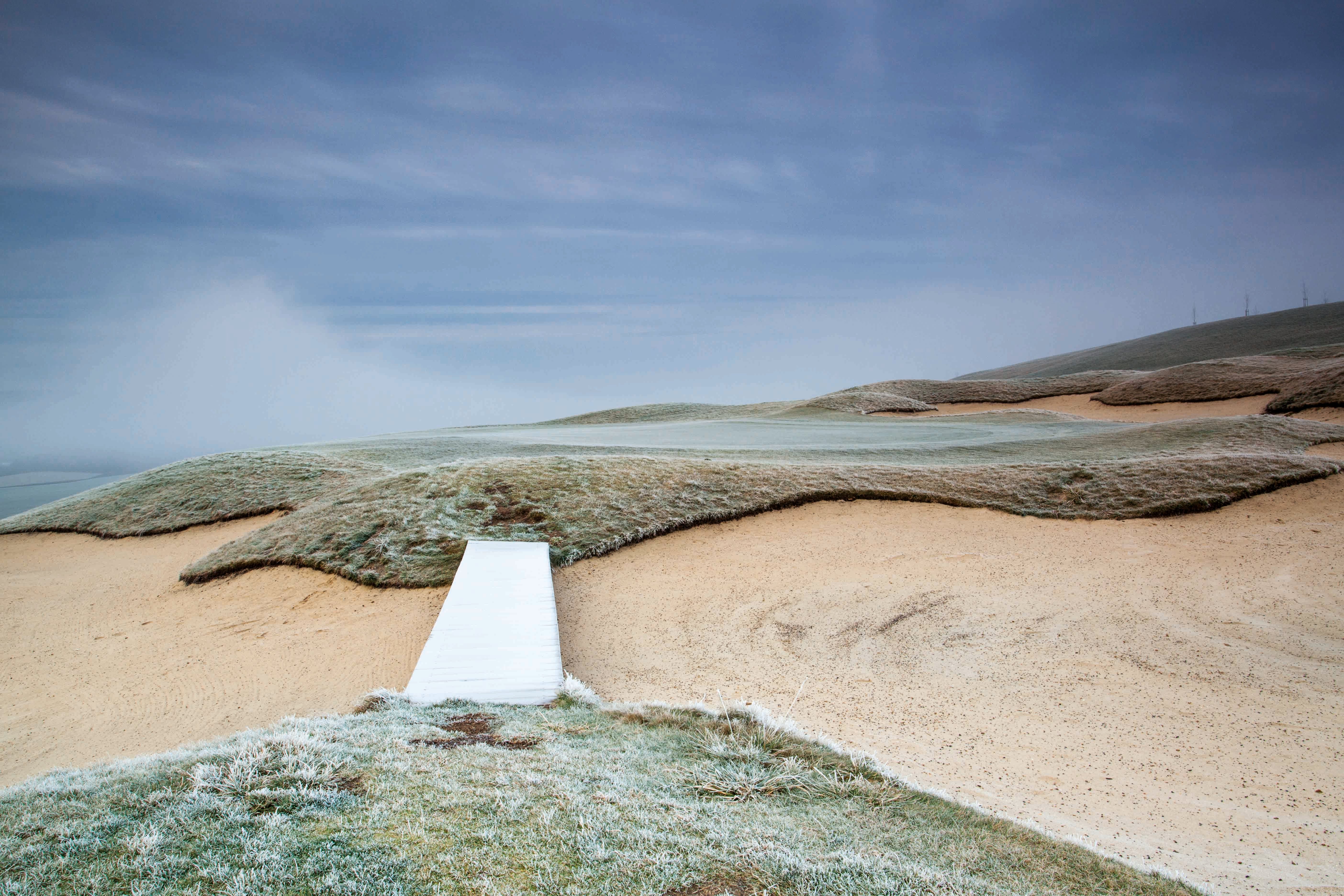
They say it never rains but it pours. Whoever came up with that failed to think about frost.
It might be a golfer’s worst nightmare – who really enjoys playing off temporary greens? – but when our courses are frozen solid our greenkeeping teams have to take care.
Let’s take a look at why measures are brought in when the mercury plunges below zero and why we’ve just got to put up with the restrictions. Is frost bad for golf courses?
How does frost affect golf courses?
What happens to grass during a frost?
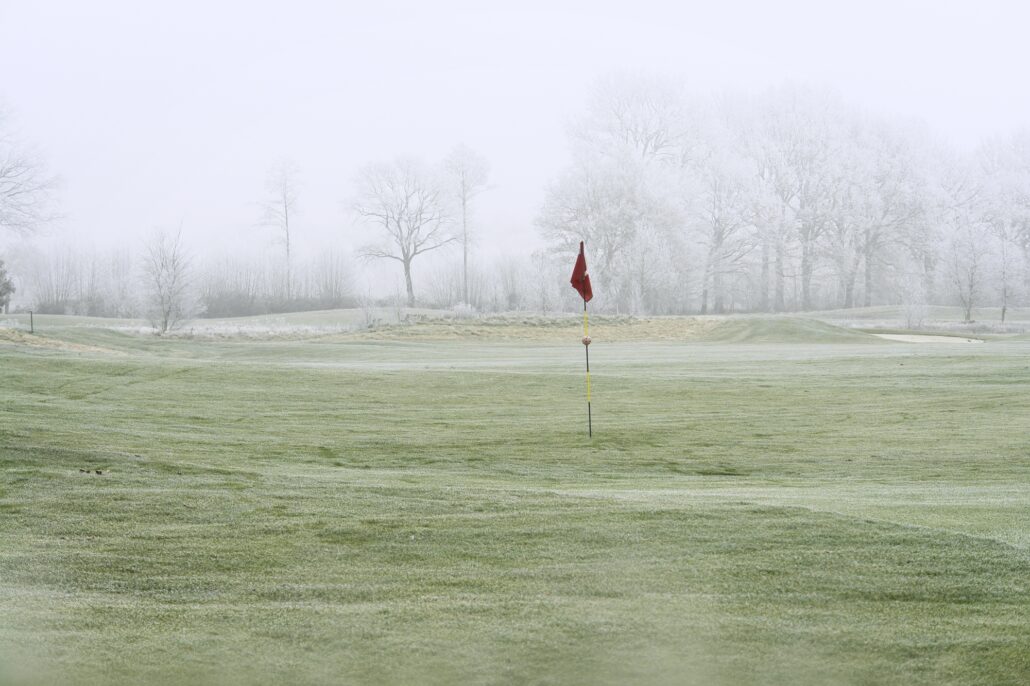
Frost is formed when cool air causes water vapour to condense and form droplets that then freeze on the ground.
There are actually a number of different types of frost, including air and hoar, but the one that principally affects our rounds is a ground frost.
You need to remember grass is a plant. Like all plants it’s subject to stresses and strains. If you think about our courses, we put grass under strain simply by cutting it – whether that’s tees, fairways or greens.
The less stress a plant is under during the winter months, then the healthier it should be when temperatures start to rise in the spring.
When grass freezes, though, water within its cells expands and that can put a large amount of pressure on the membranes.
Grass is largely dormant during the winter months – it’s too cold for it to grow – and this means it can be vulnerable.
When golfers walk across frozen grass, and particularly greens, the compaction can cause bruising underfoot. Barriers between cells break and the plant is killed from the inside.
As the temperature then rises, on a putting surface for example, the dead grass turns brown and wastes away. This kind of damage can last well into the spring – until temperatures really start to rise again and growing resumes.
Advertisement
So does frost damage greens?
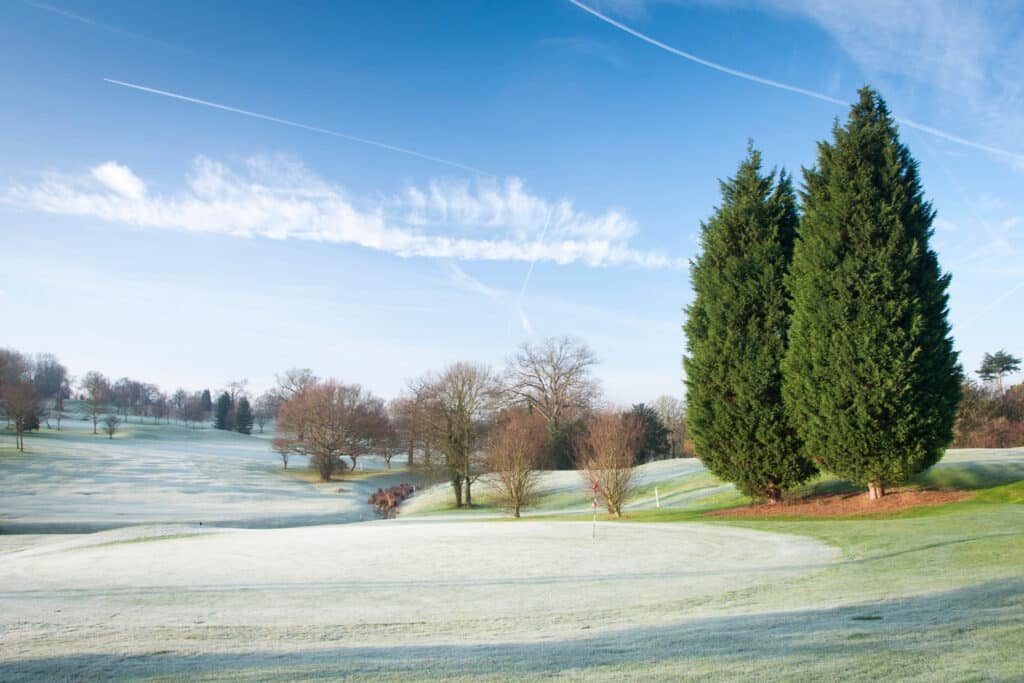
You’ll notice that some courses put you on temporary greens at the first sign of a frost, while others carry on regardless.
Whether or not to play on frosty greens is a subject of much debate in the turf community and it’s an issue that’s largely considered on a course-by-course basis. Any decision can depend on the type of course, the type of grass and the composition of greens.
What might cause significant bruising and damage at one course, may not do the same somewhere else. The needs of the business may also have to be taken into consideration.
Greens are fragile. When there’s a visible frost, the plant can become brittle and crushed when golfers or machinery come into contact with it.
But even as the top-soil thaws, and the frost is no longer visible, that doesn’t necessarily mean it’s time to pepper a putting surface with pitching wedges.
The sub-soil may still be frozen and that can cause a root break where the underlying roots are severed and cause the plant to die.
Now have your say
So is frost bad for golf courses in your opinion? Does your golf course cope well with the cold weather? Get in touch with me on X.
Advertisement