



I’ve often been the inadvertent prey of a howitzer screaming into the rough. It’s no fun as the ball whistles past your head without any forewarning and you think about what might have been had you been a mere couple of steps to the side.
Every now and then we see a professional golfer getting put to the sword as a couple of wayward cannons failed to elicit any shout of ‘fore’.
Whenever this happens there are usually loud and noisy calls for the player concerned to face a penalty – or even get booted out of the tournament – for their transgression.
But it can’t be a case of one rule for them and so on. If we’re going to throw the book at someone in the professional game, we’re going to face the same when we tee it up in a club competition.
Is a DQ the answer? And what do the Rules of Golf say about it? I’ve teamed up with my colleague Alex Perry to sort it out once and for all…
Should you be disqualified for not shouting fore?
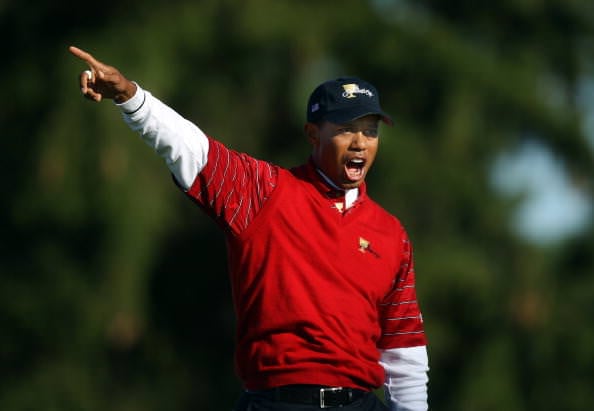
‘It’s not acceptable behaviour and the game needs to reflect that’
I’m not going to quite lurch into Shooter McGavin “Kick him off the tour, Doug!” territory here, writes Alex Perry, but what has to happen to get these players to warn people there is a golf ball flying toward them?
As someone who has been hit by a golf ball, I can tell you it bloody stings. I’m just thankful it was on the back of my leg and after a couple of bounces rather than on the fly and on my cranium.
Do a quick Google search. People have died from being hit by a golf ball. And remember the spectator who lost an eye at the Ryder Cup in Paris? You shouldn’t go to watch a golf event and come home with life-changing injuries. Or not come home at all.
Advertisement
So whether you’re the World No 1 or a Sunday hacker, if you see your ball going anywhere but your intended target, shout ‘fore’. It’s not hard. I know there’s a stigma attached to it, but a moment of embarrassment is a damn sight better than the other option. It’s not acceptable behaviour and the game needs to reflect that.
Immediate disqualification isn’t necessarily the answer, but punishment needs to start somewhere. Start dishing out penalty strokes and players will soon find their voice.
And if they don’t? Boot them out the tournament. How else will they learn?
‘Etiquette and the Rules of Golf are not two sides of the same coin’
A passionate case, Alex, but here’s where it gets a touch tricky, writes Steve Carroll. People often see etiquette and the Rules of Golf as entwined but they are not two sides of the same coin. They’re actually different beasts.
The Rules do lay down expected standards of player conduct but there’s no penalty for failing to act in this way – unless a committee decides to disqualify a player ‘for acting contrary to the spirit of the game’ if they find they’ve committed ‘serious misconduct’.
It’s laid out in Rule 1.2a and a clarification to that rule defines serious misconduct as ‘so far removed from the expected norm in golf that the most severe sanction of removing a player from the competition is justified’.
This can include endangering the safety of others. That’s it, you say. But the interpretation also lays out examples of what serious misconduct can be and it’s things like deliberately damaging a green, chucking a club towards a player or spectator, or deliberately distracting others who are playing a shot.
Disqualification is the only recourse available under this Rule but what if someone has just made an honest mistake?
Clubs can set out other penalties by adopting them as part of a Code of Conduct and they can range from a warning, to shots, to the ultimate sanction for those who don’t get the message.
Depending on the circumstances, this seems to me a better way to go – as it can close in on repeat offenders – rather than pressing a nuclear button straight away and getting ready for some hefty fallout.
Where do you stand on the debate?
Should there be zero tolerance when it comes to shouting fore or do we need to be careful when it comes to dishing out sanctions? Let us know on X.
Advertisement