


Golf and coastal erosion: Introduction
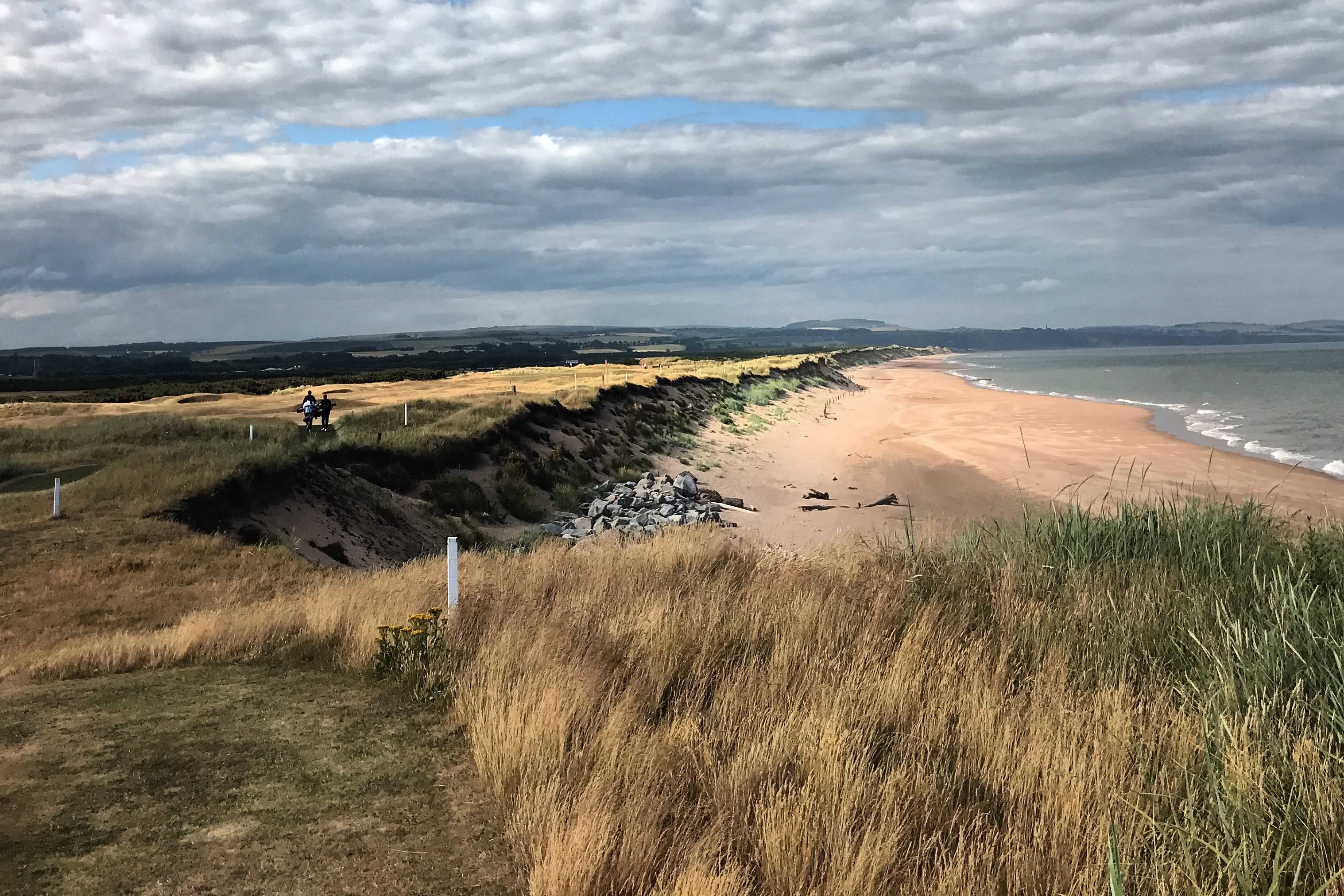
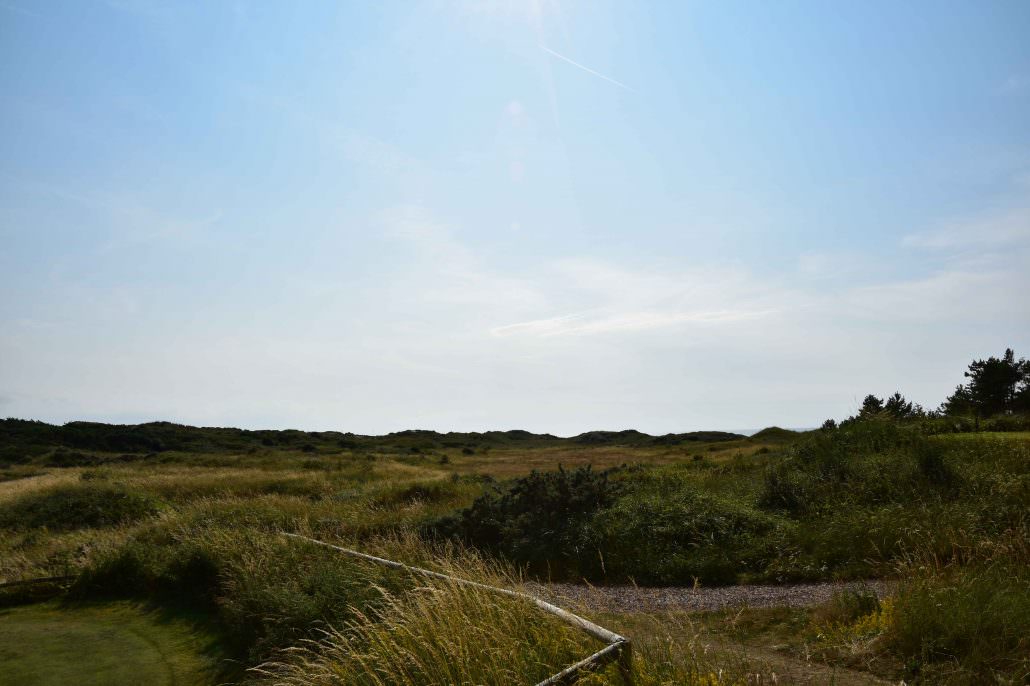
Clear the pines that frame the back of the 9th green and the way paves to thick dunes almost as far as the vision allows. The Irish Sea is out there but it’s a keen eye that can scan over the mounds of grass and sand to find those specks of blue in the distance.
It’s close to 200 metres away and it’s only at this point, stood on the 10th tee at Formby, that the realisation finally dawns of the destructive power coastal erosion is having on our links golf heritage.
For in the space of a single lifetime, none of it will exist. Formby Point is the fastest eroding coastline in the UK, according to club secretary/manager Stuart Leech, and Mother Nature is encroaching on the historic fairways and greens at the rate of two and a half metres a year.
By 2085, the coast will be at the championship blue tee – leaving the club planning for a future without some of their most attractive holes.
Formby are by no means the only club facing this problem. Last year, the Climate Coalition warned that Open venues like St Andrews and Royal Troon could be under water by the end of the century if sea levels rose as a result of climate change.
Coastal erosion, both natural, man made and linked to changing weather patterns, is already lapping at the edges of many our links treasures – with Montrose and Royal North Devon among those taking evasive action to try and stop the tides.
But how big is the problem, and can anything be done about it?
Head to the next page to continue reading our special investigation on golf courses and coastal erosion in order or choose from the options below…
Next page:
Advertisement
Explore more:
How Montrose is falling into the North Sea
Formby’s future-proofing plan for new holes
How Royal North Devon lost 20 metres in three nights
Is Abersoch an avoidable catastrophe?
The affect of coastal erosion on golfing communities
What can be done to tackle coastal erosion?
How Royal Dornoch is fighting coastal erosion
The stark reality of coastal erosion
What is coastal erosion?
Coastal erosion is described by the British Geological Survey as “the removal of material from the coast by wave action, tidal currents and/or the activities of man, typically causing a landward retreat of the coastline”.
Waves are formed when wind blows over the sea. There are two types – constructive and destructive – and the latter aids coastal erosion.
Waves can smash against a cliff, causing the rock to break apart, and this is called hydraulic action. Pebbles can grind along a rock platform over time, making them smooth, and this is known as abrasion.
Attrition describes where the sea carries rocks and they knock against each other, while sea water can also dissolve certain kinds of rocks. This is called solution.
Dunes are a prominent feature of coastlines and have an important role to play in the aesthetics of links golf. Many were formed thousands of years ago when sand was produced by glaciers and delivered to the coast by rivers.
The coast and those dunes are constantly modified by tides, winds and waves and are always changing – both growing and eroding – over time.
The issue now is several-fold. We’ve developed land near coasts for human habitation and built towns. Erosion is threatening them, and golf courses are a part of that.
We’ve manufactured conditions in bays and harbours – by carrying out activities like dredging – and they have altered the properties of the coast somewhere else, which can accelerate or change the natural erosion process.
Our climate, and in particular rising sea levels and extreme weather events, is also playing a more and more significant role.
A big storm, for example, can massively quicken erosion – stripping away metres of dunes in a single night.
Head to the next page to continue reading our special investigation on golf courses and coastal erosion in order or choose from the options below…
Next page:
How Montrose is falling into the North Sea
Explore more:
Formby’s future-proofing plan for new holes
How Royal North Devon lost 20 metres in three nights
Is Abersoch an avoidable catastrophe?
The affect of coastal erosion on golfing communities
What can be done to tackle coastal erosion?
How Royal Dornoch is fighting coastal erosion
The stark reality of coastal erosion
Golf courses and coastal erosion: Montrose
The dagger shaped split that’s carved close to the fairway just in front of the 2nd tee both thrills and frightens golfers.
There’s not much separating you from the clifftop and a decent sized drop onto the beach below. It feels like there’s no guarantee a strong gust won’t send you tumbling over at any given moment.
Golf has been played at Montrose for more than 450 years but that history is at risk of being washed away.
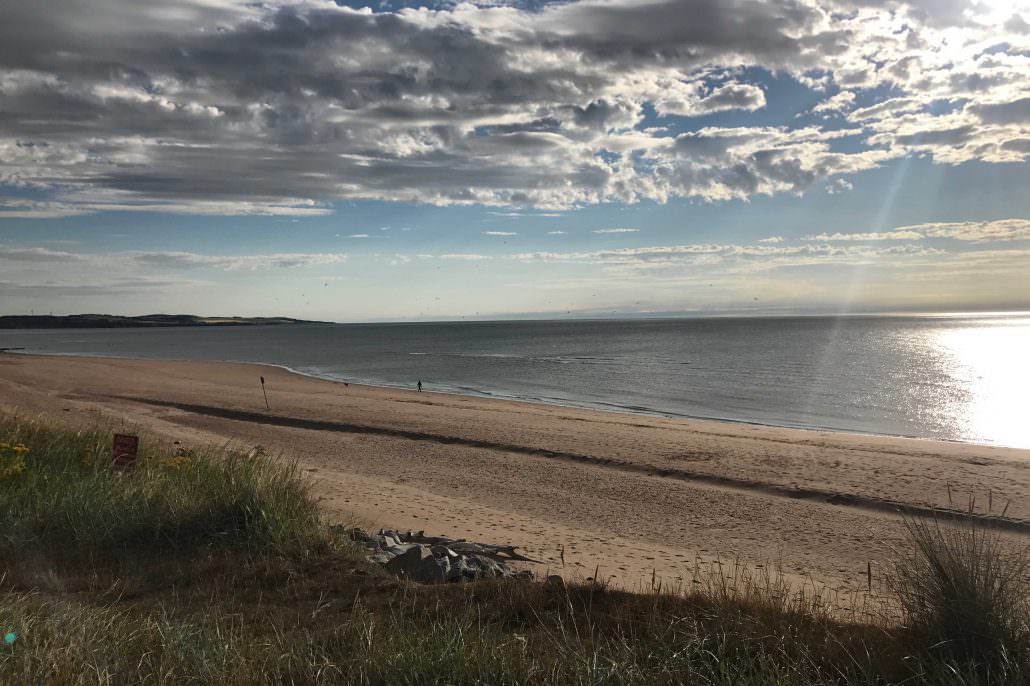
Storm Deidre threatened to do just that last December. It deposited hundreds of tonnes of sand all over the course – the dunes having now eroded to the point where they no longer offer any protection.
[object Object][object Object][object Object][object Object]
Research from Dundee University reveals the North Sea has moved 70 metres towards Montrose in the last three decades, caused by reduced sediment and rising sea levels.
It’s imperilled the links but, as links director John Adams reveals, there’s another huge problem.
“The sand has secreted north and the beach profile has changed,” he explains. “We’ve got virtually no sight of dunes but a hell of a lot of sand.
Advertisement
“Montrose is the most at risk place in Scotland for flooding. Golf is important but Montrose town itself is significantly at risk and there’s a funding package being looked into.”
The 2nd hole is clearly the most eye-catching example but Adams says there is slippage all across that coastline.
“Since a walkabout earlier this year we’ve lost another metre of dunes. We lost two and a half metres last year and we lost eight metres on our old third hole.
“But it’s not just the golf. It’s the town and that’s the emphasis. I’m more concerned about walking down the 15th, looking through the gap out to sea, and seeing the bottom of a ship.”
Head to the next page to continue reading our special investigation on golf courses and coastal erosion in order or choose from the options below…
Next page:
Formby’s future-proofing plan for new holes
Explore more:
How Royal North Devon lost 20 metres in three nights
Is Abersoch an avoidable catastrophe?
The affect of coastal erosion on golfing communities
What can be done to tackle coastal erosion?
How Royal Dornoch is fighting coastal erosion
The stark reality of coastal erosion
Golf courses and coastal erosion: Formby
There’s inevitability about the creeping coast at Formby – the club have been through this before.
New holes at 7, 8 and 9, along with a new 10th tee, were designed by Donald Steel in the late 70s as the club couldn’t combat the attack on the shoreline from the River Mersey.
“It was a very good job the club looked that far ahead at the time because the old 9th green is now about 25 yards on the beach,” says club secretary and manager Stuart Leech.
Advertisement
Now two of those remodelled holes, members’ favourites, are themselves under assault from shrinking sands.
Sefton Metropolitan Borough Council reckons the coastline could be at the back of the 10th blue tee by 2085, and so the club are already planning.
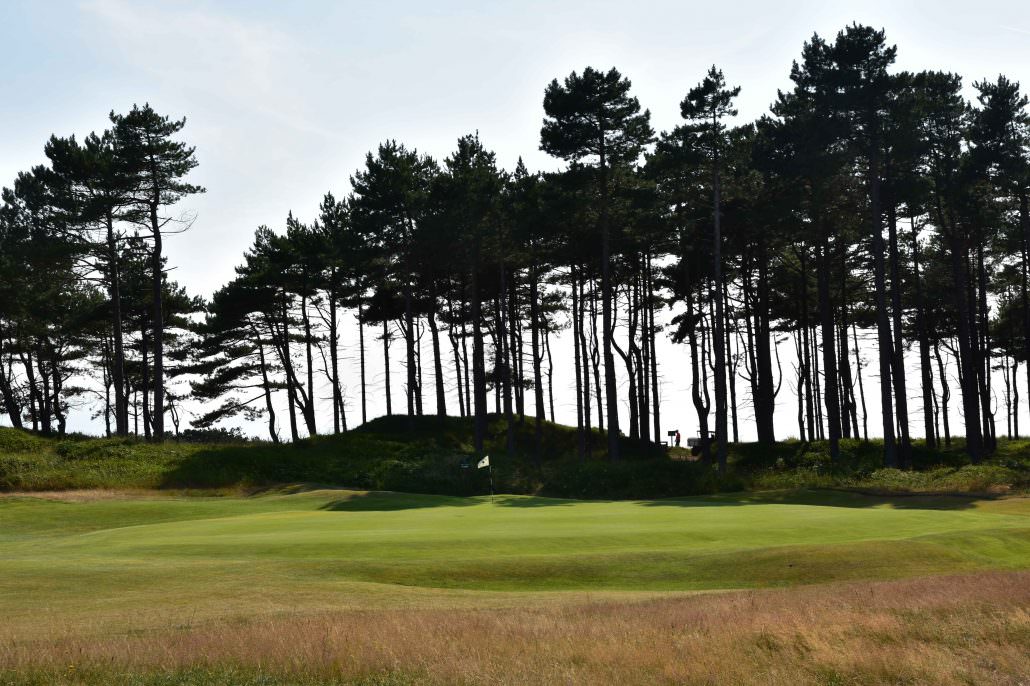
As part of a masterplan of improvements to the current layout, Formby asked Martin Ebert, the renowned Open architect, to design new 9th and 10th holes.
To ensure play isn’t disrupted by wind blown sand, as what’s left of the dunes get ever closer, a 150 metre safe range means that revised layout would need to be in play by 2040.
“The line that we gave to Martin has basically meant that the 9th and 10th holes would potentially have to be changed.
“Thankfully, with erosion rates, we don’t have to do a great deal with those for the next 25 years. The changes that Martin is proposing are things we can construct without affecting play.
“We can do most of the work before we even look to open the holes and still keep playing the existing layout. In around 20 to 25 years’ time we will be starting construction on those.
“That future proofs us until 2100. If we didn’t think about it, and left it to one side for somebody else to pick up in the future, we would be being incredibly irresponsible.”
The new 9th would be a strong par 4 that doglegs right and looks out over the Irish Sea, while the proposed 10th, with a tee set on dunes to the left of the current 9th green, would remain as a par 3 and require a carry over a low dune valley.
“It certainly won’t diminish the current layout in any way, shape, or form,” says Leech. “If anything, people may even turn around and say it’s better.
Advertisement
“Change is inevitable and it has to happen. We would like to think of this as a progressive change that, if we do it well, will enhance everything we’ve got rather than something that is forced upon us.”
Head to the next page to continue reading our special investigation on golf courses and coastal erosion in order or choose from the options below…
Next page:
How Royal North Devon lost 20 metres in three nights
Explore more:
How Montrose is falling into the North Sea
Is Abersoch an avoidable catastrophe?
The affect of coastal erosion on golfing communities
What can be done to tackle coastal erosion?
How Royal Dornoch is fighting coastal erosion
The stark reality of coastal erosion
Golf courses and coastal erosion: Royal North Devon
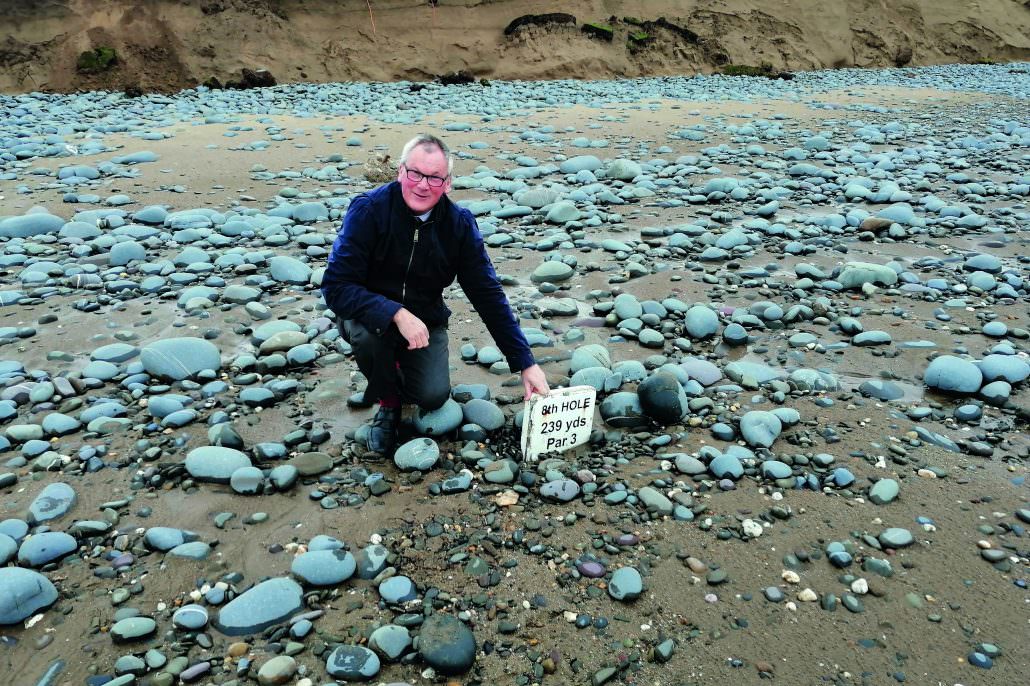
The sign remains as a monument to what has been lost – a reminder of the awesome power of nature.
Royal North Devon is England’s oldest course, opened for play in 1864, and was an Old Tom Morris design that had been largely untouched since the 1920s.
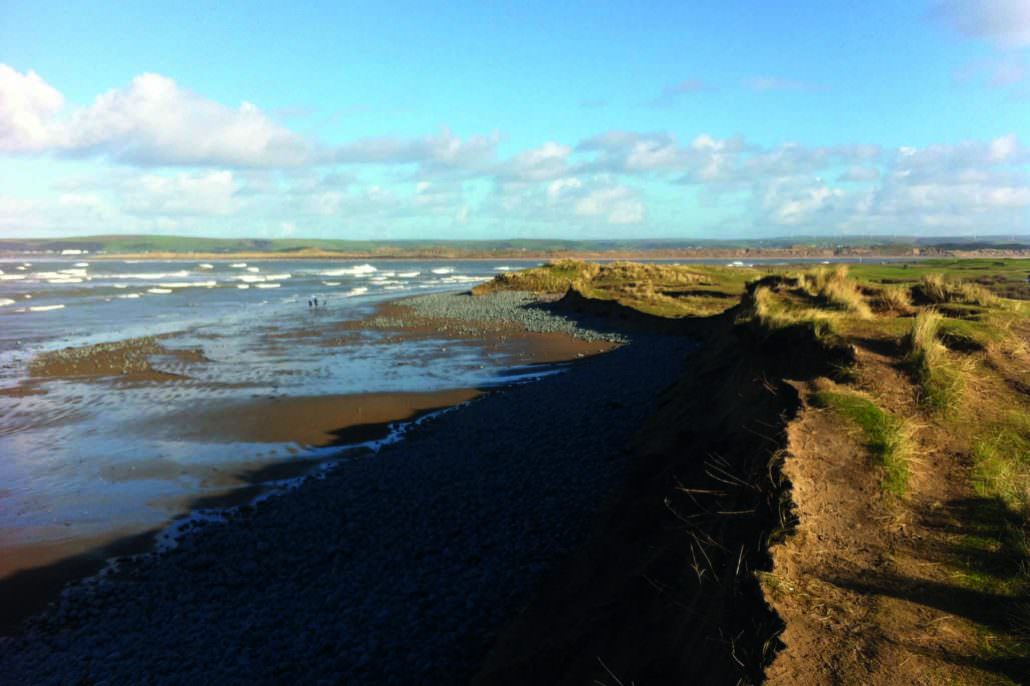
That was until the coast started to erode rapidly in the last decade. In 2013, they lost 15 to 20 metres of dunes in the space of three tides.
Last year, the 8th championship tee was claimed completely – the marker that lies on the beach is all that remains.
The 7th green is now just 35 feet from the edge of the erosion and the 6th green could also be at risk.
“There’s a sea defence called the Pebble Ridge, which is a natural phenomenon,” says Royal North Devon’s long-serving manager Mark Evans.
“Pebbles fell off the cliff and were washed around and became a sea defence. For whatever reasons, the material is not coming around as quickly as it used to and so the ridge is getting less effective.
“Behind that ridge are the sand dunes and, against the Atlantic Ocean and when you get big swales and 10-foot tides, there is no defence there. It is all being washed away very quickly, unfortunately, and it is very concerning.
“You can see the sea a lot more clearly from the 7th fairway (than previously). There were massive sand dunes on the left hand side and you could never see it.
“It’s probably about 25 metres of sand dunes that have gone. You were talking big, high, sand dunes and millions of tonnes of sand that have just washed away.”
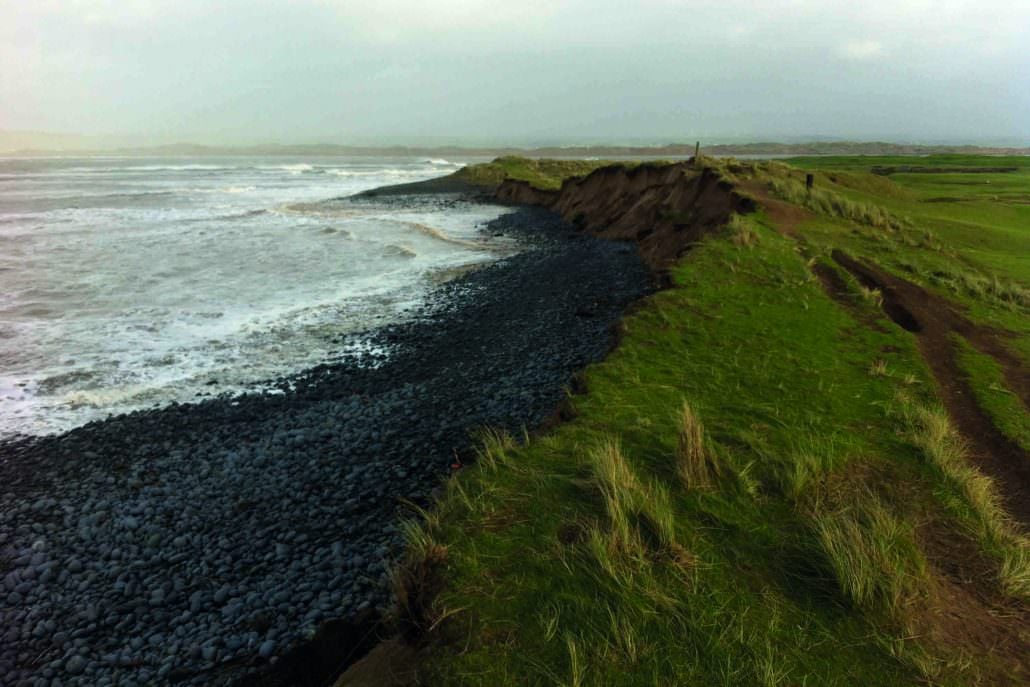
RND have engaged Tom Mackenzie to rebuild the threatened areas and try to hold off the receding sand for the time being.
The 7th, a right to left dogleg that plays towards the sea, is set to become a straight par 5 while the par 3 8th would move inland and be played from higher ground. The 9th will shift from a par 5 to 4 and the 7th and 9th greens are also being altered.
“We don’t think we would have any more problems for at least 50 years,” says Evans.
But when the redesign went before planning chiefs at the end of August, the Environment Agency were less optimistic saying: “There are significant erosion issues in this section at the moment.
“It is also worth noting that the proposed plan will only offer a temporary solution, and further movement will be required in perhaps five to 10 years.”
Head to the next page to continue reading our special investigation on golf courses and coastal erosion in order or choose from the options below…
Next page:
Is Abersoch an avoidable catastrophe?
Explore more:
How Montrose is falling into the North Sea
Formby’s future-proofing plan for new holes
The affect of coastal erosion on golfing communities
What can be done to tackle coastal erosion?
How Royal Dornoch is fighting coastal erosion
The stark reality of coastal erosion
Golf courses and coastal erosion: Abersoch
“It’s an easy solution,” vents a frustrated Dai Davies, Abersoch’s club manager. “You continue the rock armour to where the beach huts are. We’re talking £250,000 of work, but the club doesn’t have that sort of money in ready capital.”
If the narrow fence – all that’s now separating the beach from the 8th green at Abersoch – wasn’t enough of a clue that parts of this Gwynedd course are in imminent peril then the new contouring on the putting surface has alerted everyone to its fate.
“There’s obviously some movement underneath the sand dunes as well,” Davies adds. “If there was a breach there, and there’s every indication that there might be at some time in the future, how long that’s going to be I’ve got no idea, it wouldn’t just affect the 8th.
“It would come across the 8th, 9th and 10th and effectively up to the 11th and the clubhouse.”
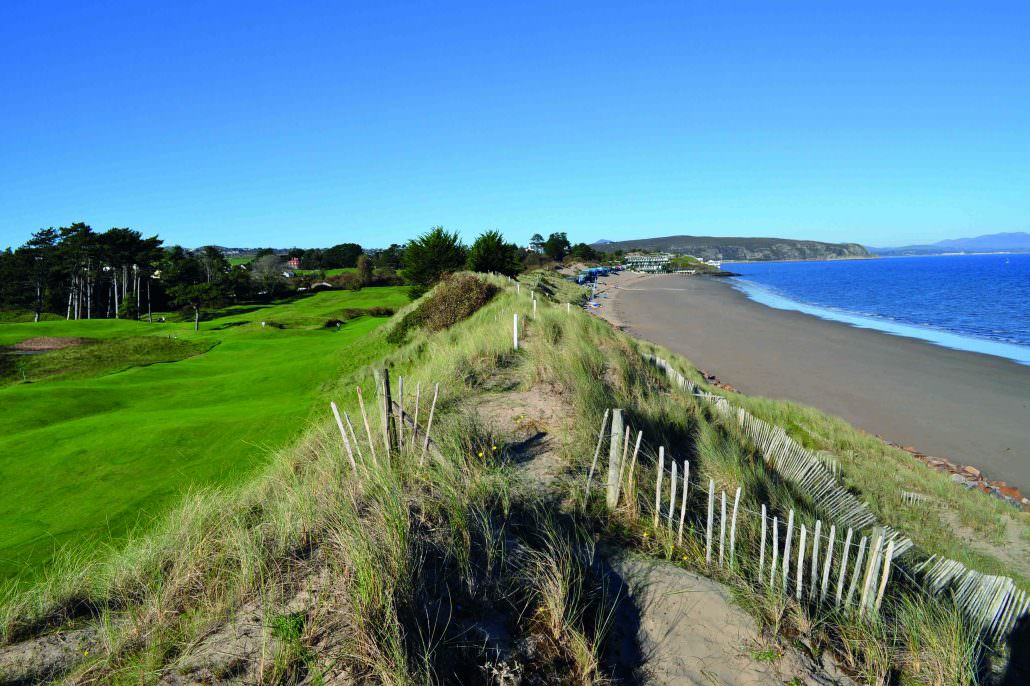
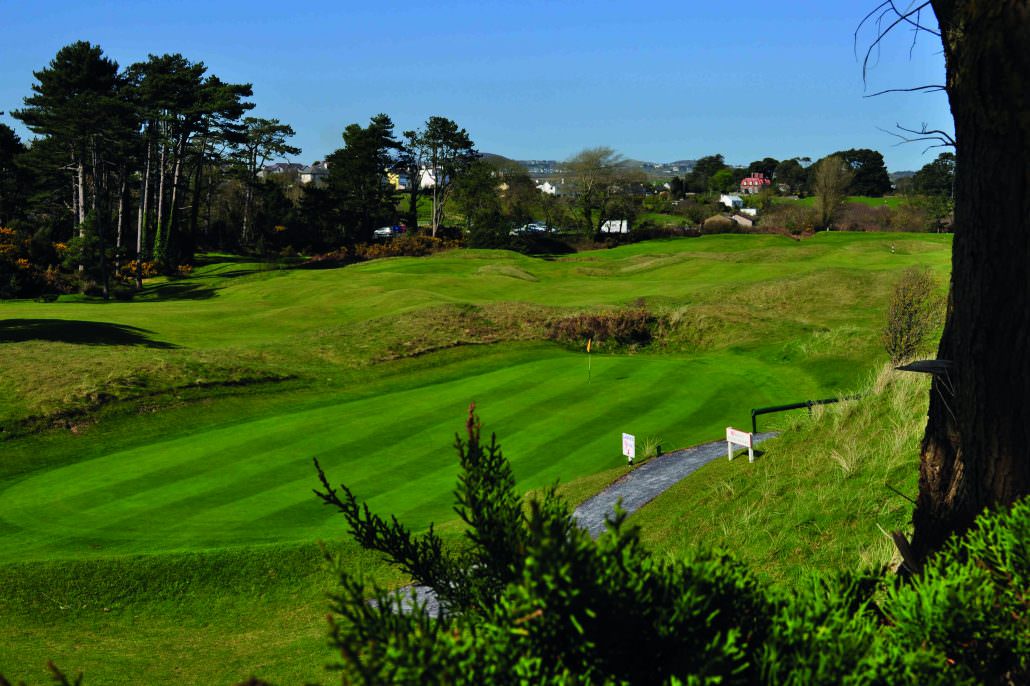
A number of Abersoch’s holes run right alongside the sand dunes and around three quarters of the golf course is protected by rock armour, sea defences, and a line of beach huts.
But there’s around 150 metres of unprotected sand dune, reckons Davies, and, in the last four years, he estimates those dunes have shrunk by as much as 30 metres.
The club proposed a solution to the problem – build three new beach huts, sell them and use the money to pay for more rock armour to protect the unguarded dune – but say they’ve got nowhere with the authorities.
“It’s probably 50 or 60 metres away now,” adds Davies. “Four years ago we had devastating storms that wiped away a lot of the beach huts and two of those (storms) and there would be a serious breach.
“It’s massively frustrating because we know there is a solution to the problem.”
Head to the next page to continue reading our special investigation on golf courses and coastal erosion in order or choose from the options below…
Next page:
The affect of coastal erosion on golfing communities
Explore more:
How Montrose is falling into the North Sea
Formby’s future-proofing plan for new holes
How Royal North Devon lost 20 metres in three nights
What can be done to tackle coastal erosion?
How Royal Dornoch is fighting coastal erosion
The stark reality of coastal erosion
Golf courses and coastal erosion: The expert view
Jaap Flikweert is flood and coastal management adviser for consultancy firm Royal HaskoningDHV, who helps those with erosion problems worldwide and throughout the UK, including the East Coast
“I’m particularly involved on the East Coast and, certainly there, this is a really long-term process that is a geological response to the ice age 5,000 years ago,” he explains.
“The land is rebounding and there is a relative change of sea level that leads to a long-term process of coastal erosion.
“Many parts of the East Coast were protected after ‘the Great Flood’ of 1953. Big sea walls were built at the time and people thought this would be the solution.
“But those structures are now coming to the end of their lives. The beaches have eroded since, which further undermines them. Through the national shoreline management planning process, questions are now being asked.
“Is it the right thing to keep defending particular areas, when it is actually a long-term process that you can’t stop? Would it be affordable, and could it make the situation even worse for the neighbours?
“Are there smarter ways in the long-term to adapt to coastal change?
“Beaches have dropped by as much as two or three metres in many places because of normal, natural, processes and there is, on sandy coasts, local geomorphological processes that could be influenced by climate change.
“If, for example, storms increase – like those we saw in the spring of 2014, or there is a sequence of storms from the ocean – those changes can also put pressure on coastlines and lead to change.
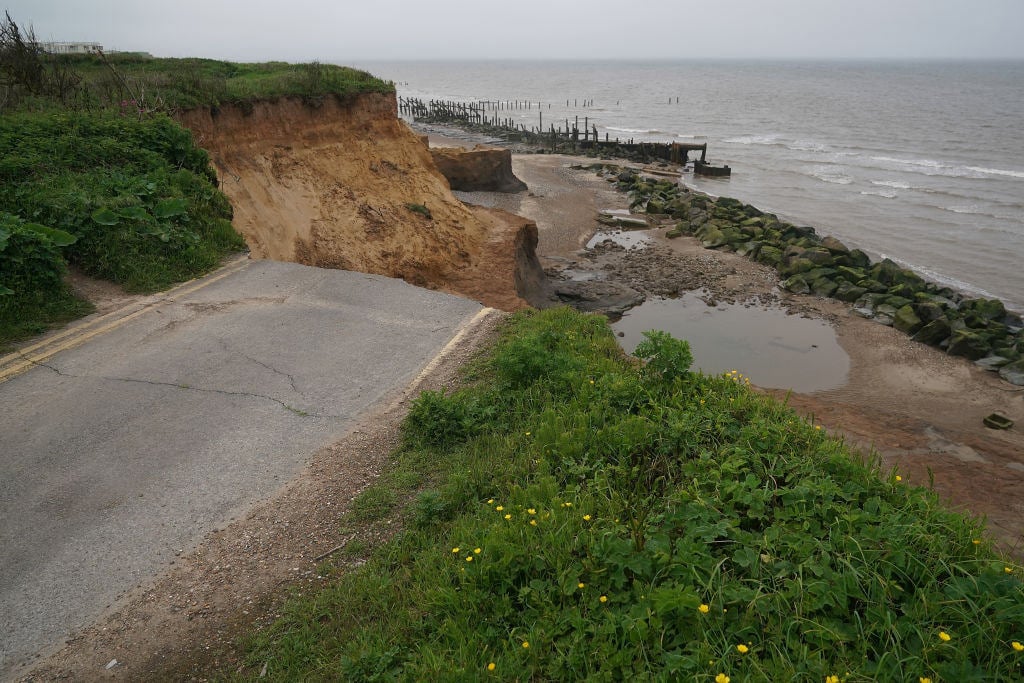
“Coasts work in cells – large units in which the coastal processes operate. So what you do in a headland influences what happens elsewhere in a neighbouring bay, or stopping erosion of a local cliff can increase erosion of a neighbouring dune.
“All the local decisions in one place influence the rest of that coastal cell and its different functions – infrastructure use, amenity use, land use, natural habitats – and this can be really complicated.
“People have talked worldwide about integrated coastal zone management. That’s the idea where you take all of those factors, bring them all together and make one encompassing plan for the coast.
“In the UK we are doing well at taking a slightly more pragmatic approach. We have shoreline management plans that have a limited scope.
“They only decide ‘do we protect the coastline here?’ or ‘how do we manage the coastline?’
“The idea is that they are informed, driven by everything and owned by everyone that matters, such as land use planning, infrastructure and habitats.
“It also includes local landowners and local functions like golf courses. And there is an opportunity for the golfing community to get involved and play a more pro-active role.
“With golf courses, they have a direct value to the golfing community, but also to the wider area, in terms of socio-economic value but also ecosystem benefits and landscape value. These interactions have to be, and are, considered in shoreline management planning.
“These interactions may sometimes limit the options for a golf course, but they can also create opportunity: if you can find shared objectives, you can develop joint solutions, for example, where you work with natural processes and get better access to innovative options. This will help get consent and improve quality, and could even generate co-funding.
“In some cases, the question may need to be asked: if you know that this is a long-term and on-going process, is it sustainable to hold the line exactly where it is?
“This has to be balanced with the historic and cultural value of golf courses. Is it the right thing to keep defending it and for how long?
“We work on generation-long adaptation plans for communities – a similar approach could be appropriate for golf courses.”
Head to the next page to continue reading our special investigation on golf courses and coastal erosion in order or choose from the options below…
Next page:
What can be done to tackle coastal erosion?
Explore more:
How Montrose is falling into the North Sea
Formby’s future-proofing plan for new holes
How Royal North Devon lost 20 metres in three nights
Is Abersoch an avoidable catastrophe?
How Royal Dornoch is fighting coastal erosion
The stark reality of coastal erosion
So what can we do to tackle coastal erosion?
If coastal erosion is largely a natural process then can clubs do anything to protect their courses from the ravages of nature? Here are some of the many measures that can restrict, or prevent, damage…
Adaptive management – Accept that erosion will happen and deal with it. You might have to move tees and greens but that could cost less than trying to build defences to halt the rate of decay.
Plant dune grasses – The idea is that planting helps to trap and stabilise the sand. Marram grasses can develop yellow dunes and form a barrier that limits the effects of waves. It doesn’t so much stop erosion as provide a buffer and accelerate recovery.
Dune fencing – Fences line the seaward face of dunes and encourage wind blown sand to be deposited. They can also help recovery but they need regular maintenance and only have a five-year shelf life.
Beach re-profiling – Now it starts to get a bit more expensive. Shift a load of sand, or shingle, from where deposits are being formed and move them to the hardest hit areas. The problem is that you can simply be moving the erosion problem from one area to another
Sand bags – Yes, you can use these to effectively block a beach but waves, sunlight and even vandalism makes it an unstable way of sorting the problem.
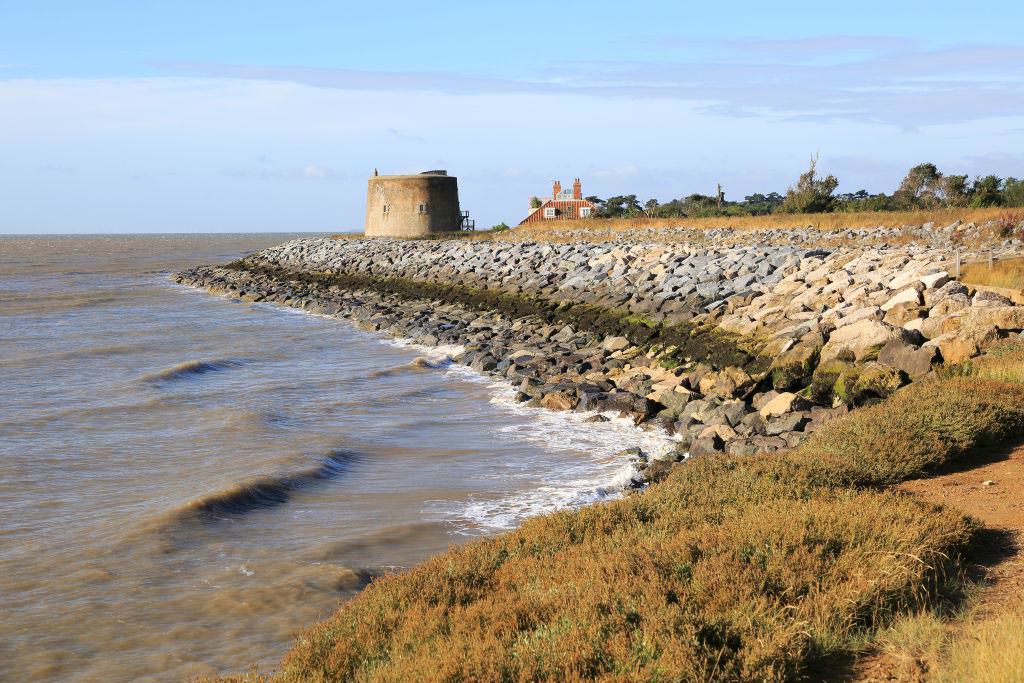
Rock walls – They armour the dune face, spread the impact of the waves and stop the shoreline eroding. It’s expensive and changes the nature of the beach.
Sea walls – Popular in the past, they are usually concrete structures that slope down to the beach and provide a fixed line of defence. They’re expensive and have a huge effect on the environment.
Head to the next page to continue reading our special investigation on golf courses and coastal erosion in order or choose from the options below…
Next page:
How Royal Dornoch is fighting coastal erosion
Explore more:
How Montrose is falling into the North Sea
Formby’s future-proofing plan for new holes
How Royal North Devon lost 20 metres in three nights
Is Abersoch an avoidable catastrophe?
The affect of coastal erosion on golfing communities
The stark reality of coastal erosion
How Royal Dornoch helped calm the waves
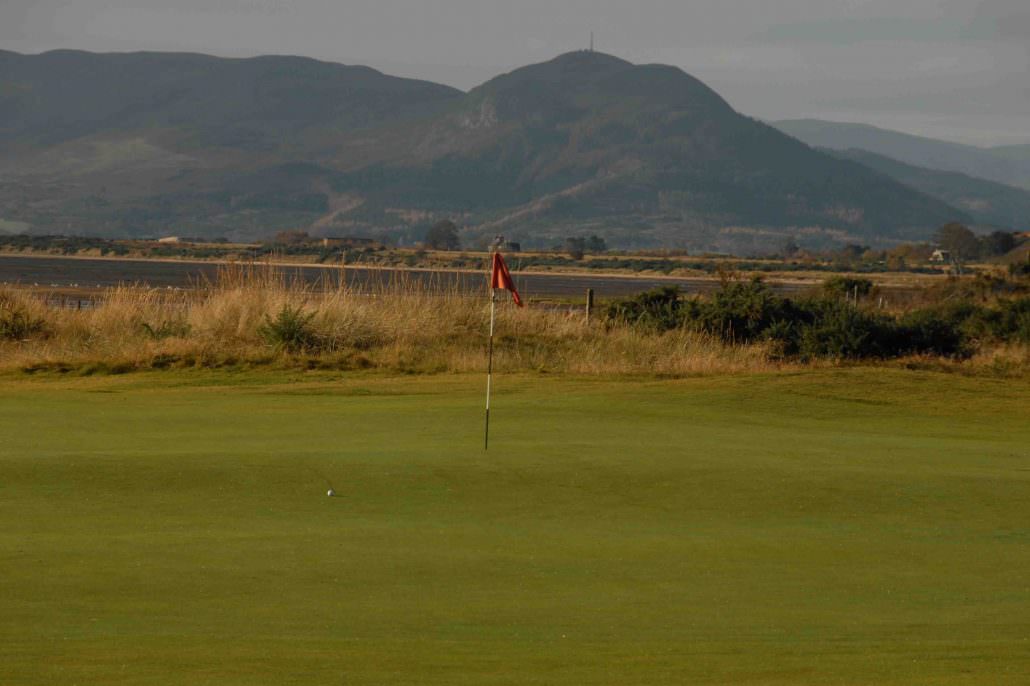
The championship course at Royal Dornoch, an outstanding links layout that has been in place for 400 years, gets all the attention but, on their Struie course, greenkeepers have found a solution that has stopped coastal erosion in its tracks.
Down on the 10th fairway the sea has been getting perilously close but, by using chestnut fences, they have managed to take the sting out of waves that had been causing so much damage.
“They’re wooden stakes within wire at the top and bottom and we bury them half into the sand and it strengthens them further,” explains Scott Aitchison, deputy course manager.
“When the waves are coming up it just takes the energy out of them. It disperses them and they don’t seem to be eating away too much into that.
“We wanted to look further why it was doing it so much in that area. Surveys noticed there is quite a lot of saltmarsh along the sand in the area where the waves come in and the saltmarsh has receded away.
“We’ve got a scientist (Dr Clare Maynard) from St Andrews University who has helped with a saltmarsh regeneration project and is using organic based bio-rolls, which are made up of coconut.
“They’re bound by rope and plant little bits of saltmarsh over the place and stake it into the ground. It gives the saltmarsh plants a chance of coming back.
“Hopefully that will naturally take the strength out of the wave as it approaches the land.”
Head to the next page to continue reading our special investigation on golf courses and coastal erosion in order or choose from the options below…
Next page:
The stark reality of coastal erosion
Explore more:
How Montrose is falling into the North Sea
Formby’s future-proofing plan for new holes
How Royal North Devon lost 20 metres in three nights
Is Abersoch an avoidable catastrophe?
The affect of coastal erosion on golfing communities
What can be done to tackle coastal erosion?
The reality of coastal erosion
Links courses are some of our greatest golfing treasures and it’s a sobering thought – when standing and looking over a glorious dunescape – that some may soon no longer exist.
Extreme weather is here to stay and the planet’s climate will continue to shift over the coming decades as the world gets progressively warmer.
That will naturally have a huge effect on those golf courses situated closest to the sea.
The worst-case scenario sees the likes of St Andrews under water but, in reality, they, and their like, have the resources to either delay or alter the threat.
But there are others that will inevitably bear the brunt as rising sea levels, freak storms and the natural process of erosion inevitably take their toll.
Will they be able to realign and rebuild their courses or will the cost claim them as well as their precious turf?
As Royal North Devon’s Mark Evans concludes: “If the predictions are correct then a lot of links courses are really going to start to suffer.”
Is your club suffering from the affects of coastal erosion? We’d love to hear from you. Let us know in the comments below or tweet us.
Where would you like to go next?
How Montrose is falling into the North Sea
Formby’s future-proofing plan for new holes
How Royal North Devon lost 20 metres in three nights
Is Abersoch an avoidable catastrophe?
The affect of coastal erosion on golfing communities