
Mizuno’s JPX ONE metal woods represent one of the most significant material breakthroughs the company has introduced since its first titanium drivers in the early 1990s.
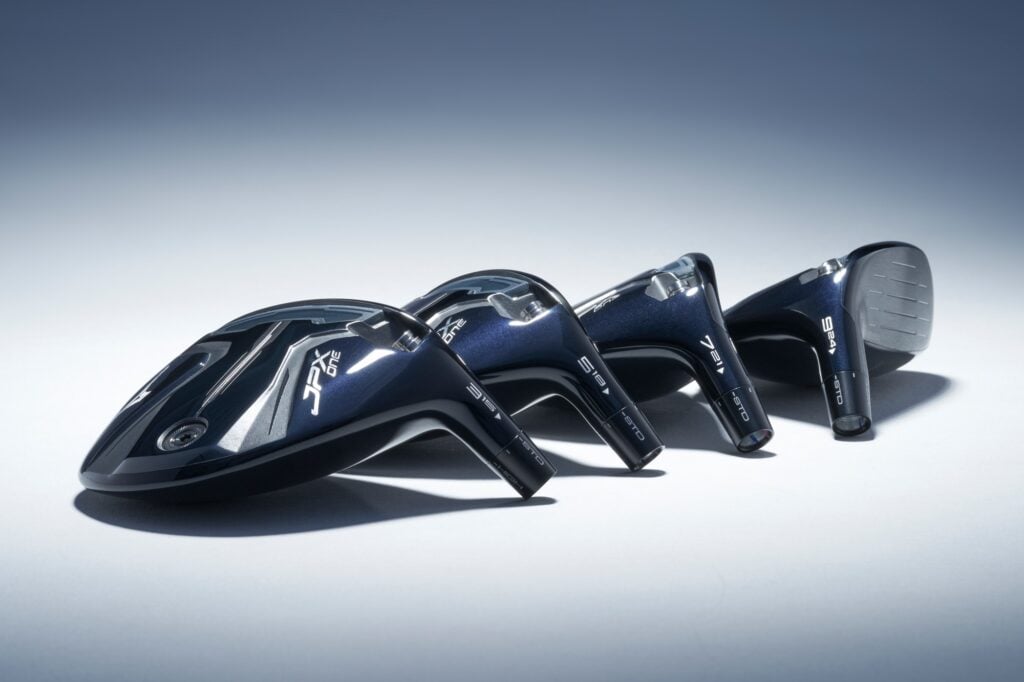
Alongside a pair of new drivers, Mizuno has also unveiled a set of fairway woods and hybrids. Every driver, fairway wood, and hybrid in the lineup has been features evolved face structures, refined mass distribution, and improved turf interaction.
Here’s everything you need to know about Mizuno’s metal wood range…
- RELATED: Mizuno JPX One Driver Review: A major step forward
- RELATED: Mizuno JPX One Select Driver Review: The brand’s most competitive driver yet?
Mizuno JPX One Metals: The Technology
At the heart of JPX ONE is the industry’s first driver face made using NANOALLOY™ technology. At impact, the NANOALLOY™ face becomes significantly more elastic than urethane, nylon, or titanium alternative.
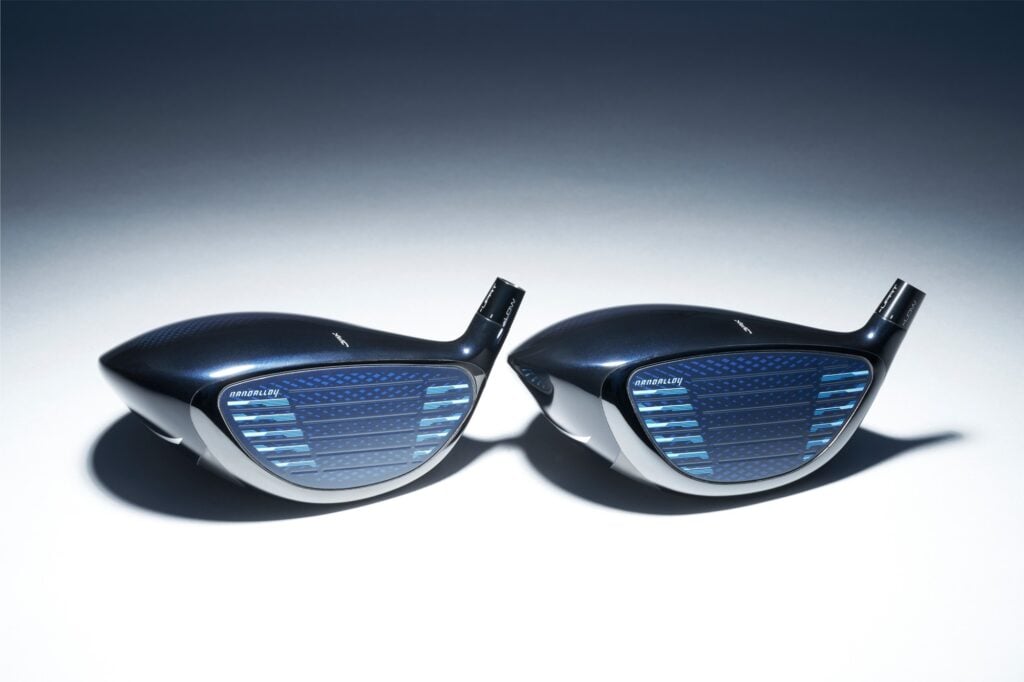
Ultimately, this allows a wider range of the driver face to store more ball speed, including away from the centre.
To take advantage of the of NANOALLOY™ technology fully, Mizuno has developed a new CORTECH Face structure. The face features strategically controlled thickness variations that are thinner than previous Mizuno drivers.
Again, the ball speed from toe, heel, high and low strikes is still high off the face of the JPX One and the JPX Select drivers is preserved better.
The fairway woods use an evolved CORTECH Chamber positioned behind the face. This leads to more consistent ball speeds across the face, particularly from common miss locations.

Additionally, the fairway woods are equipped with Mizuno’s speed bevel sole. Better turf interaction is promoted, as a result, to reduce energy loss at impact.
The fairway woods use a high-COR MAS1C forged face with a multi-thickness CORTECH pattern. This delivers fast ball speeds while maintaining the durability required for repeated turf strikes.
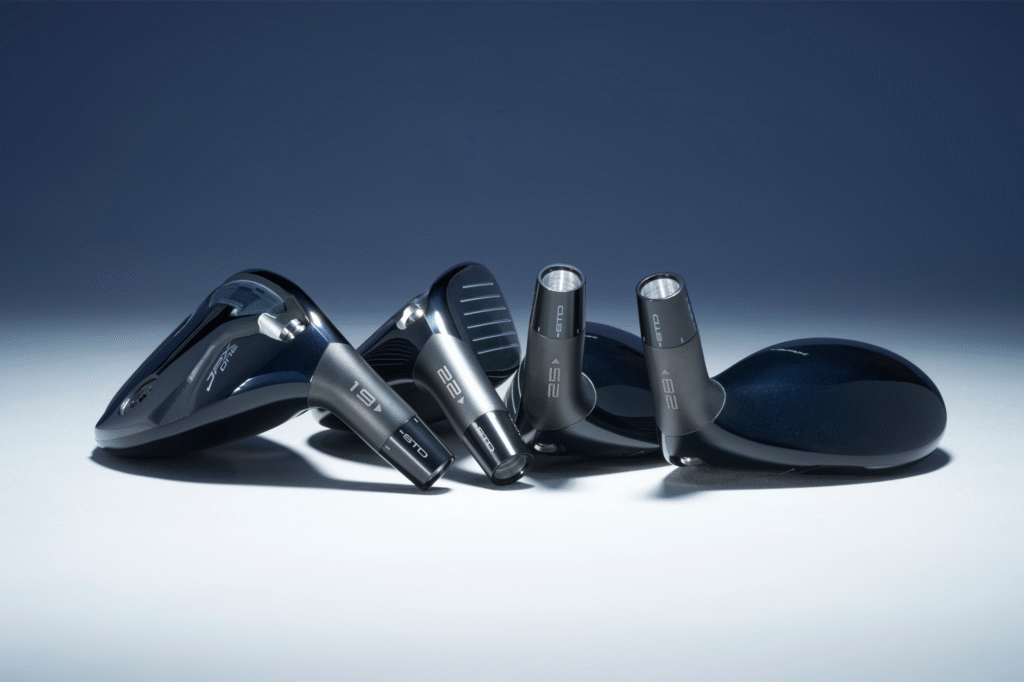
In terms of the JPX One hybrids, the standout feature is the Waffle Crown. It is a structural lattice design that removes mass from the crown without sacrificing strength.
Advertisement

The saved weight from the new crown is repositioned in the head to improve the launch conditions and forgiveness all whilst maintaining a compact head shape.
Unlike the fairway woods, the hybrids use a uniform 1.8mm thick MAS1C forged face. This is to improve ball speed and launch from out of the rough in particular.
Mizuno JPX One Metals: The Line-Up
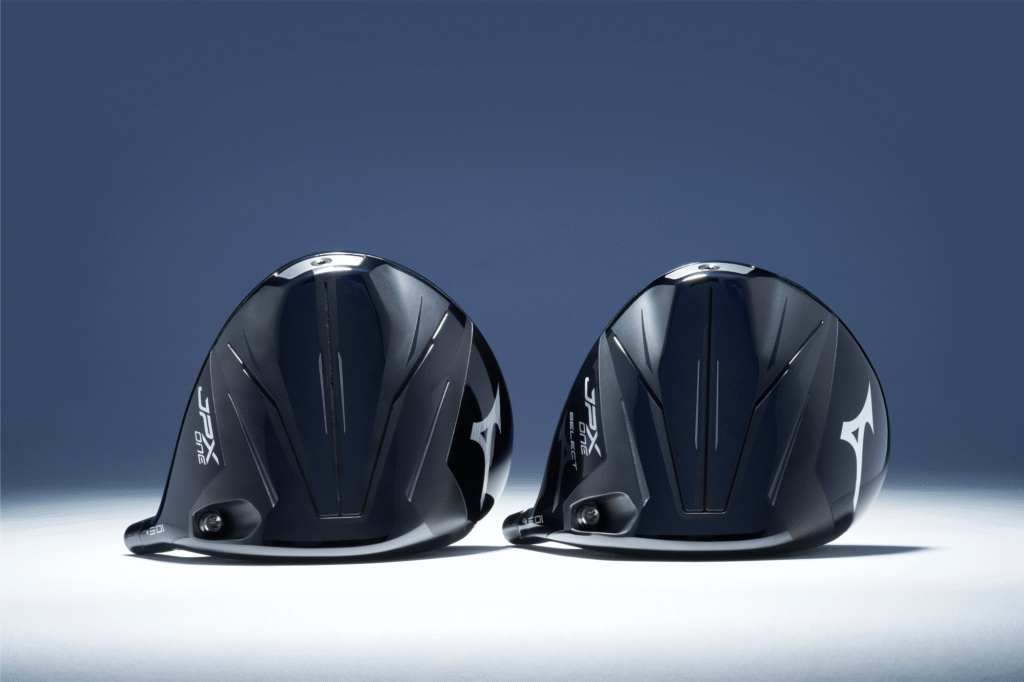
Mizuno has release two new drivers, as well as a set of fairway woods and hybrids. Here’s a closer look at the difference between the two driver models.
JPX One Driver
Looks: Features a larger footprint.
Main Attributes: Designed for maximum forgiveness, with a higher MOI and a CG configuration that promotes straighter ball flight.
Who is it for?: Can be utilised by a wide range of players.

JPX One Select Driver
Looks: A more compact and player refined driver head shape.
Main Attributes: Promotes a straighter ball flight and more workability.
Who is it for?: Generally for the more consistent ball strikers who prefer a cleaner look at address.
The Details
Loft:
- Fairway Wood – 15°, 18°, 21° and 24°
- Hybrid – 19°, 22°, 25° & 28°
Number:
- Fairway Wood – 3, 5, 7 & 9
- Hybrid – 3, 4, 5 & 6
RRPs:
- Drivers – £529 / $600
- Fairway woods – £315 / $350
- Hybrids – £280 / $280
More information: Mizuno UK / Mizuno US
Will you be trying the new Mizuno JPX One drivers or metal woods? Let us know on X!
Don’t forget to check out and like our YouTube channel – YOUR GOLF NCG – where you will find lots of hints, tips and equipment reviews.
Advertisement